
Supervised vs Unsupervised Learning Explained
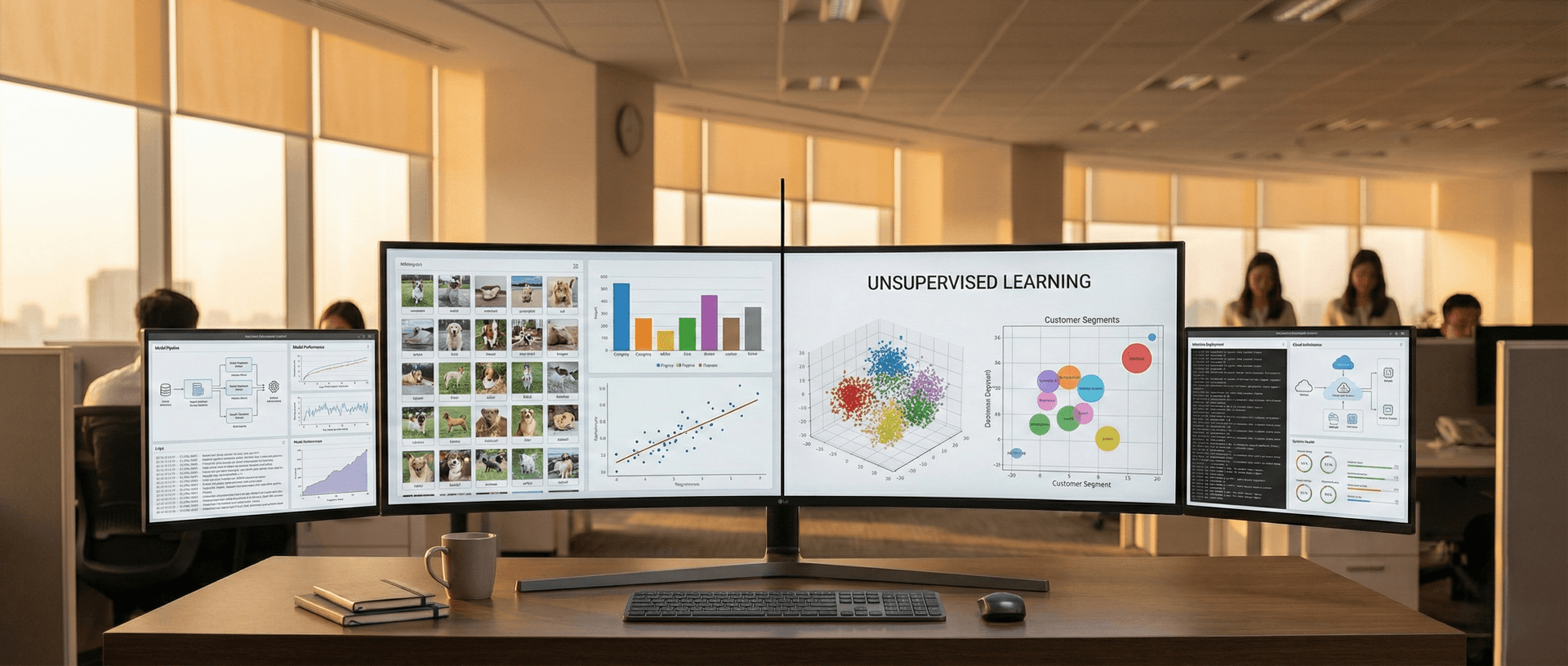
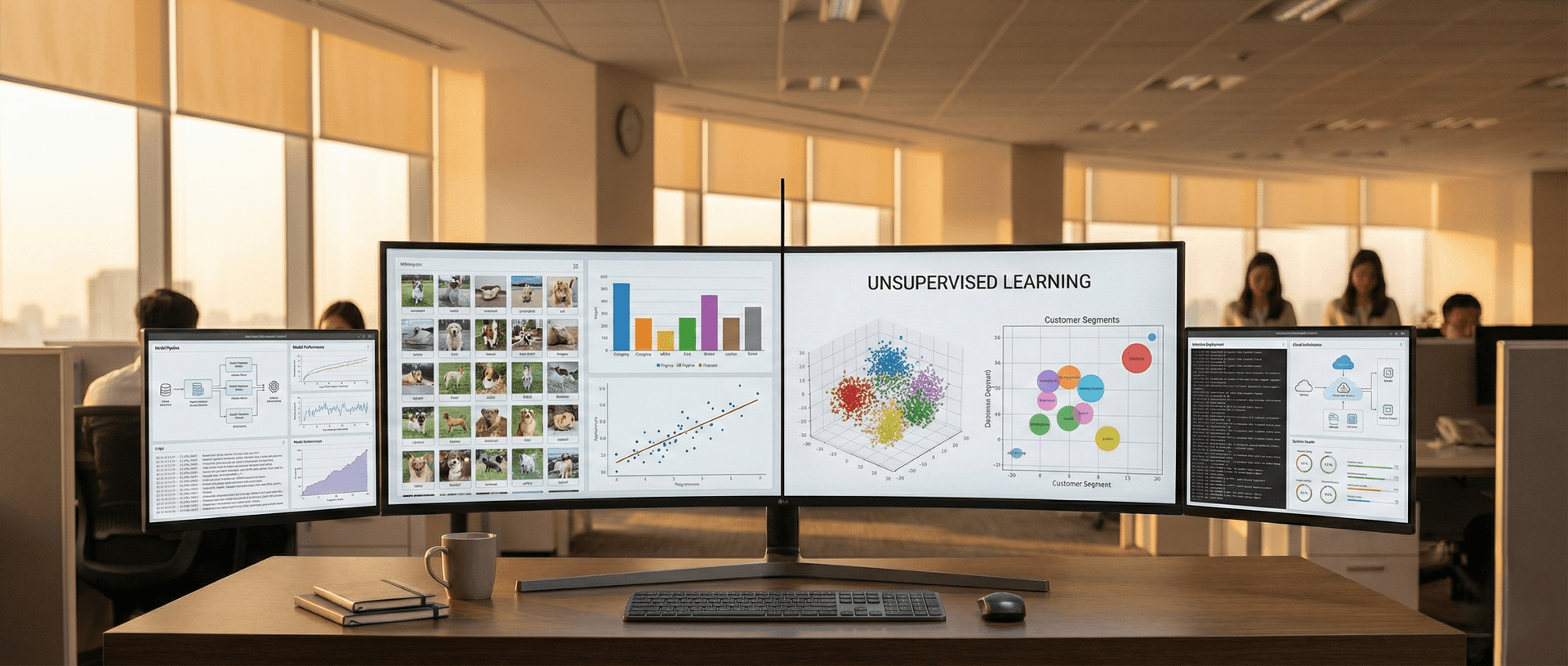
Confused about supervised and unsupervised learning? This guide explains the key differences, real-world applications, advantages, and how these machine learning techniques power modern AI systems.
Explore the key differences between supervised and unsupervised learning with simple explanations, real-world examples, and practical applications. This beginner-friendly guide helps you understand how machine learning models work in modern AI systems.
Supervised vs unsupervised learning is one of the most important foundational concepts in Artificial Intelligence and Machine Learning. If you are starting your journey in AI or planning to build intelligent systems for business, understanding these two approaches is essential.
From spam email detection to customer segmentation and recommendation engines, almost every modern AI solution is built using either supervised or unsupervised learning techniques. In this blog, we will break down these concepts in a simple, practical, and real-world manner so that anyone — student, professional, or business owner — can clearly understand how they work and why they matter.
If you want structured learning, enrolling in a Data Science & Machine Learning Course can help you build strong fundamentals and practical skills.
What is Machine Learning in Simple Words?
Before comparing supervised vs unsupervised learning, let us understand what Machine Learning (ML) actually means.
Machine learning is a branch of AI where computers learn patterns from data instead of being explicitly programmed. Instead of writing rules manually, we feed data into algorithms, and the system learns patterns automatically.
For example:
If you want a system to detect spam emails, instead of writing thousands of spam rules, you provide examples of spam and non-spam emails. The algorithm learns patterns from those examples.
This learning process can happen in two main ways:
- With labeled data (Supervised Learning)
- Without labeled data (Unsupervised Learning)
What is Supervised Learning?
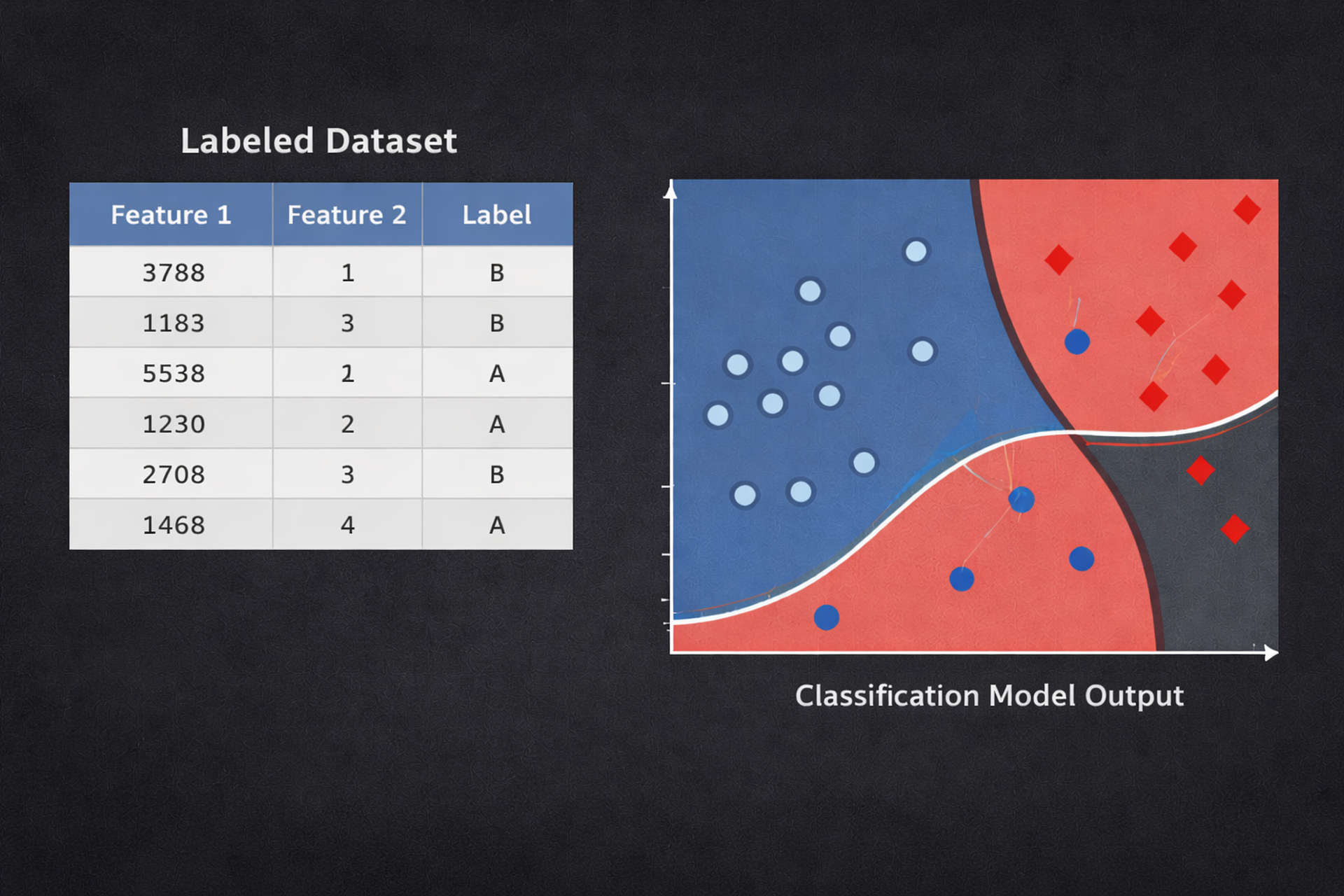
Supervised learning is a type of machine learning where the model is trained using labeled data.
Labeled data means each input has a known output. The system learns from examples where the correct answer is already provided.
Think of it like learning with a teacher.
The teacher gives questions and also provides the correct answers. Over time, the student learns the pattern.
Real-Life Example
If you want to predict house prices:
- Input: Size, location, number of rooms
- Output: Price
The model learns from historical data where both inputs and prices are known.
Types of Supervised Learning
There are two main categories:
1. Classification
Used when output is categorical.
Example:
- Spam or Not Spam
- Disease or No Disease
2. Regression
Used when output is continuous.
Example:
- Stock price prediction
- Sales forecasting
Supervised learning is widely used in:
- Fraud detection
- Image recognition
- Medical diagnosis
- Credit scoring systems
This approach is highly accurate when quality labeled data is available.
Many students learn these concepts in detail through an AI & ML Certification Program that focuses on real-world datasets.
What is Unsupervised Learning?
Main Techniques in Unsupervised Learning
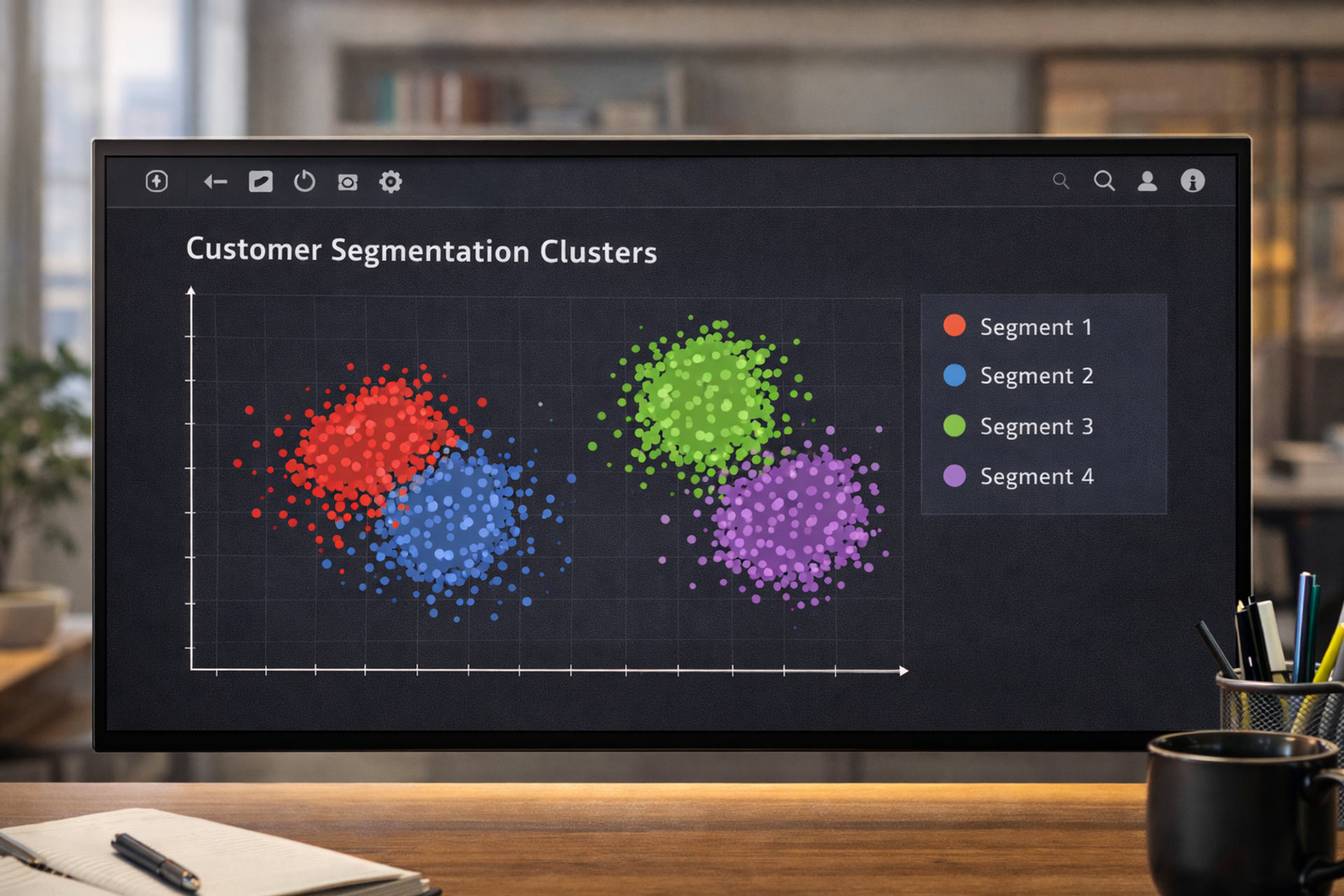
Clustering
Grouping similar data points together.
Example:
- Customer segmentation
- Market basket analysis
Association
Finding relationships between variables.
Example:
- “Customers who bought X also bought Y”
Unsupervised learning is powerful when:
- Labels are unavailable
- Data is huge
- You want to discover hidden patterns
Supervised vs Unsupervised Learning: Core Differences
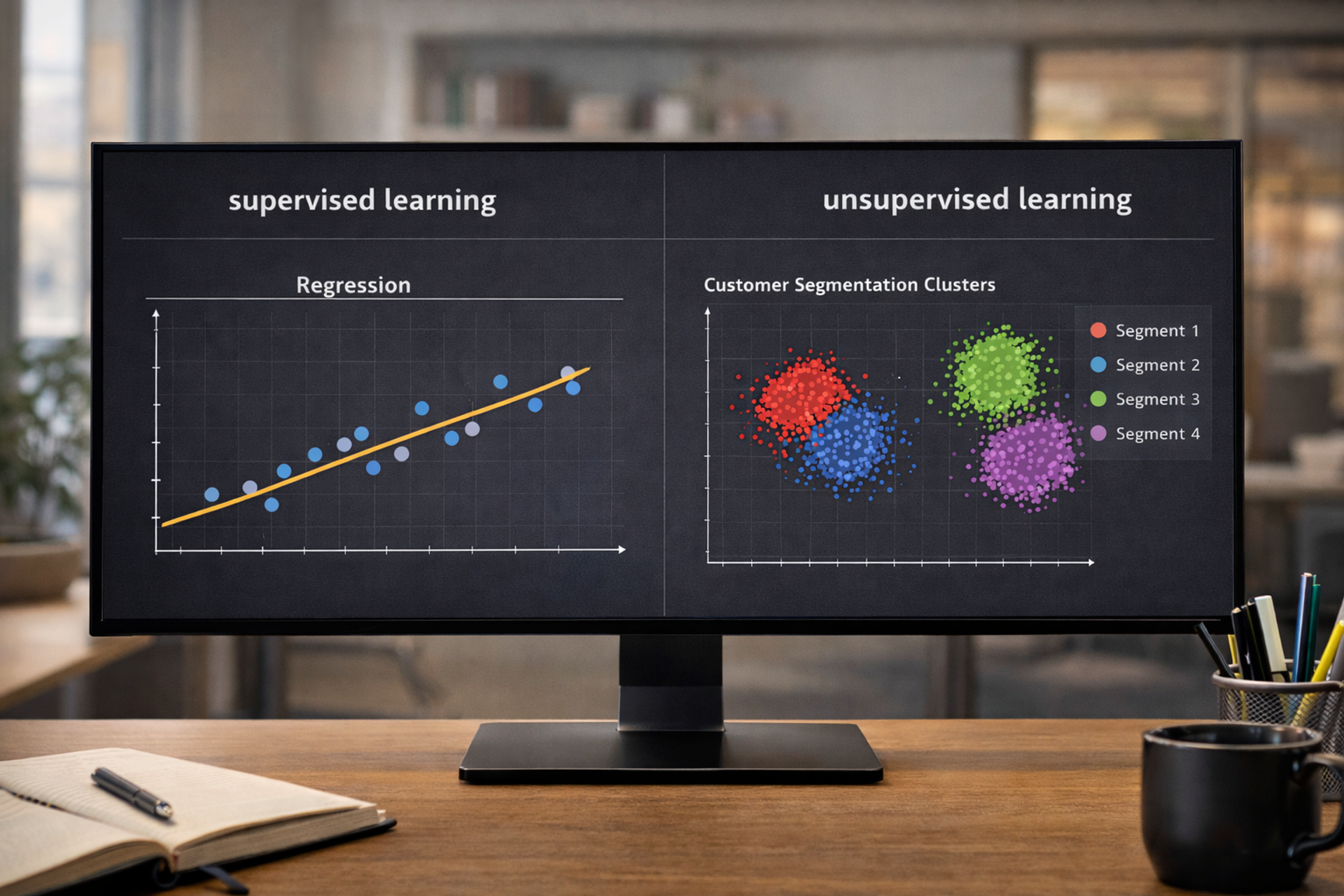
When comparing supervised vs unsupervised learning, the main difference lies in data labeling.
Supervised learning uses labeled datasets and focuses on prediction accuracy.
Unsupervised learning works with unlabeled data and focuses on discovering hidden structures.
In supervised learning, performance is measured using accuracy, precision, recall, or mean squared error.
In unsupervised learning, evaluation is more complex because there are no predefined correct answers.
Supervised learning is commonly used for predictive analytics.
Unsupervised learning is often used for exploratory data analysis.
Both approaches are essential in modern AI systems.
Real-World Business Applications
Today, companies rely heavily on AI-driven decision-making. Whether it is marketing, finance, healthcare, or retail, machine learning is everywhere.
In digital marketing, supervised learning predicts customer churn and conversion probability.
Unsupervised learning helps segment audiences for targeted campaigns.
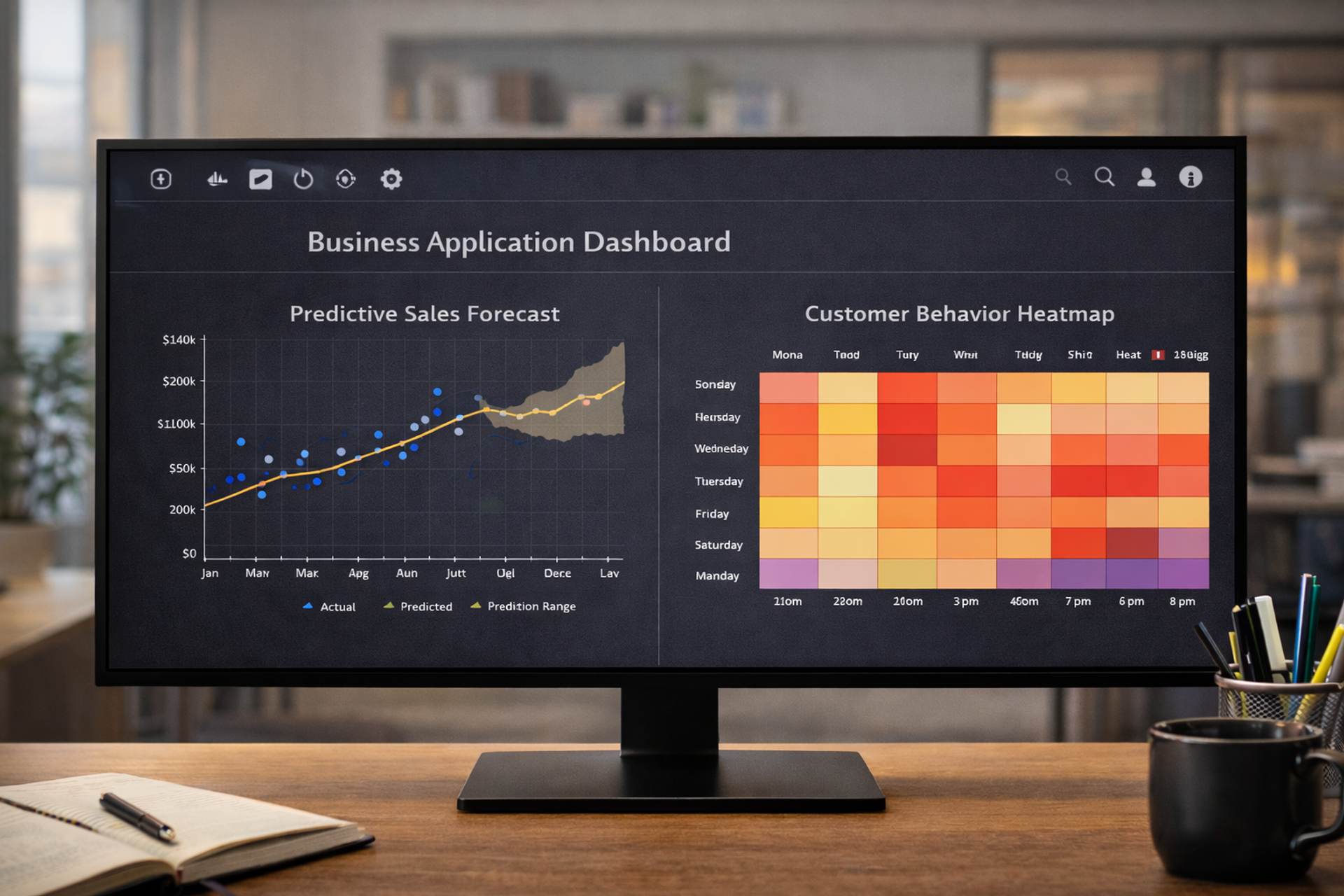
In healthcare, supervised models detect diseases from medical images.
Unsupervised models identify hidden patient risk groups.
If you are exploring Data Science & Machine Learning Courses, understanding these practical applications helps you build real industry skills.
Businesses offering AI & ML Solutions use both techniques to build scalable and intelligent systems.
Organizations providing Data Analytics Services use supervised models for forecasting and unsupervised models for pattern discovery.
Companies investing in Business Intelligence Solutions often combine clustering with predictive modeling.
Modern enterprises also integrate these models into Digital Transformation Services to automate operations.
Advantages of Supervised Learning
Supervised learning offers high accuracy when trained with quality labeled data. It is ideal for prediction-based tasks. Businesses prefer it because results are measurable and easier to validate.
It works extremely well for:
- Risk prediction
- Sales forecasting
- Sentiment analysis
However, it requires large labeled datasets, which can be expensive and time-consuming.
Advantages of Unsupervised Learning
Unsupervised learning does not require labeled data, which makes it cost-effective. It is excellent for discovering unknown patterns.
It is powerful for:
- Customer segmentation
- Behavioral analysis
- Anomaly detection
However, results may be harder to interpret compared to supervised learning.
Which One Should You Learn First?
For beginners, supervised learning is usually easier to understand because outputs are clearly defined.
A structured Advanced Data Analytics Course can help beginners understand both techniques with real-world case studies.
However, mastering both is essential if you want to build a strong AI career.
If you are planning to enter the AI field, enrolling in structured programs like DS & ML Courses can help you build real-world expertise.
Future Trends in 2026 and Beyond
The future of AI combines supervised and unsupervised learning with reinforcement learning and deep learning.
Hybrid models are becoming popular. These systems use unsupervised learning for feature extraction and supervised learning for prediction.
With the rise of Agentic AI and autonomous workflows, machine learning models are now capable of making decisions independently.
Industries investing in automation are increasingly relying on machine learning-driven intelligence.
Frequently Asked Questions (FAQs)
What is the main difference between supervised and unsupervised learning?
The main difference is labeled vs unlabeled data. Supervised learning uses labeled datasets, while unsupervised learning does not.
Is supervised learning better than unsupervised learning?
Neither is better. They serve different purposes depending on the problem.
Can both methods be used together?
Yes, many advanced AI systems combine both techniques.
Which has more career opportunities?
Both are in high demand, especially in AI, data science, and analytics roles.
Is coding mandatory to learn machine learning?
Basic programming knowledge helps, but conceptual clarity is equally important.
Conclusion
Understanding supervised vs unsupervised learning is the foundation of modern AI. These two approaches power everything from recommendation engines to fraud detection systems.
Supervised learning excels in prediction when labeled data is available. Unsupervised learning shines in discovering hidden patterns when labels are missing.
To stay competitive in today’s AI-driven world, enrolling in an Industry-Oriented AI Training program can accelerate your career growth.
In today’s AI-driven world, mastering both methods is not optional — it is essential. Whether you are a student, entrepreneur, or business leader, knowledge of these concepts will help you make smarter technology decisions.
As industries continue embracing intelligent automation, machine learning will remain at the core of innovation.
Tags

A visionary data scientist dedicated to unlocking the potential of data to drive informed decision-making and spark innovation. With a strong foundation in Data Science.