
Simple Machine Learning Algorithms to Kickstart Your Career


Learn simple machine learning algorithms and start your career with this beginner-friendly guide, roadmap, and job insights.
This blog is designed for students and beginners who want to start a career in machine learning without confusion. It focuses on simple explanations, practical steps, and real career opportunities to help you take action immediately and build a future-proof skill.
Right now, thousands of students are graduating every year, but only a small percentage are actually getting high-paying jobs. The biggest reason is not a lack of degrees it’s a lack of in-demand skills. You might be learning programming, watching tutorials, or trying different courses, but still feeling confused about what actually leads to a job. This is where machine learning changes everything.
Simple machine learning algorithms are one of the easiest and smartest ways to enter the tech industry in 2026. You don’t need to be a genius or a coding expert to start. With the right approach, even beginners can understand these concepts and apply them to real-world problems. Companies today are not just looking for coders they want people who can work with data and make intelligent decisions.
If you start learning now, you’re not just learning a skill you’re building a future-proof career.
Learn this Machine Learning skill step-by-step and take your first step toward a high-paying career.
Why This Skill Matters in 2026
The job market is evolving faster than ever. Traditional roles are slowly being replaced or upgraded with automation and AI. Companies across industries from startups to large corporations are integrating machine learning into their systems. Whether it’s recommending products, detecting fraud, or predicting trends, machine learning is everywhere.
For students, this creates both fear and opportunity. The fear comes from competition. Everyone is learning something, but very few are learning what truly matters. The opportunity lies in choosing the right skill early. Machine learning is not just a trend it’s a long-term career path with strong demand and growth.

In 2026, even basic knowledge of machine learning can set you apart from thousands of candidates. Recruiters are actively looking for candidates who understand data, even at a beginner level. This means you don’t have to wait years to become an expert you can start applying for roles much earlier.
Start your career with our course and stay ahead in this competitive job market.
Understanding Simple Machine Learning Algorithms
Machine learning might sound complex, but when you break it down, it becomes much easier to understand. At its core, machine learning is about teaching computers to learn from data and make predictions or decisions. Instead of writing exact instructions, you provide examples, and the system learns patterns.
Linear Regression: The First Step into ML
Linear regression is often the first algorithm beginners learn. It is used to predict a value based on input data. For example, predicting a person’s salary based on years of experience or estimating house prices based on location and size.
What makes linear regression powerful is its simplicity. It helps you understand how relationships between variables work. Once you understand this concept, you build a strong foundation for more advanced topics.
Join our beginner-friendly training and master these fundamentals easily.
Logistic Regression: Making Smart Decisions
Despite its name, logistic regression is used for classification problems. It helps answer questions like: Is this email spam or not? Will a customer buy a product or not?
This algorithm is widely used in industries like finance, marketing, and healthcare. It introduces you to decision-making using probabilities, which is a key concept in machine learning.
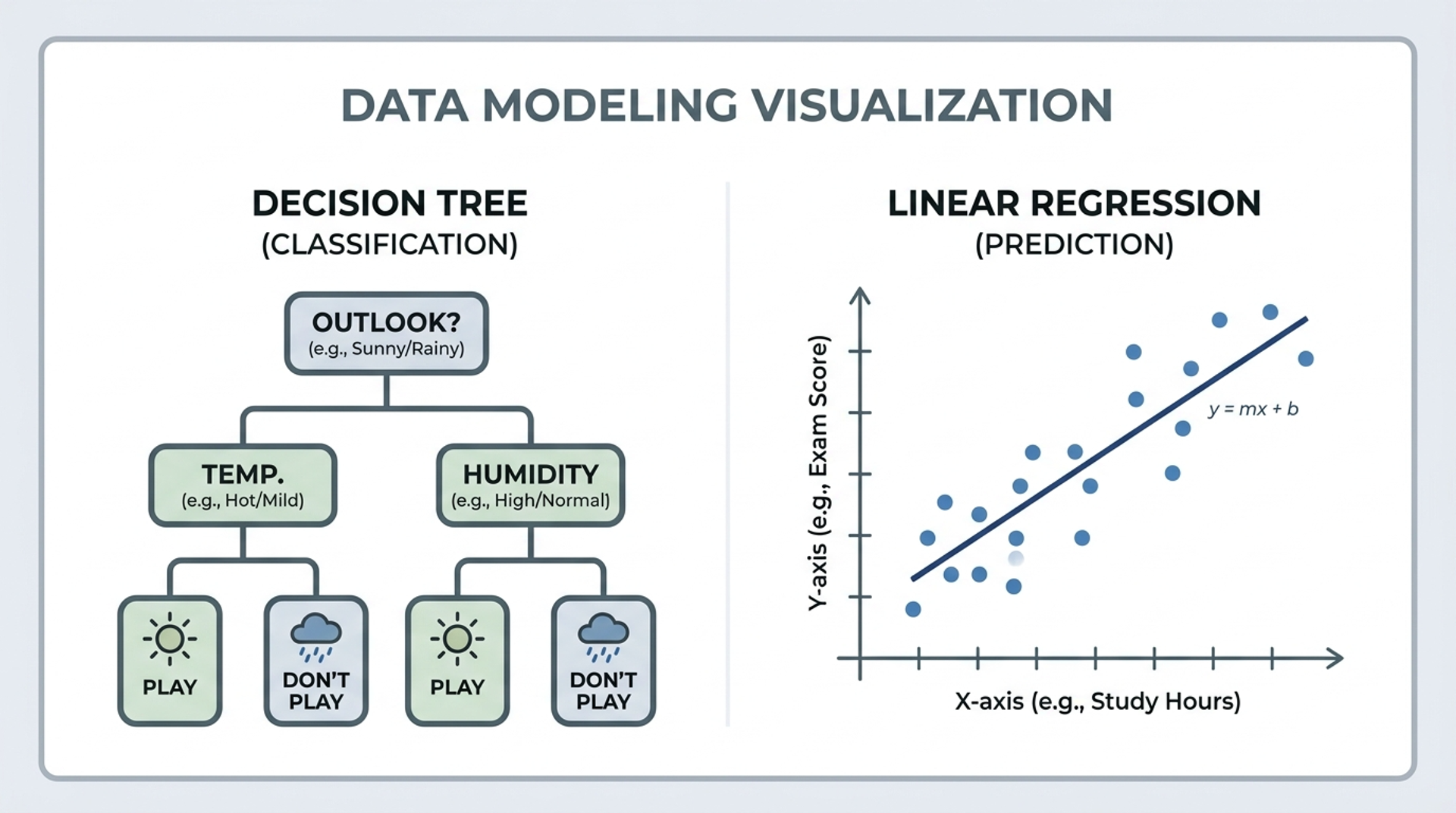
Decision Trees: Thinking Like Humans
Decision trees are one of the most intuitive algorithms. They work like a flowchart, where decisions are made step by step. For example, deciding whether a person should get a loan based on income, age, and credit score.
Because of their visual nature, decision trees are easy to understand and explain. This makes them perfect for beginners who want clarity without complexity.
Learn this Machine Learning with Python skill step-by-step and start building real-world projects.
K-Nearest Neighbors (KNN): Learning by Similarity
KNN is based on a simple idea similar things are close to each other. It classifies data based on similarity. For example, recommending movies based on what similar users like or identifying handwritten digits.
This algorithm doesn’t require complex training, which makes it beginner-friendly and practical.
Naive Bayes: Simple Yet Powerful
Naive Bayes is often used in text classification tasks like spam detection or sentiment analysis. It works on probability and assumes independence between features.
Even though the assumptions are simple, the results are surprisingly effective. It’s a great example of how simple logic can solve real-world problems.
Start your career with our course and gain hands-on experience with these algorithms.
Career Opportunities & Salary Potential
Once you understand these simple algorithms, you unlock multiple career opportunities. You don’t need to wait until you become an expert. Even beginner-level knowledge combined with projects can help you enter the industry.
In India, entry-level roles such as Data Analyst or Machine Learning Intern offer salaries ranging from ₹4 to ₹8 LPA. With 2–3 years of experience, this can grow significantly. Globally, beginners can earn around $60,000 or more annually.
Roles you can aim for include Data Analyst, Junior Machine Learning Engineer, AI Intern, and Business Intelligence Analyst. These roles focus on applying machine learning concepts to solve real problems, making them perfect for beginners.
The best part is that demand is growing rapidly, while skilled professionals are still limited. This creates a gap and that gap is your opportunity.
Join our beginner-friendly training and start building job-ready skills today.

Common Mistakes Students Make
One of the biggest mistakes students make is trying to learn everything at once. They jump into advanced topics like deep learning without understanding the basics. This leads to confusion and burnout.
Another common mistake is focusing only on theory. Watching videos and reading articles is not enough. Machine learning is a practical skill, and without projects, your knowledge remains incomplete.
Many students also underestimate consistency. They start learning with motivation but stop after a few days. The reality is, even 1–2 hours daily can create massive progress over time.
Finally, students often delay starting because they think they need perfect knowledge. But in reality, starting early and learning along the way is what leads to success.
Avoid these mistakes, learn this skill step-by-step with proper guidance.
Step-by-Step Roadmap to Start Machine Learning
Starting machine learning becomes easy when you follow a clear roadmap. First, begin with Python programming. You don’t need advanced coding just basics like variables, loops, and functions.
Next, learn how to work with data using libraries like Pandas and NumPy. This helps you understand how data is structured and processed. Once you are comfortable, move on to simple algorithms like Linear Regression and Decision Trees.
After learning the basics, start building small projects. For example, predicting house prices or classifying emails. These projects help you apply what you learn and build confidence.
Gradually, you can explore more advanced concepts, but only after mastering the basics. Consistency is the key. Learning for a few hours every day is more effective than studying randomly.
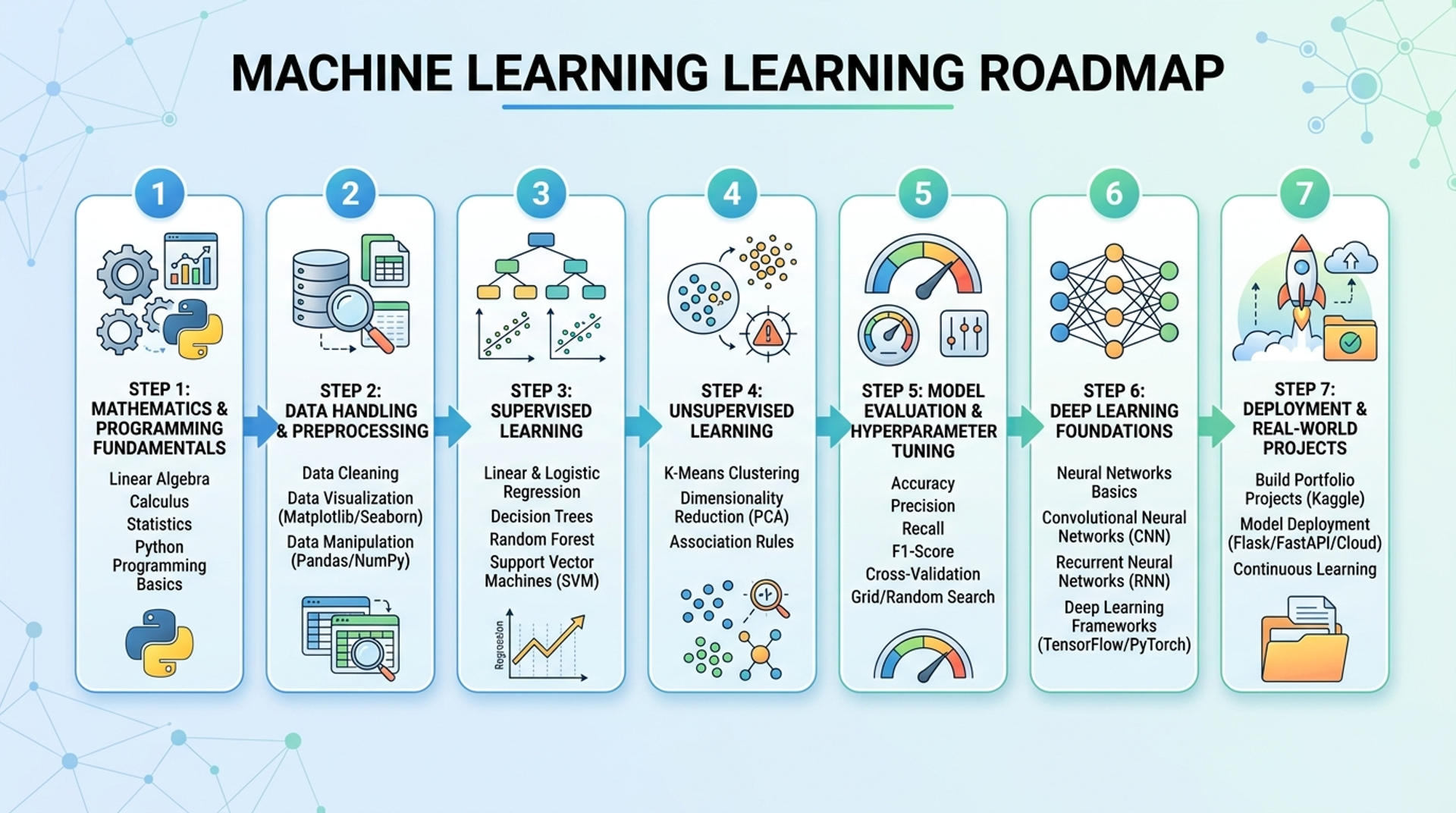
Follow our structured roadmap and avoid confusion while learning.
Tools & Platforms to Learn Machine Learning
There are many tools available, but beginners should focus on simple and effective platforms. Google Colab is one of the best tools because it allows you to write and run Python code directly in your browser without any setup.
Kaggle is another excellent platform where you can find real datasets and practice your skills. It also has competitions and community discussions that help you learn faster.
For structured learning, platforms like Coursera and YouTube offer beginner-friendly content. However, random learning often leads to confusion because there is no clear path.
A well-structured course can help you save time, avoid mistakes, and stay consistent. It provides a clear roadmap, practical projects, and guidance.
Join our beginner-friendly training to learn everything in one place.
Free Roadmap for Beginners
If you are starting from zero, here’s a simple approach. Begin with Python basics, then move to data handling, followed by learning simple machine learning algorithms. Practice with small projects and gradually build your portfolio.
This roadmap is designed to remove confusion and help you take action immediately. You don’t need expensive tools or advanced knowledge to begin. What you need is consistency and the right direction.
Download your free roadmap and start learning today.
FAQ (Student-Focused)
Q1. Is machine learning difficult for beginners?
No, when you start with simple algorithms and follow a structured approach, it becomes easy and manageable.
Q2. Do I need a strong coding background?
No, basic Python knowledge is enough to begin your journey.
Q3. How long does it take to learn machine learning?
With daily practice, you can gain beginner-level skills in 2–3 months.
Q4. Can I get a job after learning basic algorithms?
Yes, with projects and practical knowledge, you can apply for entry-level roles and internships.
Q5. Which algorithm should I start with?
Linear Regression is the best starting point because it builds a strong foundation.
Conclusion
Machine learning is no longer just an advanced skill it is becoming a basic requirement in the tech industry. While many students are still confused about where to start, you now have a clear path. By focusing on simple machine learning algorithms, you can build a strong foundation without feeling overwhelmed.
The future belongs to those who take action early. If you start today, stay consistent, and focus on practical learning, you can transform your career within months. Opportunities are growing, demand is increasing, and the right time to start is now.
Start your career with our course today and turn your learning into real income.
Tags

Cezzane Khan is a dedicated and innovative Data Science Trainer committed to empowering individuals and organizations.