
Python OOP Concepts: A Simple Guide for Beginners
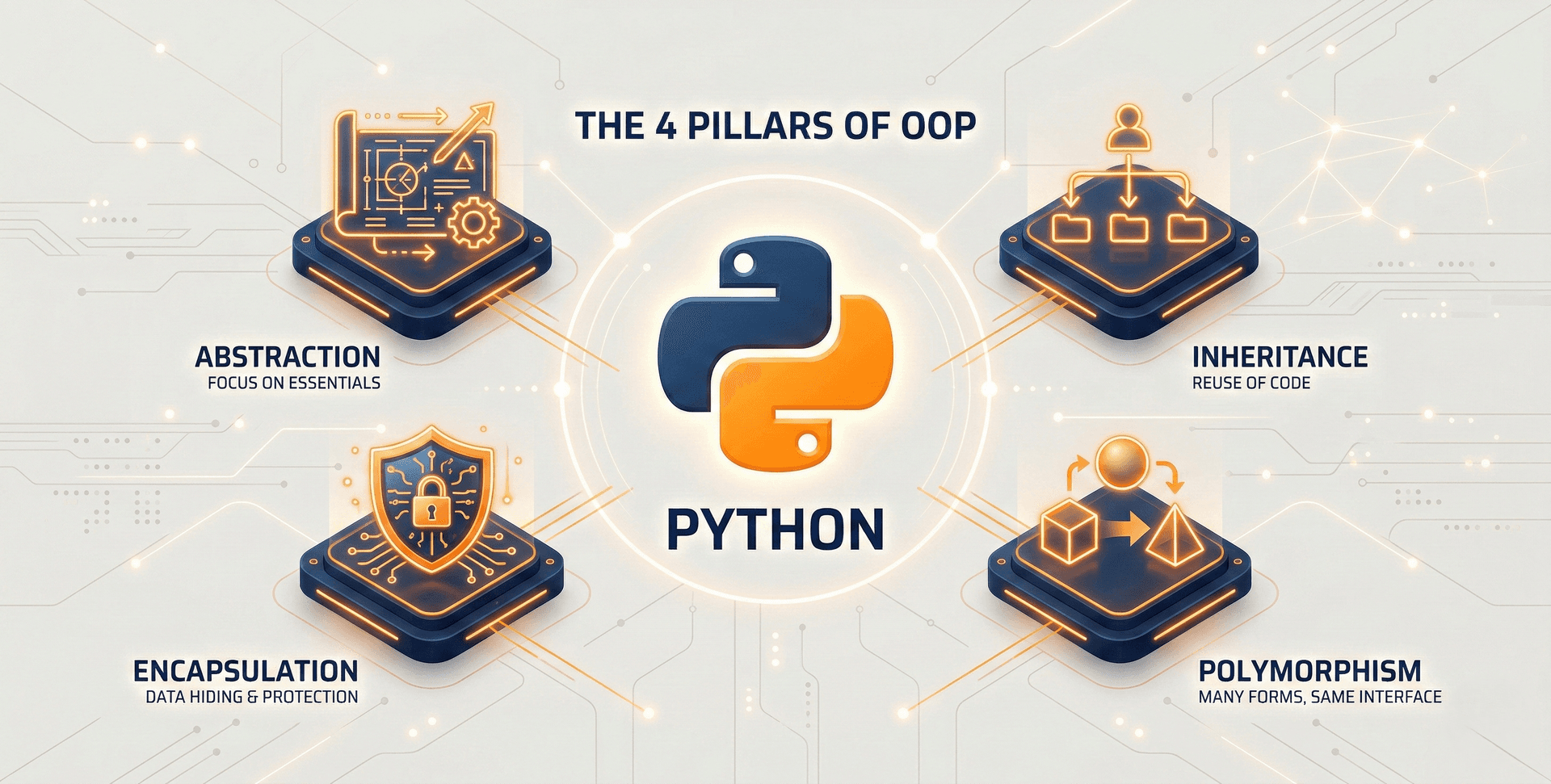
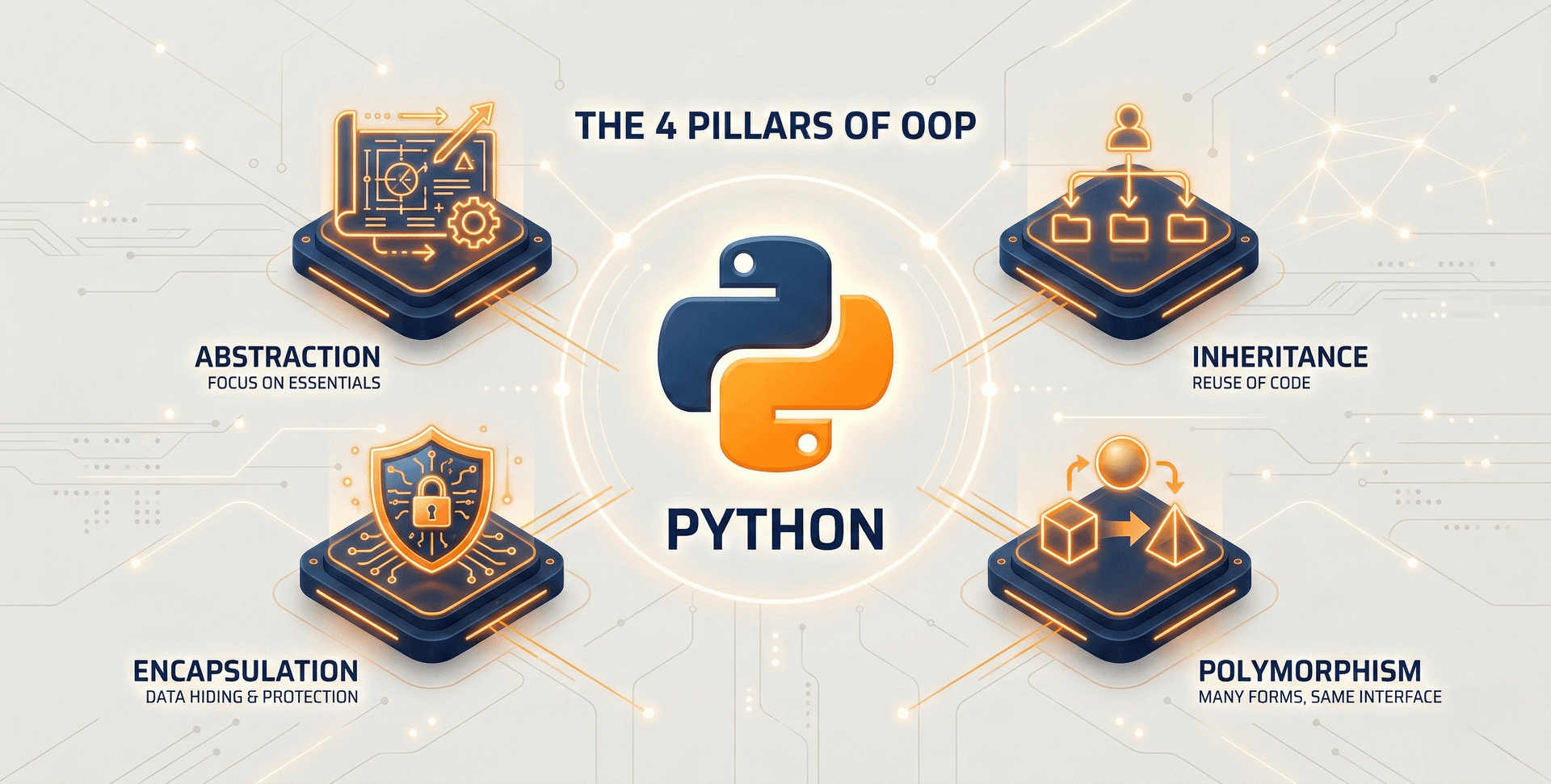
Struggling to understand classes and objects? Dive into our simple beginner's guide to Python OOP concepts and learn how to write cleaner, more efficient code using real-world examples
Unlock the power of Object-Oriented Programming in Python. This comprehensive, easy-to-read guide breaks down complex Python OOP concepts—like inheritance, encapsulation, polymorphism, and abstraction—into simple terms. Perfect for beginners looking to level up their software development and automation skills
If you are starting your journey into software development, you have likely heard the term "Object-Oriented Programming" thrown around. But what exactly does it mean? Understanding Python OOP concepts is the critical bridge between writing basic scripts and building robust, scalable applications. Whether you want to build web applications, dive into complex data models, or design sophisticated frameworks, OOP is the foundation. In this comprehensive guide, we will break down the complexities of Object-Oriented Programming into simple, digestible pieces. We will explore classes, objects, and the four main pillars of OOP inheritance, encapsulation, polymorphism, and abstraction using real-world examples that actually make sense. By the end of this read, you won't just know the definitions; you will know exactly how to apply these concepts to write cleaner, more efficient Python code.
What is Object-Oriented Programming (OOP)?
Before diving into the code, we need to understand the philosophy behind OOP. Object-Oriented Programming is a programming paradigm a way of structuring and organizing your code. Instead of writing a long, top-down list of instructions (known as procedural programming), OOP allows you to bundle related properties and behaviours into individual structures called objects.
Think of a real-world object, like a car. A car has attributes (color, brand, top speed) and behaviours (accelerate, brake, honk). In Python, OOP allows us to model our code after these real-world entities. This makes the code easier to visualize, manage, and modify as your projects grow larger.
Why is OOP So Important?
- Modularity: Troubleshooting is easier when code is divided into distinct, manageable objects.
- Reusability: You can reuse code through inheritance, saving you from writing the same logic multiple times.
- Productivity: Teams can work on different objects simultaneously without breaking the entire system.
- Flexibility: It is highly adaptable, which is why it is the backbone of modern software testing services and complex application development.
The Core Building Blocks: Classes and Objects
To master Python OOP concepts, you must first understand the relationship between a Class and an Object. They are the bread and butter of this programming paradigm.
What is a Class?
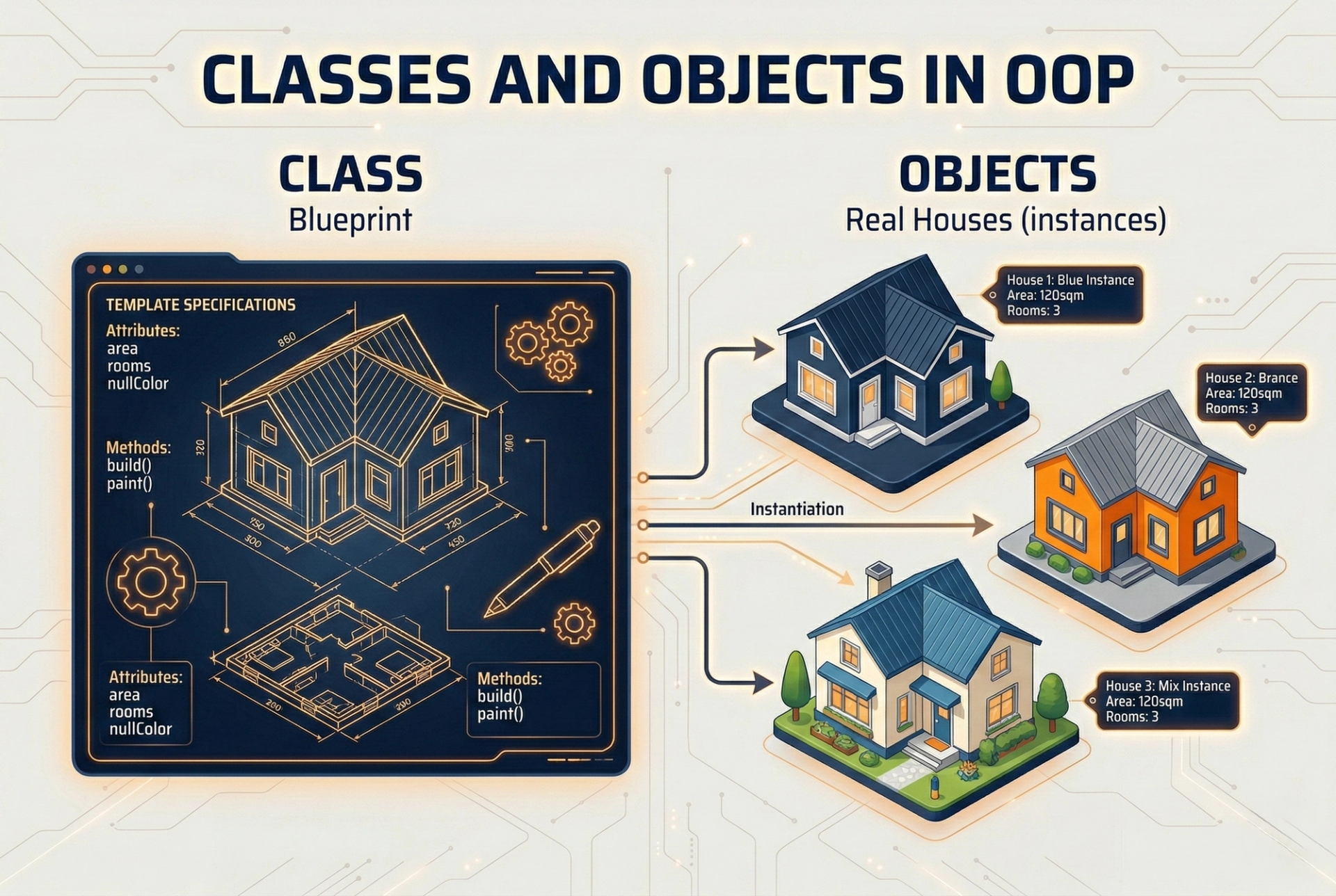
A Class is essentially a blueprint or a template for creating objects. It defines the structure, the attributes (variables), and the methods (functions) that the objects created from this class will have. It doesn't contain any actual data itself; it just lays out the rules.
What is an Object?
An Object is an instance of a class. If the class is the blueprint for a house, the object is the actual physical house built from that blueprint. You can build many houses (objects) from one blueprint (class), and while they all share the same structure, they can have different paint colours or furniture (data).
Here is a simple Python example:
In this example, Dog is our blueprint. dog1 and dog2 are actual objects with their own specific data.
The 4 Pillars of Python OOP Concepts
Now that we have the foundation, let's explore the four fundamental pillars that make Object-Oriented Programming so powerful. Understanding these is crucial for writing professional-grade Python.
Pillar 1: Inheritance (Code Reusability)
Inheritance allows a new class (the child class) to inherit the attributes and methods of an existing class (the parent class). This promotes code reusability and establishes a logical hierarchy.
Imagine you are writing a script for a zoo. You might have a general Animal class with attributes like age and methods like eat(). Instead of rewriting these for every specific animal, you can create a Lion class that inherits from Animal.
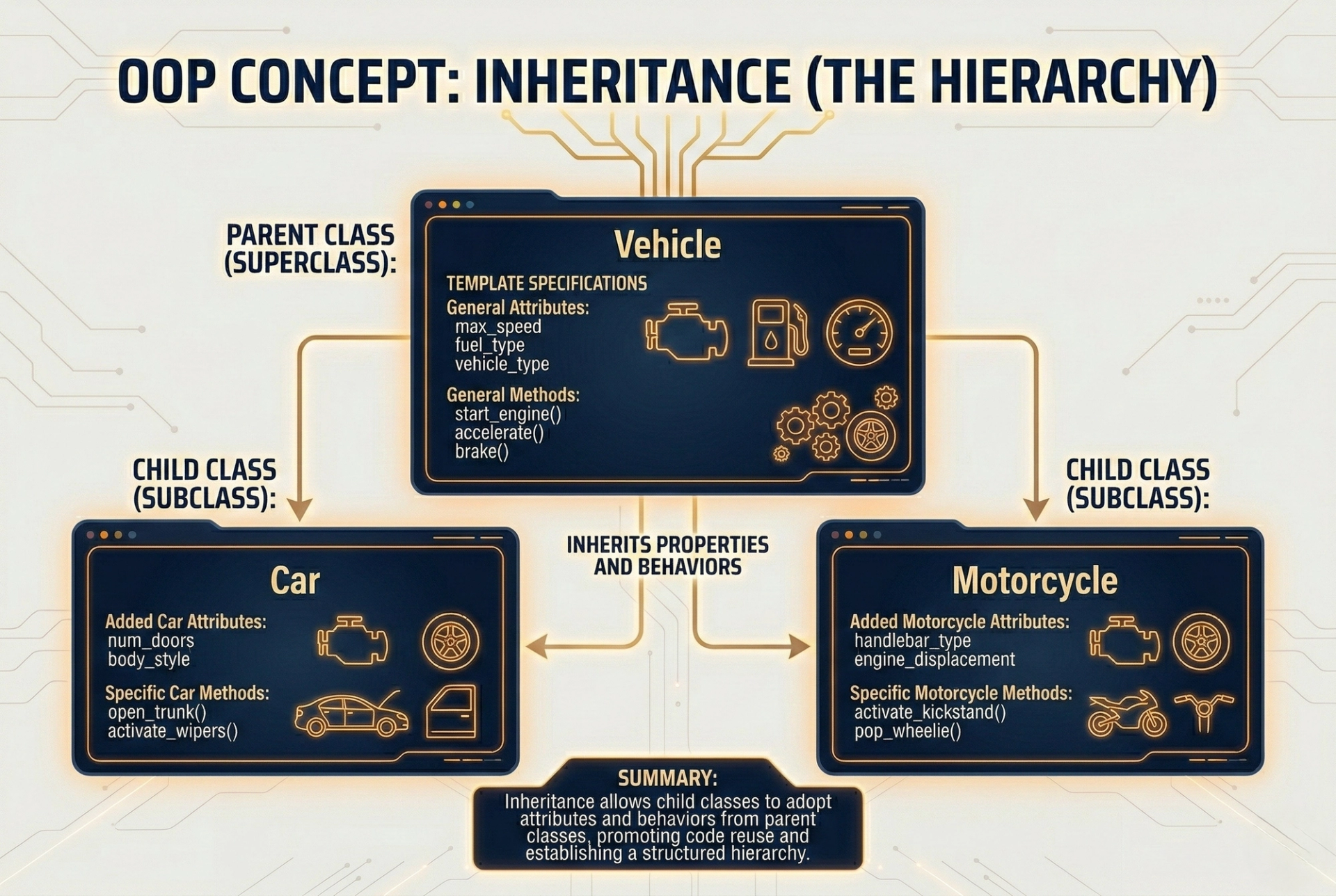
Inheritance is incredibly useful when building scalable frameworks, such as those used in advanced automation testing, where test scripts share common setup and teardown behaviours.
Pillar 2: Encapsulation (Data Protection)
Encapsulation is the practice of hiding the internal state of an object and requiring all interaction to be performed through an object's methods. Think of it like a capsule: the inner workings are protected from the outside world.
In Python, we use underscores to indicate private or protected variables. A single underscore ( _ )suggests a variable is protected, while a double underscore ( _ ) makes it strongly private. This prevents other parts of the program from accidentally changing critical data.
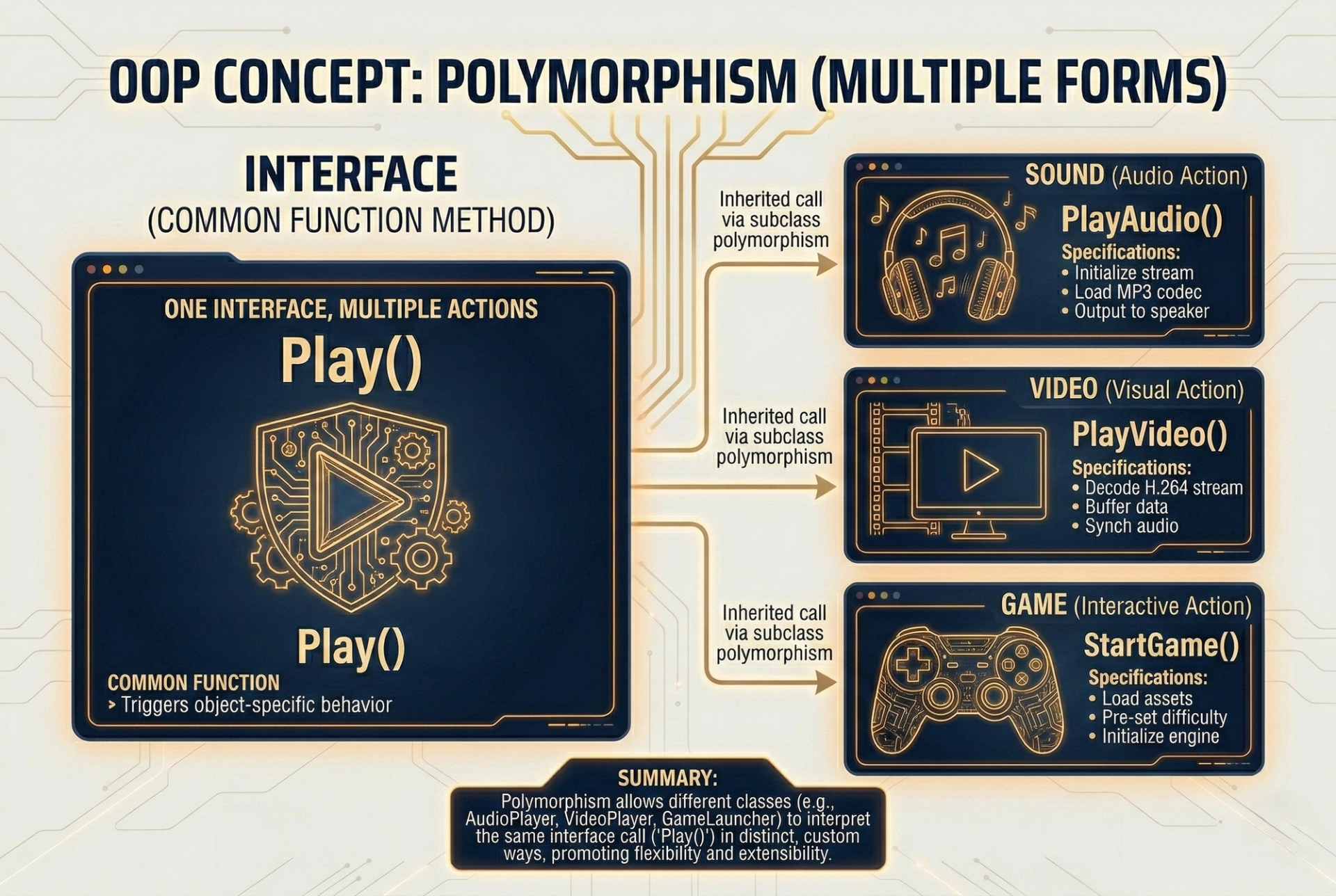
Pillar 3: Polymorphism (Flexibility)
The word Polymorphism means "many forms." In Python OOP concepts, it refers to the ability of different classes to be treated as instances of the same class through a common interface. Most commonly, it means that a child class can override a method from its parent class to provide its own specific implementation.
This flexibility is heavily utilized when processing varied data sets, a concept you will frequently encounter if you ever take a comprehensive ds ml course.
Pillar 4: Abstraction (Hiding Complexity)
Abstraction focuses on hiding the complex implementation details and showing only the essential features of the object. When you drive a car, you don't need to know how the fuel injector works; you just press the gas pedal. The complexity is abstracted away.
In Python, we achieve abstraction using abstract base classes (the abc module). These are classes that cannot be instantiated on their own and require their child classes to implement specific methods. This is highly beneficial in structured environments like API testing, where you define a standard interface that all test cases must follow, regardless of their internal logic.
Real-World Applications of Python OOP
Why do enterprise-level companies care so much about these concepts? Because OOP is the engine driving complex software.
- Web Frameworks: Frameworks like Django are entirely object-oriented. Every webpage, form, and database table is represented as an object.
- Machine Learning: Libraries like Scikit-Learn rely on objects to train models. You instantiate a model object, feed it data, and call its
predict()method. - Quality Assurance: Modern QA teams rely heavily on OOP to build maintainable test suites. By utilizing OOP, teams conducting rigorous performance testing can simulate thousands of user objects simultaneously without crashing the test environment.
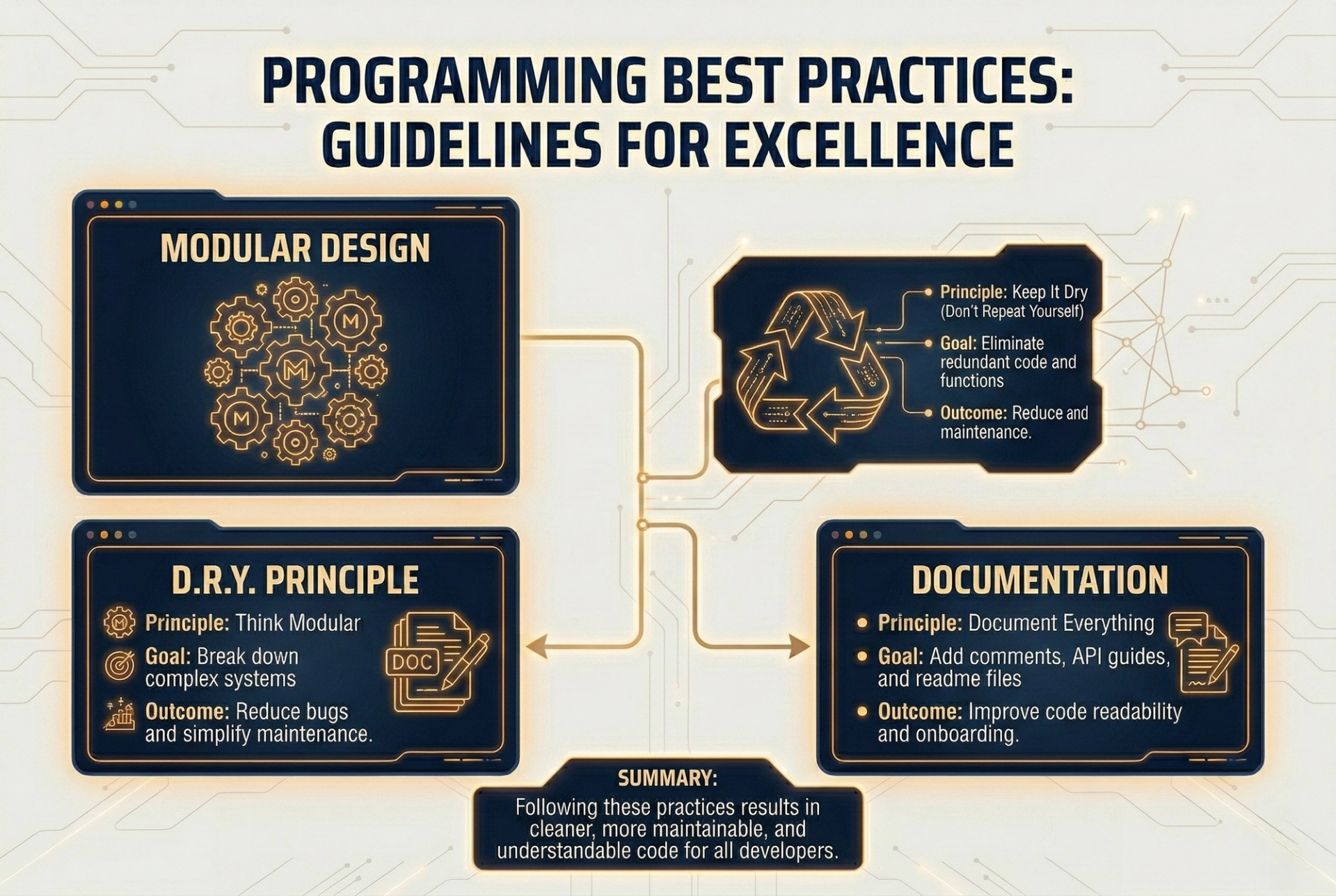
Best Practices for Writing Python OOP Code
To truly master Python OOP concepts, writing the code isn't enough; you must write clean code.
- Keep Classes Focused: A class should have one primary responsibility. Don't create a "God Class" that tries to do everything.
- Use Descriptive Names: Class names should be nouns (e.g.,
Customer,Invoice), and methods should be verbs (e.g.,calculate total,send email). - Don't Overuse Inheritance: While inheritance is powerful, nesting it too deeply (a child of a child of a child) makes code impossible to read. Favour composition (putting objects inside other objects) when it makes sense.
- Docstrings: Always document your classes and methods so other developers (and future you) understand what the object is supposed to do.
Frequently Asked Questions (FAQ)
Q1: Is Python 100% Object-Oriented?
No, Python is a multi-paradigm language. It supports OOP, procedural, and functional programming. However, almost everything in Python is an object under the hood, including integers and strings.
Q2: Do I have to use OOP in Python?
For small scripts, procedural programming is perfectly fine. However, for large applications, team projects, or complex software development, using OOP is highly recommended for maintainability.
Q3: What is the self keyword in Python?
self represents the instance of the class. By using the self keyword, we can access the attributes and methods of the class in python. It binds the attributes with the given arguments.
Q4: Can a class inherit from multiple classes in Python?
Yes! Unlike some other languages (like Java), Python supports multiple inheritance, meaning a child class can inherit from more than one parent class.
Q5: What is the _ _init_ _ method?
It is a reserved method in Python classes, known as a constructor. It is automatically called when a new object of that class is created, used primarily to initialize the object's attributes.
Conclusion
Mastering Python OOP concepts is a pivotal moment in any developer's career. Transitioning from writing simple, top-to-bottom scripts to designing modular, reusable, and scalable objects will fundamentally change how you approach problem-solving. By understanding the core building blocks Classes and Objectsand rigorously applying the four pillars of Inheritance, Encapsulation, Polymorphism, and Abstraction, you set yourself up to write professional-grade code.
Whether your goal is to build the next big web application, dive deep into data science, or create unshakeable automated testing frameworks, the principles of Object-Oriented Programming will be your most valuable tool. Start small, practice creating simple classes, and slowly integrate these principles into your daily coding habits. Happy coding!
Tags

Shoeb Shaikh is a seasoned Software Testing and Data Science Expert and a Mentor with over 14 years of experience in the field. Specialist in designing and managing processes, and leading high-performing teams to deliver impactful results.