
Is Big Data Spark the Best IT Skill for Freshers ?
Breaking into IT in 2026 requires more than just basic coding. Learn why Big Data Spark is the high-paying skill every fresher should target.
A complete roadmap for Indian graduates looking to break into the lucrative world of data engineering using Apache Spark.
Introduction
Walk into any tech park in Mumbai, Pune, or Bengaluru today, and you will hear the same complaint from HR managers: there are thousands of fresh graduates with basic coding skills, but almost zero who can handle real-world data at scale. As a fresher stepping into the 2026 Indian job market, relying solely on standard programming languages is no longer enough to guarantee a high-paying role.
You need a differentiator. You need a skill that enterprise companies are desperately hiring for. This is why mastering Big Data Spark for freshers is the smartest career investment you can make right now.
Whether you are a recent computer science graduate or an ambitious career switcher, understanding how to process millions of rows of data in seconds makes you incredibly valuable. In this guide, we are going completely under the hood. You will learn exactly what Spark is, why top-tier companies demand it, and the step-by-step roadmap to becoming job-ready. At Cinute Digital, we believe in bridging the gap between academic theory and actual industry demands. Let’s dive into how you can make your resume impossible to ignore.
Big Data Spark is an open-source distributed analytics engine designed for processing massive datasets at lightning speed. For freshers, it is the best IT skill because it powers modern data engineering, offers high starting salaries, and bridges the gap between basic coding and advanced machine learning career paths.
Foundation / What Is It
Imagine trying to read the entire library of the University of Mumbai word-by-word, by yourself. It would take a lifetime. Now imagine dividing those books among 10,000 students, having them read simultaneously, and compiling their notes in minutes. That, in simple terms, is distributed computing and it is exactly what Apache Spark does for data.
When we talk about Big Data Spark for freshers, we are talking about moving away from traditional databases that crash when you load a few gigabytes of data. Spark processes massive volumes of data in-memory, making it up to 100 times faster than older frameworks like Hadoop. It acts as the brain that coordinates multiple computers (a cluster) to solve a single massive data problem simultaneously.
If you are planning to build a foundation in data science courses, understanding this distributed architecture is non-negotiable. Spark handles the heavy lifting so that analysts and scientists can focus on finding insights rather than waiting hours for queries to load.
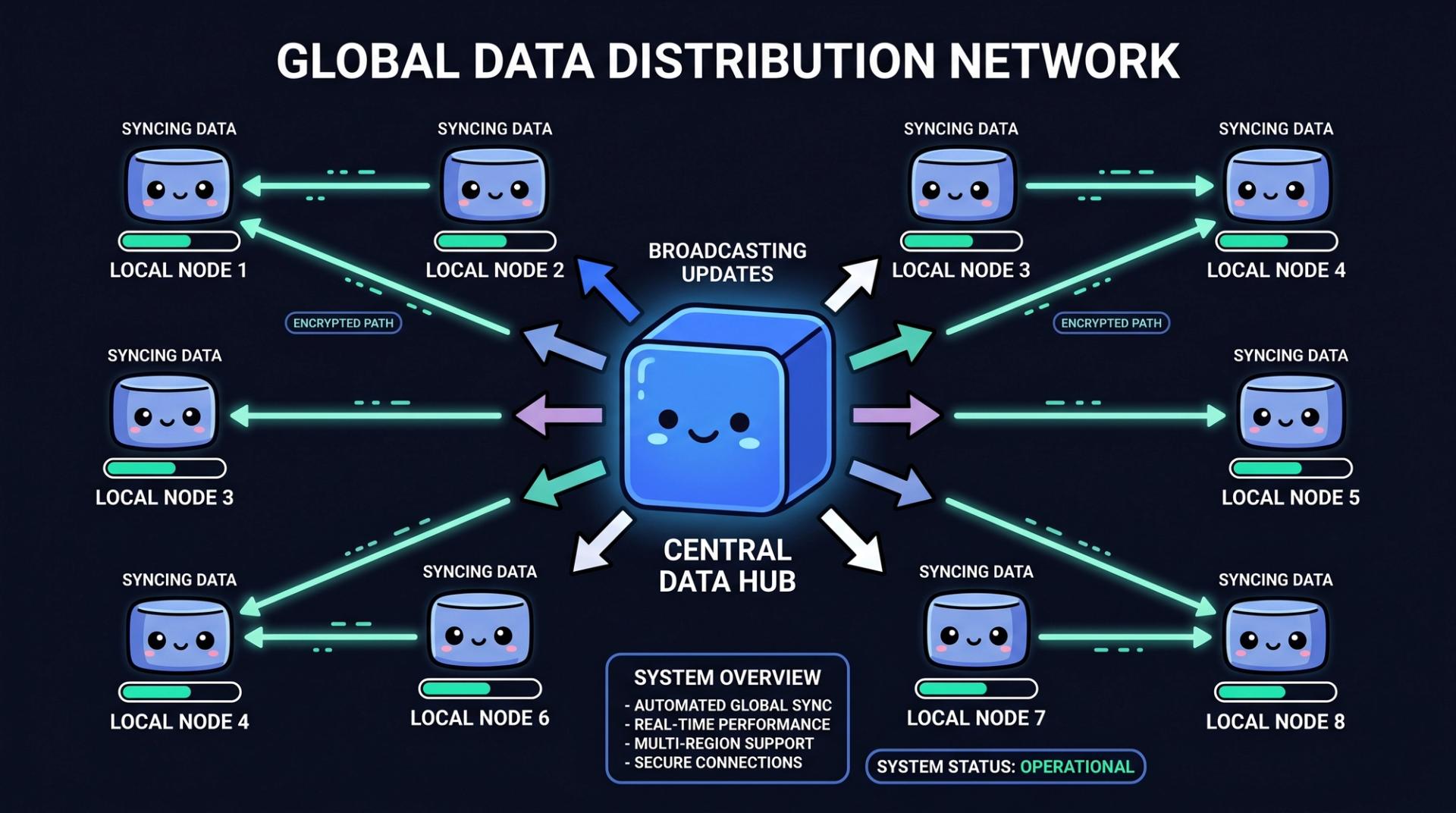
Key Takeaway: Apache Spark divides massive data tasks across multiple computers to process them at lightning speed in memory.
Why It Matters / Industry Context
Why should an entry-level candidate care about enterprise data architecture? Because the Indian tech industry has shifted aggressively toward data-driven decision-making. From Swiggy predicting your weekend orders to HDFC analyzing millions of transactions for fraud detection, every major application runs on big data.
The reality of the 2026 job market is that the supply of generic developers is high, but the supply of entry-level data engineers is critically low. Companies are actively seeking freshers who understand how to clean, transform, and load data at scale.
Let's look at the numbers. While a standard entry-level software developer in India might start at ₹3.5 Lakhs to ₹5 Lakhs per annum, a fresher with proven Big Data Spark skills can easily command ₹6 Lakhs to ₹9 Lakhs per annum (approximate verify with a keyword/industry tool like AmbitionBox). The salary scales exponentially as you gain 2–3 years of experience. This isn't just a trend; it is a structural shift in how companies build their tech stacks.
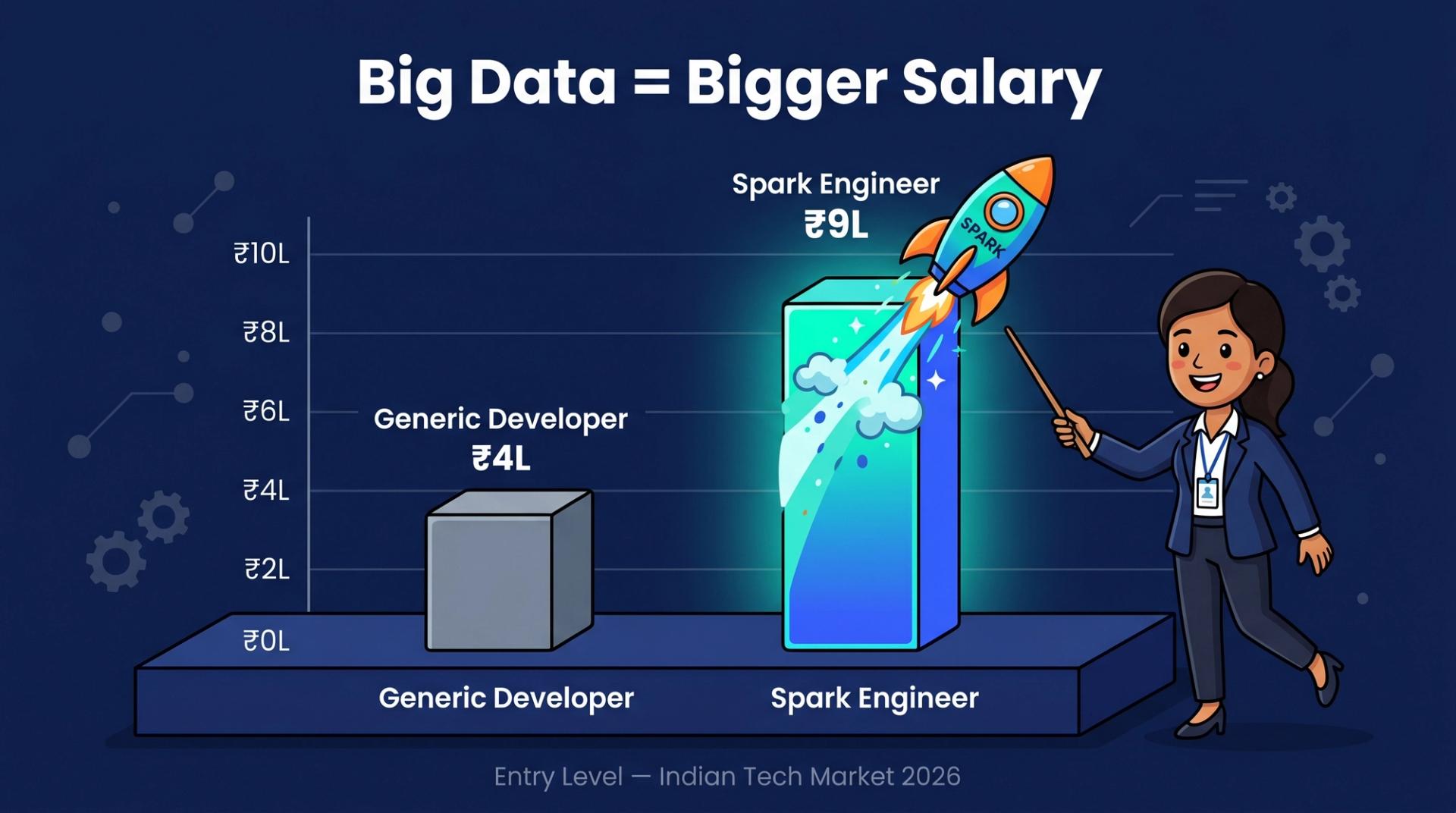
Key Takeaway: Mastering Big Data Spark positions you in a low-competition, high-demand technical niche with superior starting salaries.
Deep Dive / How It Works
Learning Spark doesn't mean you have to learn a completely new programming language from scratch. Spark provides APIs for Java, Scala, SQL, and most importantly, Python. In fact, PySpark (the Python API for Spark) is currently the industry standard for data engineering.
If you decide to learn Python programming first, picking up PySpark becomes an incredibly smooth transition. Here is a simple breakdown of how Spark processes data:
- The Driver Program: This is the master node. It contains your main application and creates the SparkContext, which tells Spark how to access a cluster.
- The Cluster Manager: This allocates resources across the network (like YARN or Kubernetes).
- Worker Nodes: These are the machines that actually execute the code and store the data.
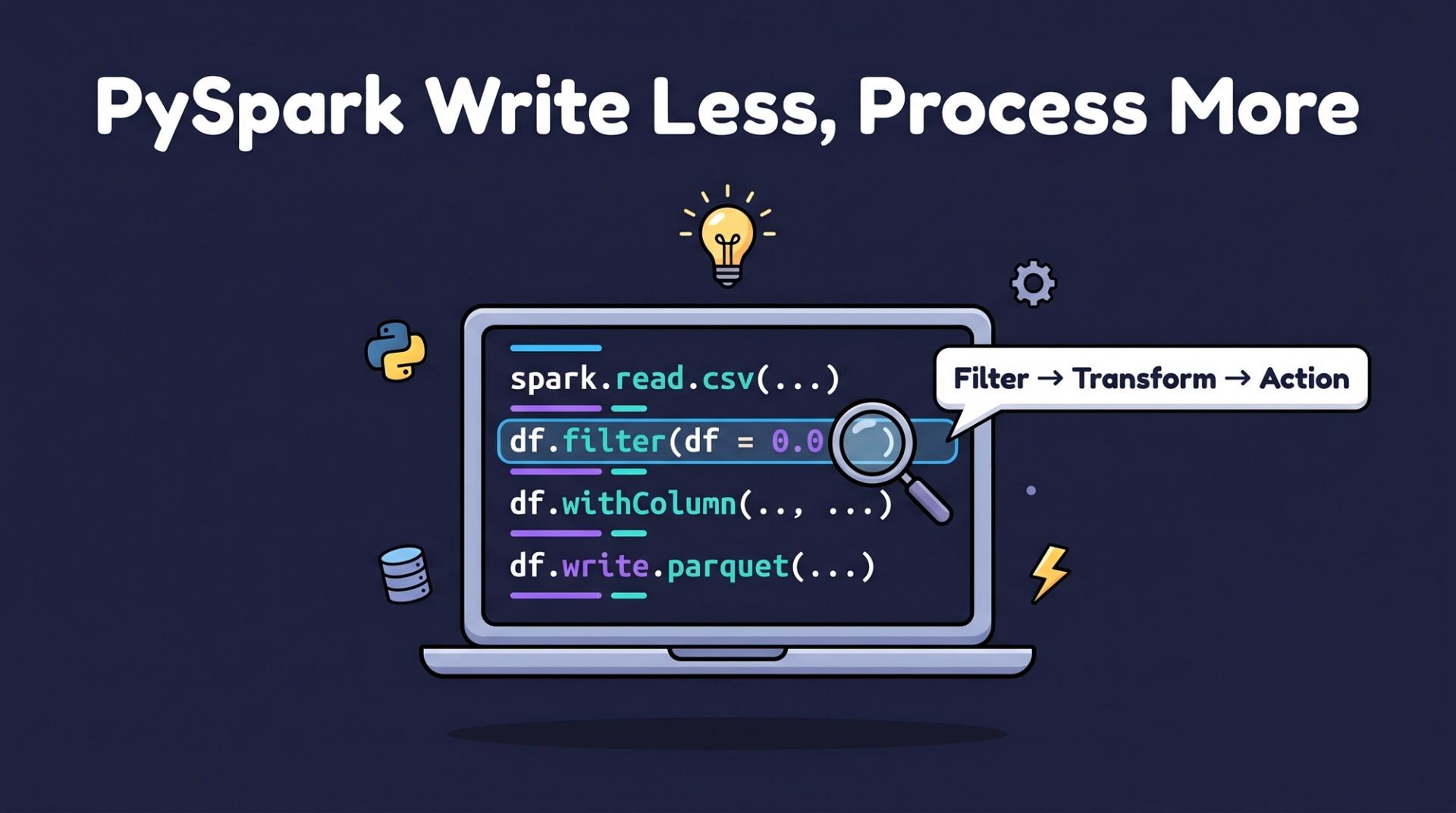
Let’s look at a basic PySpark snippet to see how intuitive it can be:
Line-by-line breakdown:
- Line 1 & 2: We create a
SparkSession. Think of this as the main entry point where you shake hands with the Spark engine. - Line 3: We load a dataset. Unlike Pandas, this DataFrame is distributed across your cluster.
- Line 4: We filter the data. This is a transformation. Spark is lazy; it notes down this command but doesn't execute it yet.
- Line 5: The
.show()command is an action. Spark now optimizes the fastest way to get your data and executes the filter.
Once you understand data manipulation, you can seamlessly transition into machine learning fundamentals using Spark MLlib, allowing you to run predictive algorithms on massive datasets without crashing your system.
Key Takeaway: Spark is highly accessible for freshers because it allows you to use familiar languages like Python to control massive computing clusters.
Practical Tips, Common Mistakes & Ethics
When you start executing your first few Spark jobs, you will inevitably hit roadblocks. Here are the most common mistakes freshers make and how to avoid them:
- Triggering too many actions: Because Spark uses lazy evaluation, every time you call
.show()or.count(), Spark recalculates the entire lineage. Use.cache()if you need to use the same DataFrame multiple times. - Ignoring data skew: If 90% of your data is linked to one specific key (like a single popular product), one worker node will do all the heavy lifting while the others sit idle.
- Using standard Pandas instead of PySpark: Pandas runs on a single machine. If you try to load a 50GB file using Pandas, your computer will freeze.
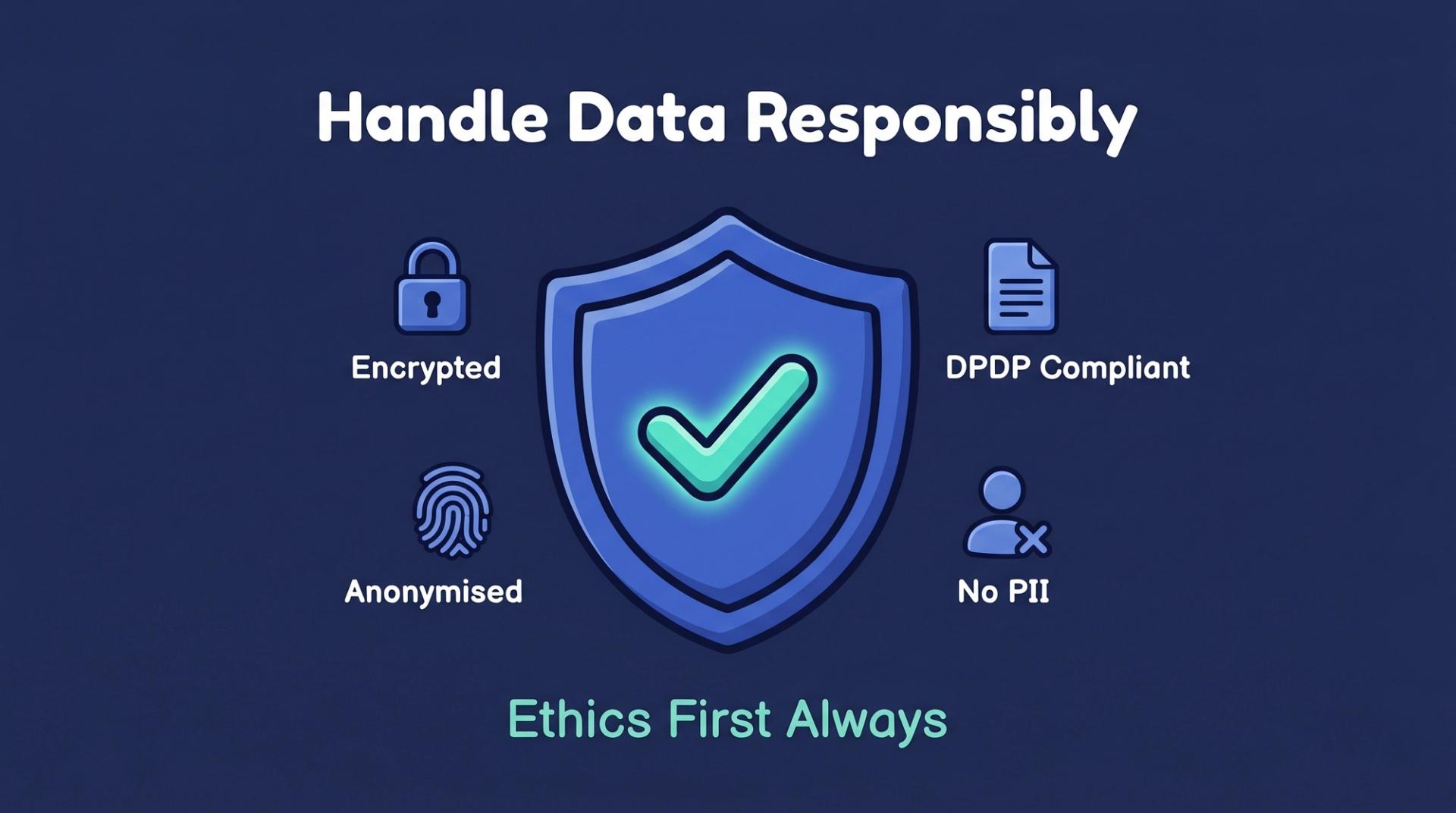
For those focusing on mastering data analytics with big data, there is also a critical ethical layer.
Legal & Ethical Note: When handling big data, you are often processing Personally Identifiable Information (PII). Always ensure data is anonymised before analysis. Adhere strictly to the Digital Personal Data Protection Act (DPDP) in India. Never scrape enterprise data without explicit permission via robots.txt or API Terms of Service.
Key Takeaway: Writing efficient Spark code requires understanding how data is distributed, caching results, and respecting user privacy laws.
Career Path & Learning Roadmap
So, what is the exact roadmap to landing a job? Start by mastering SQL and Python. Once you have a strong grasp of data structures, introduce PySpark. Build three solid portfolio projects: an ETL (Extract, Transform, Load) pipeline, a real-time streaming dashboard, and a large-scale data cleaning script.
While data engineering is incredibly lucrative, it is important to know your options. Quality Assurance (QA) is another massive entry point into tech. If you decide to explore software testing as your career foundation, you must remember this absolute industry rule: automation testing can do manual testing but a manual tester can never do automation.
Whether you choose data engineering or technical QA, the goal is to build automated, scalable skills. Becoming job-ready with Spark typically takes 4 to 6 months of dedicated, hands-on practice. It is not just about watching tutorials; it is about writing code that fails, debugging clusters, and optimizing query speeds.
Frequently Ask Question
Q1. What is Big Data Spark?
Big Data Spark is an open-source, distributed computing framework designed to process massive amounts of data extremely fast. Unlike older systems that write data to hard drives, Spark processes data in RAM (in-memory), making it up to 100 times faster for analytics, machine learning, and data engineering pipelines.
Q2. Is Big Data Spark for freshers easy to learn?
Yes, especially if you already know basic Python or SQL. PySpark (the Python API for Spark) is highly intuitive. While the concept of distributed computing takes a few weeks to grasp, a dedicated fresher can build a job-ready foundation and deploy their first data pipeline within 3 to 4 months of structured learning.
Q3. How much salary can a fresher expect in Big Data?
In major Indian tech hubs like Mumbai, Pune, and Bengaluru, an entry-level professional with verified big data and PySpark skills can expect a starting salary ranging from ₹6 Lakhs to ₹9 Lakhs per annum (approximate verify in a keyword tool). This is significantly higher than standard entry-level software engineering roles.
Q4. Do I need to know Java to learn Apache Spark?
No, you do not need to know Java. While Spark itself is built on Scala (which runs on the Java Virtual Machine), the industry standard for interacting with Spark today is Python via PySpark. Mastering Python and SQL is more than enough to secure a top-tier data engineering role.
Q5. How long does it take to learn Spark for a job?
For a complete fresher with a basic understanding of programming, it typically takes 4 to 6 months of consistent, hands-on practice. This timeline includes learning Python basics, understanding SQL queries, mastering PySpark fundamentals, and building at least three real-world data pipeline projects for your portfolio.
Conclusion
To recap, Big Data Spark for freshers is the ultimate career accelerator because:
- It processes massive datasets 100x faster than legacy systems by utilizing in-memory computing.
- It suffers from a massive skills shortage, meaning higher starting salaries and less competition for entry-level roles.
- It integrates perfectly with Python and SQL, making the learning curve manageable for dedicated beginners.
The IT industry in 2026 rewards specialized skills over generic degrees. If you are ready to stop fighting for entry-level coding jobs and want to step into the world of high-end data engineering, you need expert guidance.
Read more about our mission to upskill the Indian workforce, or take the first step today. We invite you to book a free career counseling session with our tech experts at CDPL to map out your exact roadmap from fresher to data engineer.
Tags

Cezzane Khan is a dedicated and innovative Data Science Trainer committed to empowering individuals and organizations.