
Software Testing Career in 2026: Skills, Salary, Roadmap & How to Get Placed (Complete Guide)
A complete 2026 guide to building a software testing career in-demand QA skills, salary in India, manual vs automation testing, ISTQB certification, and a step-by-step roadmap to get placed.
Thinking about breaking into IT? Software testing is one of the most beginner-friendly, high-demand paths in 2026. This guide walks you through the skills, salary, certifications, and exact roadmap to land your first QA job even with no experience.
Introduction
If you are searching for a stable, high-growth, and beginner-friendly way into the IT industry, a software testing career is one of the smartest bets you can make in 2026. Every app you open, every payment you make, and every website you scroll through has been checked by a Quality Assurance (QA) professional before it reached you. As businesses ship software faster than ever, the demand for skilled testers who can protect product quality keeps rising and you don't need a computer science degree to break in.
This complete guide explains what software testing really is, the skills you need, realistic salary expectations in India, a step-by-step roadmap, and exactly how to land your first QA engineer job. Whether you are a fresher, a non-IT professional planning a career switch, or a graduate who wants a clear path to employment, this article gives you an honest, practical roadmap. By the end, you'll know precisely where to start a structured software testing course and how placement-focused training shortens the distance between learning and earning.
What Is Software Testing? (And Why It Matters)
Software testing is the disciplined process of evaluating an application to find defects, verify that it meets requirements, and confirm it behaves correctly under real-world conditions. In plain language: testers make sure software does what it is supposed to do and doesn't do what it shouldn't.
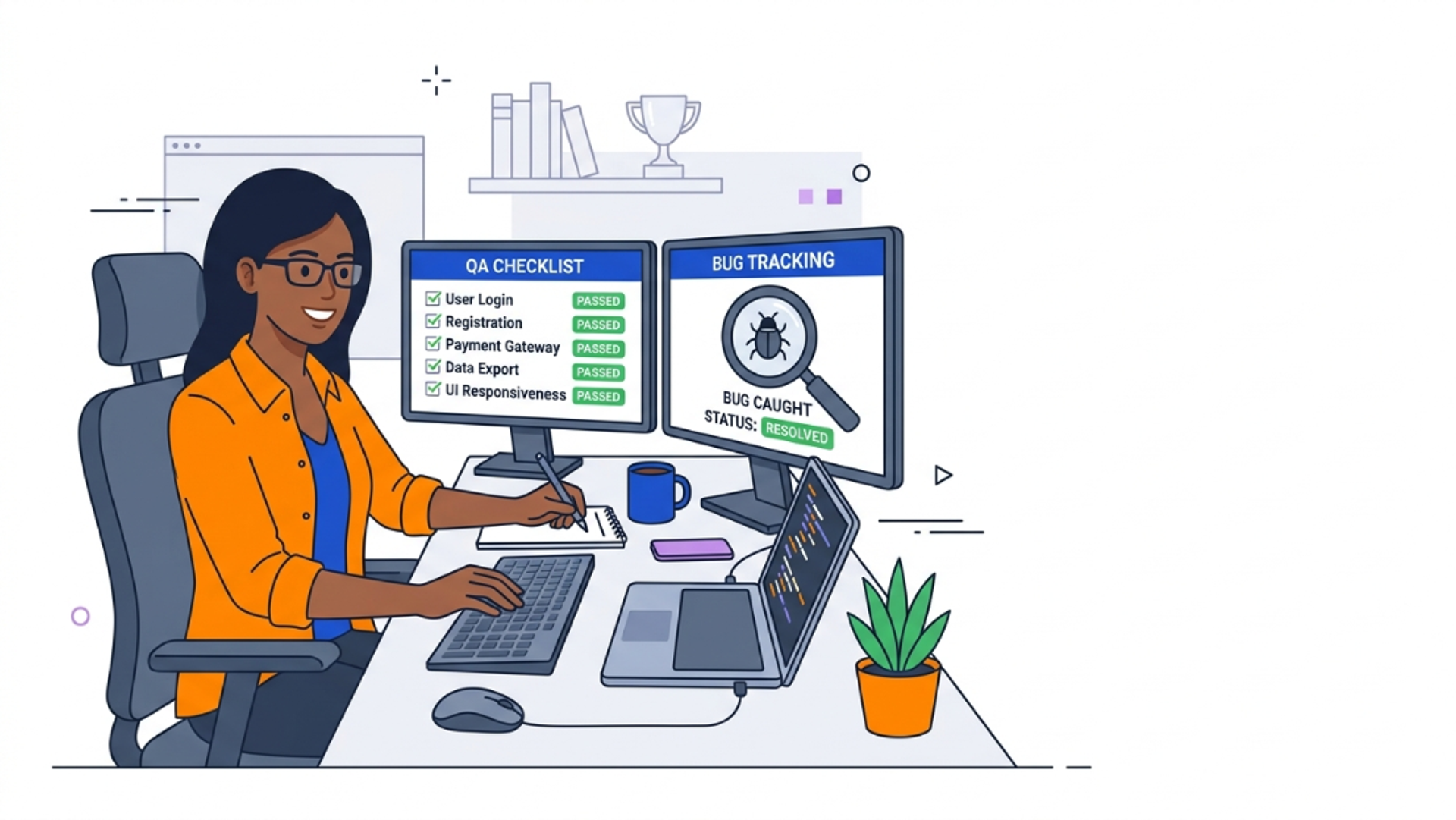
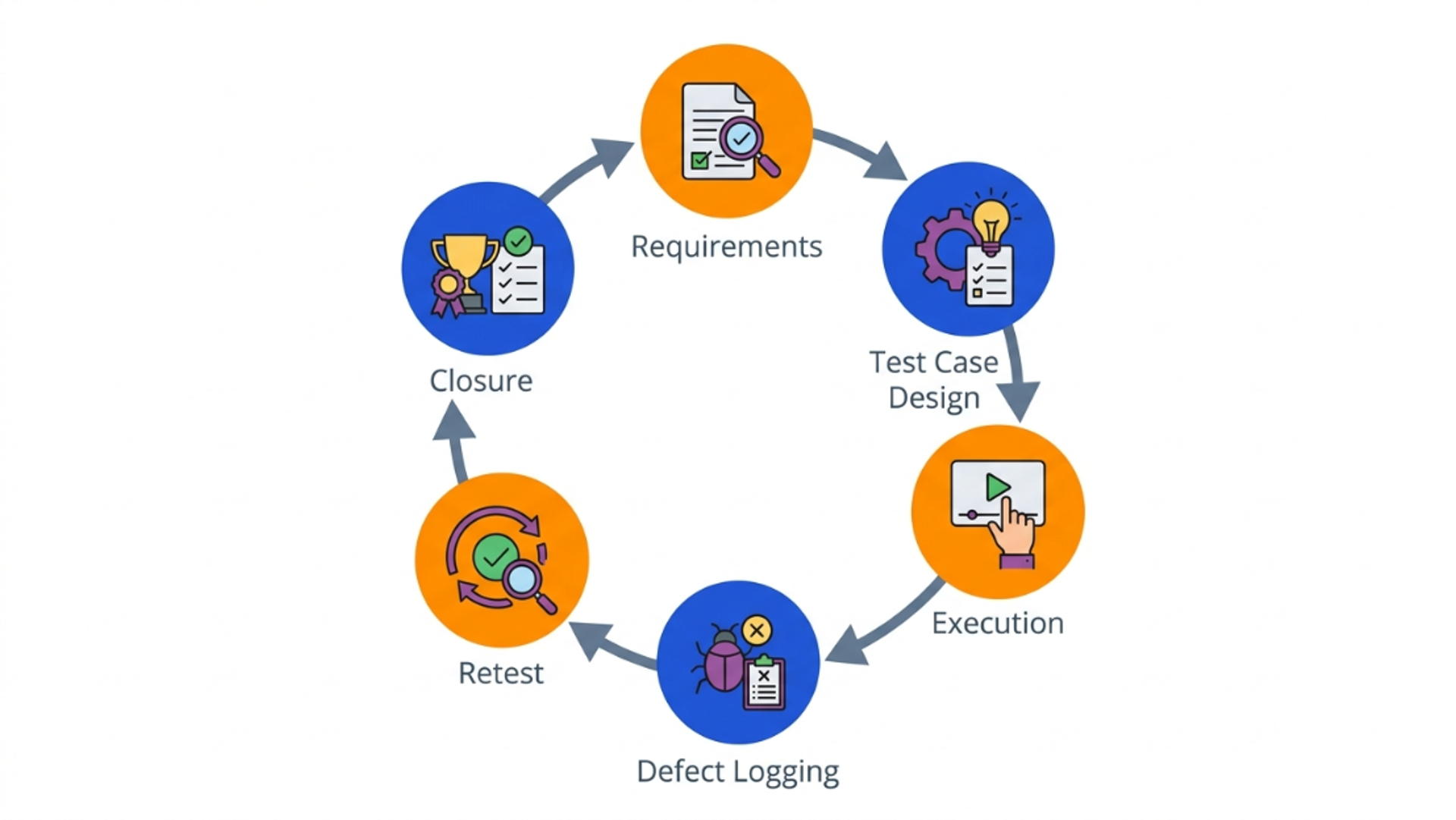
Testing sits inside the Software Development Life Cycle (SDLC). A QA professional reads requirements, designs test cases, executes them, logs bugs, and tracks each issue through the defect life cycle until it is fixed and verified. Good testing is not "clicking around randomly." It is structured, repeatable, and evidence-based.
Here's why this matters for your career: a single missed bug in a banking app or e-commerce checkout can cost a company crores in revenue and reputation. That business risk is exactly why QA roles are durable. Companies will always pay people who reduce the chance of expensive failures.
If you want to go deeper into the fundamentals, structured learning resources from Cinute Infomedia (CIM) and CDPL break down testing concepts in a way that beginners can actually follow, instead of drowning you in jargon.
Manual Testing vs Automation Testing: Which Should You Learn First?
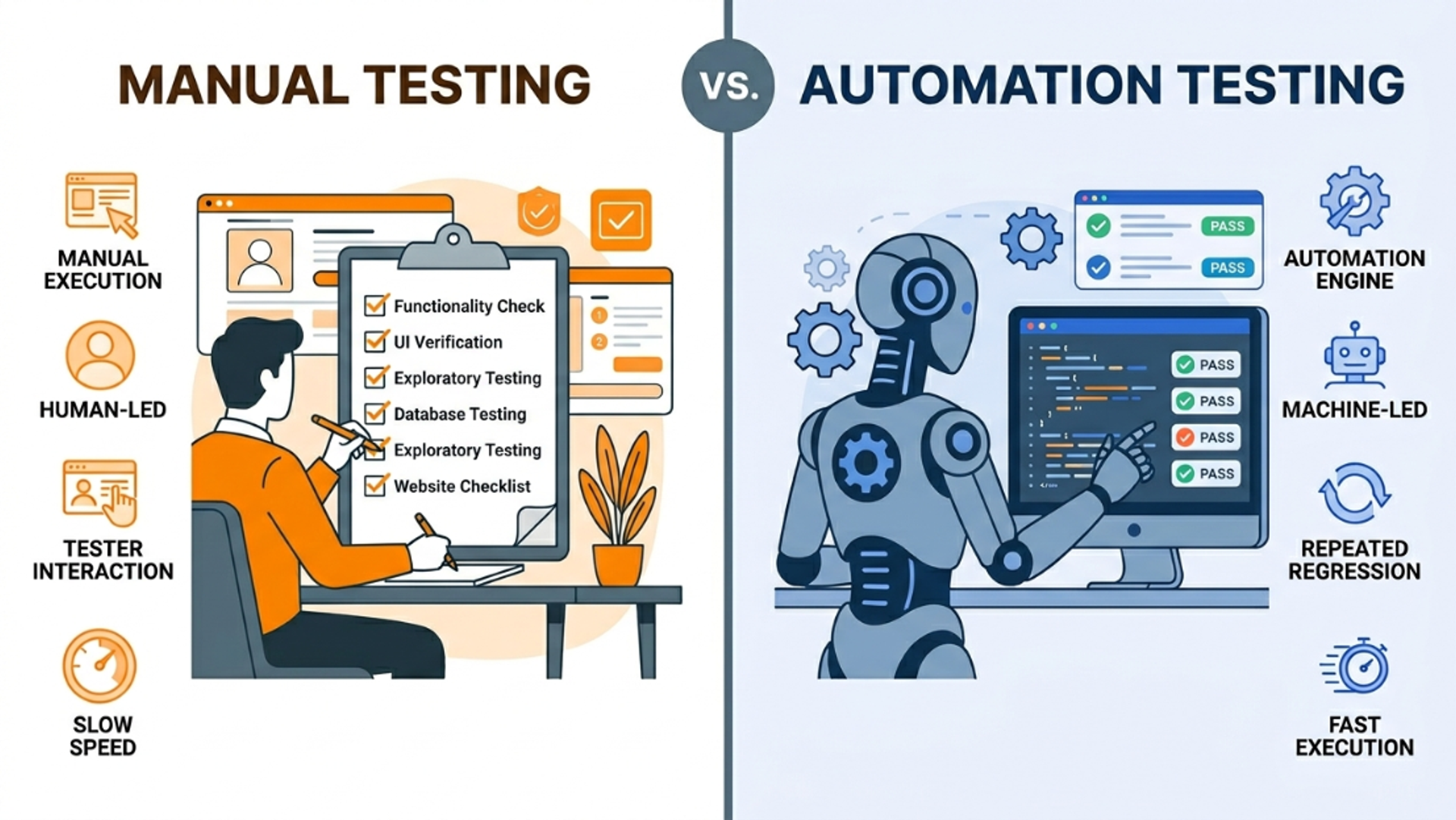
One of the most common questions from beginners is whether to start with manual testing or jump straight into automation testing. The honest answer: start with manual, then add automation.
Manual Testing
Manual testing is the foundation. Here you learn how to think like a tester writing clear test cases, exploring edge cases, performing regression testing, doing functional and usability checks, and reporting defects properly. Without this mindset, automation is just code that confirms nothing useful.
You can build this base through a focused manual software testing course that prioritises real test documentation and bug-reporting practice over theory.
Automation Testing
Once your fundamentals are solid, automation testing multiplies your value. Using tools like Selenium, testers write scripts that run hundreds of checks in minutes perfect for repetitive regression testing across builds. Learning a test automation framework (Page Object Model, data-driven, keyword-driven) is what separates a junior tester from a well-paid Automation/SDET engineer.
A structured automation testing course that teaches Selenium with a real framework not just isolated scripts is the fastest route to higher salaries.
Bottom line: Manual testing gets you hired. Automation testing gets you promoted. Most successful QA professionals know both.
The In-Demand Software Testing Skills for 2026
To stand out for QA engineer jobs, build this skill stack:
- Core testing concepts - SDLC, STLC, test case design, defect life cycle, severity vs priority.
- Manual testing - Functional, regression, smoke, sanity, exploratory, and usability testing.
- Automation with Selenium - Locators, waits, frameworks, and integration with TestNG/JUnit.
- A programming language - Java or Python for testers. Python is beginner-friendly and increasingly preferred; a dedicated Python programming course makes automation far easier to learn.
- API testing - Verifying the logic layer beneath the UI. Learn API testing with Postman and REST APIs because modern apps are API-driven, and API testers are in short supply.
- Databases (SQL) - Writing queries to validate that the right data is stored and retrieved.
- Performance testing - Tools like JMeter to check how an app behaves under thousands of users.
- ISTQB certification - Globally recognised proof of your testing knowledge that recruiters actively filter for.
You don't need all eight on day one. Layer them: concepts → manual → automation → API/SQL → performance, with ISTQB certification as the credential that ties it together.
Software Testing Salary in India (2026 Realistic Numbers)
Salary depends on your skills, city, and whether you can automate. Approximate annual ranges in India for 2026:
- Manual QA (Fresher / 0–1 yr): ₹3 – 4.5 LPA
- Automation Tester (2–4 yrs): ₹6 – 12 LPA
- SDET / Senior Automation (5+ yrs): ₹14 – 28 LPA
- QA Lead / Test Architect: ₹25 LPA and above
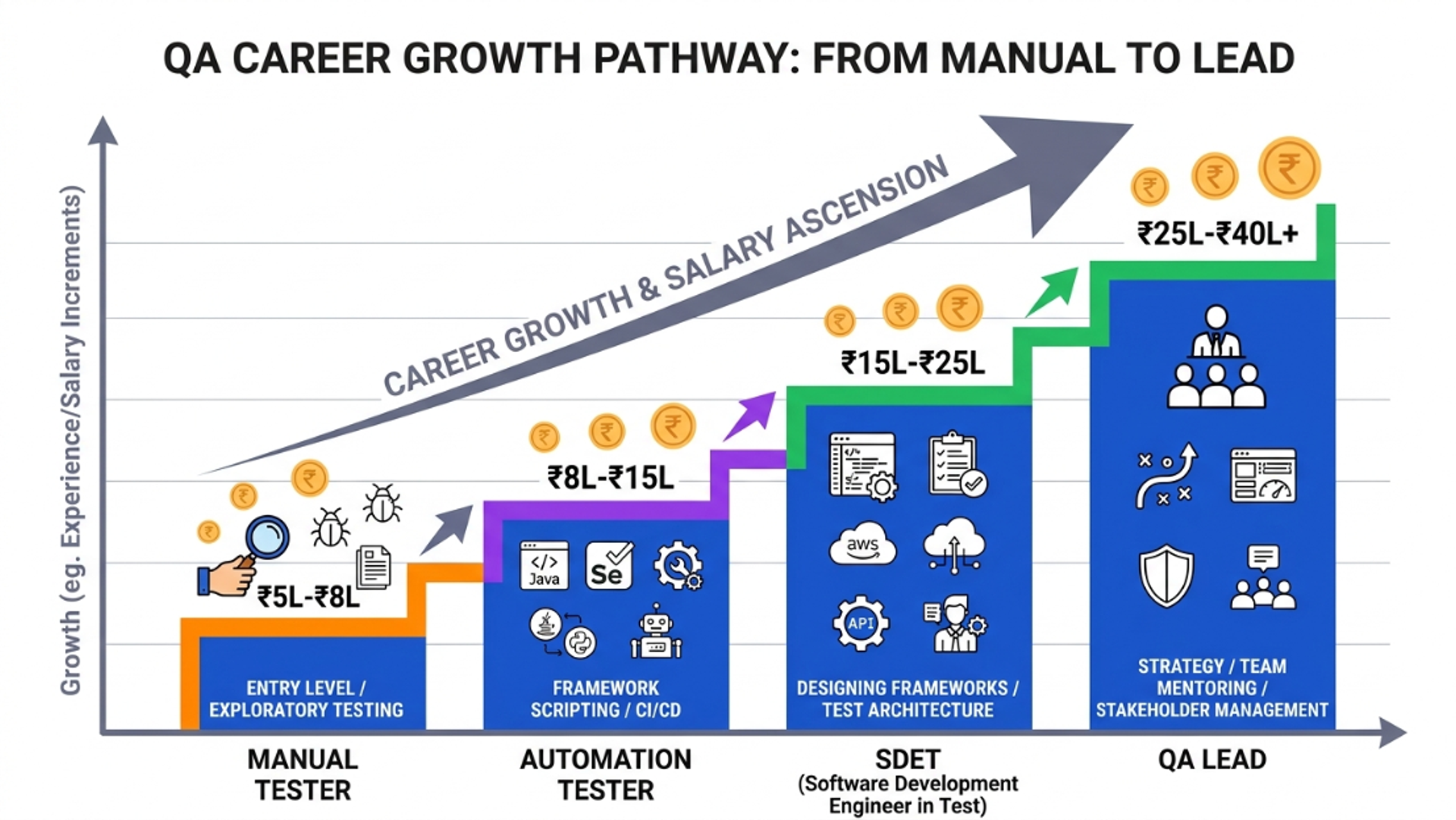
Notice the jump the moment automation enters the picture. A manual-only tester plateaus faster; a tester who can build a test automation framework, handle API testing, and read basic code commands a far higher package. This is why investing in automation early pays for itself many times over.
Step-by-Step Roadmap: How to Start a Software Testing Career in 2026 With No Experience
Here is a realistic, no-fluff path for absolute beginners.
Step 1 - Learn the fundamentals (Weeks 1–3). Understand SDLC, STLC, test case writing, and the defect life cycle. Practice writing 50+ test cases for everyday apps you already use.
Step 2 - Master manual testing (Weeks 3–6). Do hands-on functional and regression testing on a sample web application. Log real bugs with steps to reproduce, severity, and screenshots.
Step 3 - Add a programming language (Weeks 6–10). Learn Python (or Java) up to functions, loops, and OOP basics enough to read and write automation scripts.
Step 4 - Learn automation with Selenium (Weeks 10–16). Build a small test automation framework, automate login and checkout flows, and run a regression suite.
Step 5 - Layer in API testing and SQL (Weeks 16–20). Validate REST APIs and write SQL queries to verify backend data.
Step 6 - Get certified and build a portfolio. Prepare for ISTQB certification and publish 2–3 testing projects on GitHub.
Step 7 - Apply, interview, and get placed. Optimise your resume, practise mock interviews, and target companies actively hiring QA freshers.
Following this roadmap solo is possible but slow. A guided programme compresses 6–9 months of trial-and-error into a structured, project-based journey which is exactly what the next section covers.
Why Placement-Focused Training Beats Self-Study
Self-study is great for motivation but weak on three things: structure, real projects, and a job at the end. Most freshers get stuck not because they can't learn testing, but because they can't convert learning into interviews and offers.
This is where placement assistance changes the game. A strong programme gives you:
- 90+ real-world projects so your resume shows experience, not just certificates.
- Mock interviews and resume reviews tuned to actual QA hiring rounds.
- Hiring-partner referrals that put your profile in front of recruiters directly.
CDPL's training is built around this outcome live interactive classes, industry mentors, and a dedicated placement cell. You can see real outcomes on the CDPL placements page, where graduates have moved into roles at companies across India.
For learners who want supplementary practice material, skill-building content, and career resources, Cinute Infomedia complements this training ecosystem with accessible explainers and guides that reinforce what you learn in class.
Software Testing vs Data Science: Which Tech Career Fits You?
A fair question, since both are popular entry points into IT.
- Choose software testing if you want the fastest, most beginner-friendly route to a job, enjoy structured problem-solving, and prefer breaking things to find flaws. Lower entry barrier, quick employability.
- Choose data science if you love mathematics, statistics, and finding patterns in data, and are comfortable with a longer, more theory-heavy learning curve.
The good news: these worlds overlap. Skills like Python, SQL, and analytical thinking transfer between them. Many testers later move into data-focused or AI/ML-adjacent roles. If you're curious about that path, exploring foundational programming first then deciding is a smart, low-risk move.
Common Mistakes Beginners Make (And How to Avoid Them)
- Skipping manual testing to look "advanced." You'll write brittle automation that tests nothing meaningful.
- Learning tools without concepts. Knowing Selenium syntax means little if you can't design good test cases.
- No projects. Recruiters trust demonstrable work over certificates alone.
- Ignoring ISTQB certification. Many job filters screen for it; skipping it removes you from shortlists.
- No interview prep. Strong skills + weak interview performance = no offer. Mock interviews fix this.
Avoid these and you'll move from "learning" to "employed" far faster than the average self-taught beginner.
Frequently Asked Questions
Q1. Can I start a software testing career with no IT background? Yes. Software testing is one of the most accessible IT fields. With a structured course, even non-technical graduates can become job-ready in a few months.
Q2. Is manual testing dead because of automation? No. Automation handles repetitive checks, but manual testing especially exploratory and usability testing still requires human judgement. The best testers do both.
Q3. Do I need to know coding for software testing? Manual testing requires little to no coding. Automation testing requires basic programming (Python or Java). You can learn it step by step.
Q4. Which certification is best for testers? ISTQB certification is the global standard and the one most recruiters recognise.
Q5. How long does it take to get placed? With focused, project-based training and placement support, many learners become interview-ready in 4–6 months.
Conclusion: Your Next Step
A software testing career in 2026 offers a rare combination: a low barrier to entry, strong demand, clear progression, and salaries that climb fast once you add automation. The path is well-defined learn the fundamentals, master manual and automation testing, add API and database skills, earn your ISTQB certification, build real projects, and prepare seriously for interviews.
The single biggest accelerator is structured, placement-focused training. Instead of guessing for nine months, you can follow a proven roadmap, work on industry projects, and get direct support landing your first QA engineer job. Explore the full range of software testing courses at CDPL to find the track that matches your goals and use the free learning resources from Cinute Infomedia to reinforce every concept along the way.
Your tech career doesn't have to wait. Start with the fundamentals today, stay consistent, and let placement-driven training carry you the rest of the way.
Tags

Seasoned Business Intelligence and learning and development professional with over 11 years of experience empowering students and professionals to unlock career success through data-driven skills. Specializing in Power BI, Tableau, and Prompt Engineering, Ashish is known for delivering practical, high-impact workshops and training programs across academic and corporate sectors.