
Python Interview Preparation: Questions, Tips & Study Plan
Preparing for a Python interview? Here's a clear, practical guide to the core concepts, OOP fundamentals, coding questions, and study plan that actually help freshers get hired.
A beginner-friendly, in-depth guide to Python interview preparation that covers how Python interviews are structured, the core language concepts you must know, object-oriented programming fundamentals, data structures and coding questions, essential Python libraries for data roles, a step-by-step study plan, and interview-day tips written for freshers and career switchers preparing for their first Python interview.
Python routinely tops the list of most in-demand programming languages, which means Python interviews are everywhere for software development roles, QA automation roles, data analyst positions, and machine learning jobs alike. The catch is that a Python interview rarely tests just syntax. It tests whether you actually understand how the language behaves, whether you can reason through a coding problem out loud, and whether you can apply core concepts to a real scenario instead of reciting a textbook definition.
If you are getting ready for your first Python interview, or you want a structured way to revise before your next one, this guide walks through exactly what to expect: how Python interviews are usually structured, the core concepts every interviewer probes, object-oriented programming questions, data structures and coding problems, the libraries worth knowing for data-focused roles, and a simple study plan to tie it all together.
How Python Interviews Are Usually Structured
Most Python interviews, whether for a developer, QA automation, or data role, follow a similar shape. There is typically a screening round that checks basic syntax and problem-solving ability, followed by one or two technical rounds that go deeper into language concepts, data structures, and a live coding exercise. Data-focused roles often add a round on libraries like Pandas and NumPy, while back-end roles may add a round on frameworks like Flask or Django. Most processes close with an HR or culture-fit round.
Knowing this structure in advance matters because it tells you where to focus your revision time a data analyst interview and a back-end developer interview will both ask "what is a list comprehension", but they will differ sharply in what comes after. Structured, mentor-led interview practice makes a real difference here, which is why programs built around live mock interviews, like the preparation support included in Cinute Digital's placement program, tend to leave candidates far less nervous walking into the real thing.
Core Python Concepts You Must Know
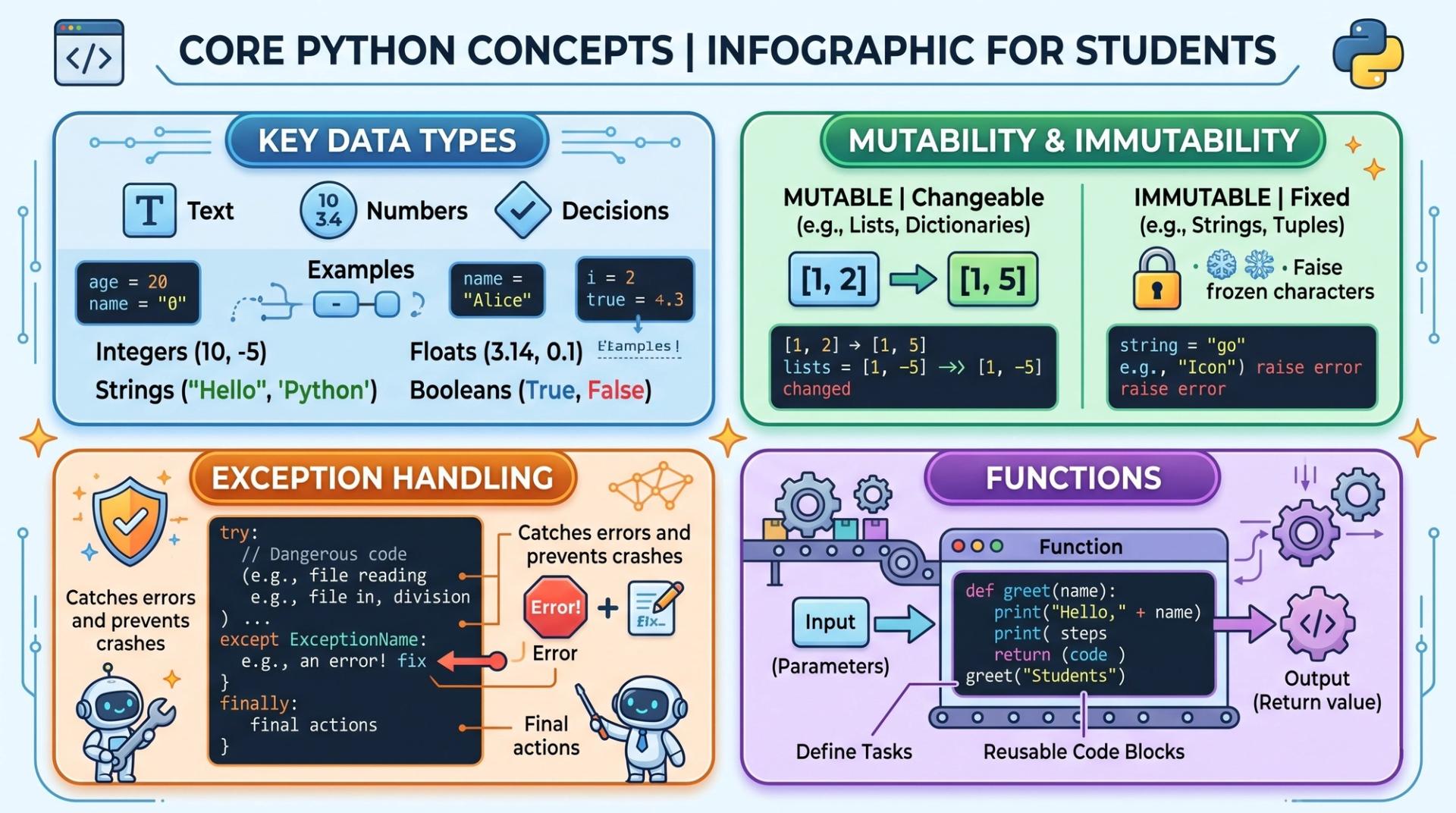
Before diving into anything advanced, interviewers want to confirm you are solid on the basics. You should be able to explain Python's core data types integers, floats, strings, lists, tuples, dictionaries, and sets and, more importantly, when to use each one.
A favourite question is the difference between a list and a tuple: both store ordered collections of items, but a list is mutable (it can be changed after creation) while a tuple is immutable (it cannot). This connects to a broader concept interviewers love to probe mutability, since understanding which objects can change in place and which cannot explains a lot of unexpected bugs in real code.
You should also be comfortable with exception handling using try, except, else, and finally blocks, since writing code that fails gracefully is a real-world skill, not just an academic one. Other frequent topics include lambda functions (short, anonymous functions defined in a single line), list comprehensions (a concise way to build lists), and the difference between is and == in comparisons. A structured, project-based foundation in these fundamentals not just isolated tutorials is exactly what Cinute Digital's Python Programming Course is built around, covering data structures, OOP, and file handling together rather than as disconnected topics.
Object-Oriented Programming (OOP) Questions
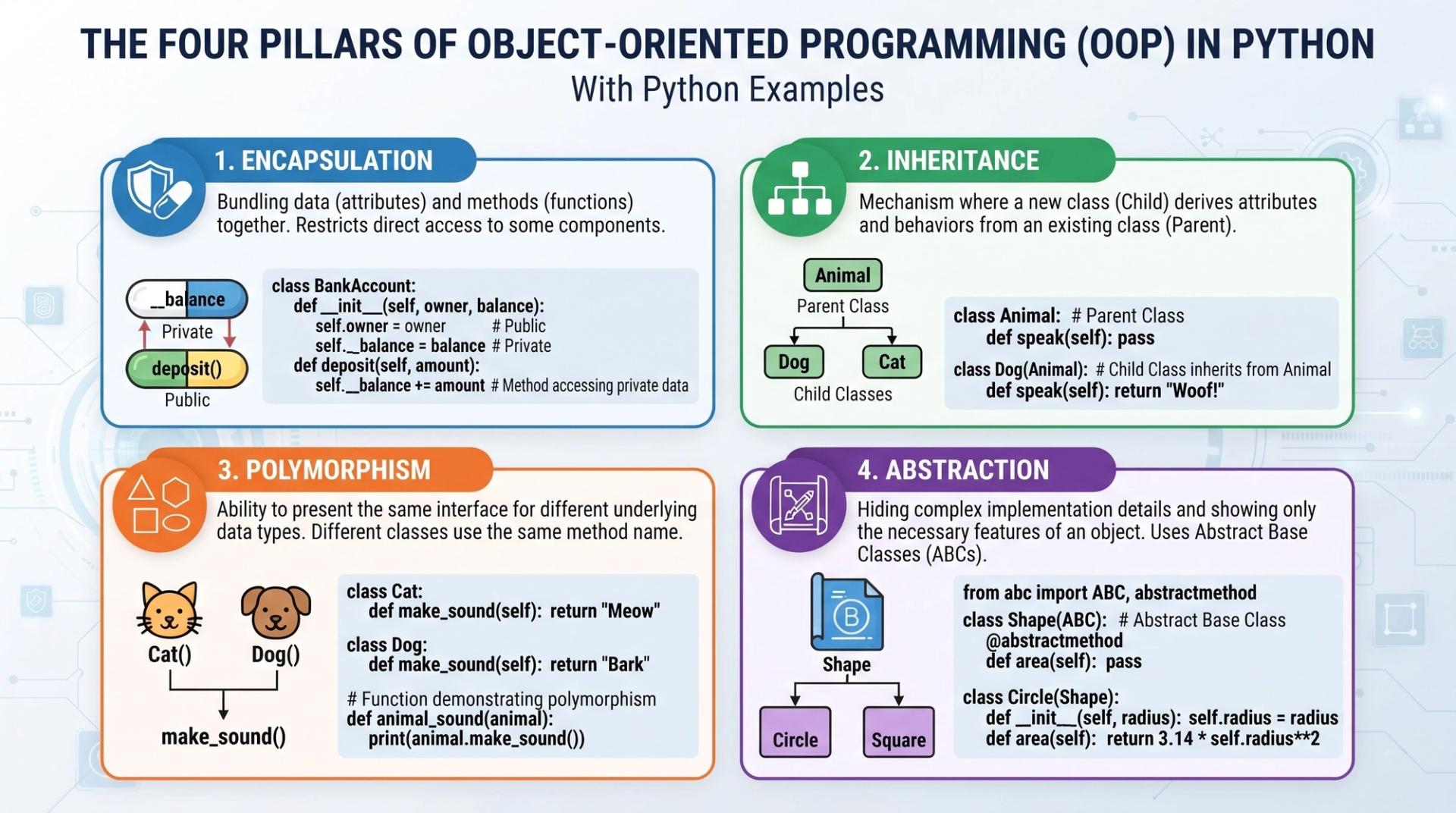
Almost every Python interview beyond the most junior level includes questions on object-oriented programming, since it is central to how larger applications are structured. You should be ready to explain classes and objects, and then go one level deeper into the four pillars of OOP: encapsulation (bundling data and methods together and controlling access to them), inheritance (letting one class reuse and extend another), polymorphism (letting different classes respond to the same method call in their own way), and abstraction (hiding implementation details behind a simple interface).
Interviewers often follow up with practical variations: "Can you show me an example of method overriding?" or "What is the difference between a class method and a static method?" These questions are less about memorized definitions and more about whether you can apply the concept to a small code example on the spot. For a clear, beginner-friendly breakdown of all four pillars with practical code examples, Cinute Digital's Python OOP concepts guide is a genuinely useful revision resource before any interview.
Data Structures and Coding Questions
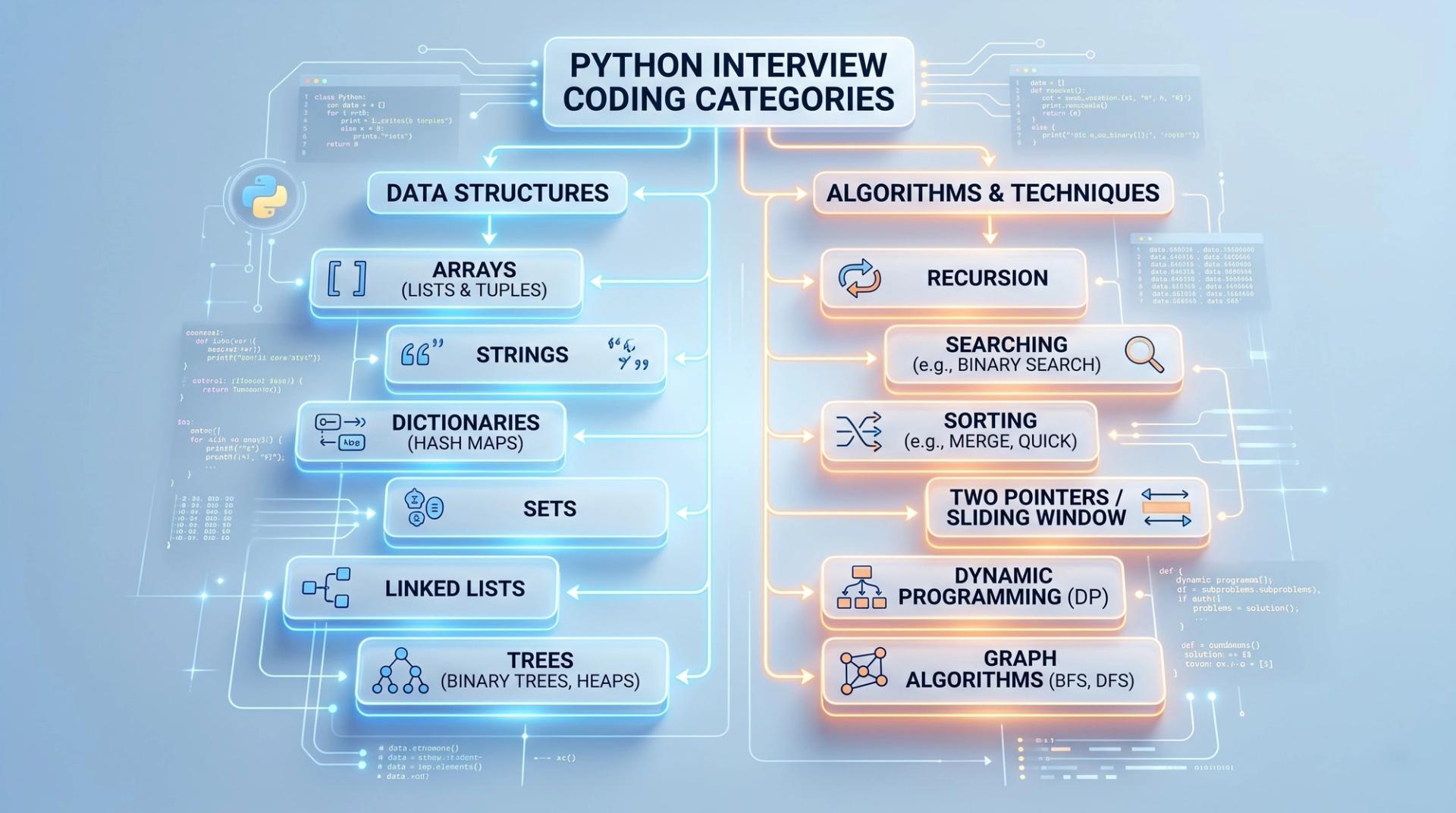
The coding round is where many candidates get nervous, but most questions actually draw from a fairly predictable set of patterns. Expect problems involving strings (reversing a string, checking for a palindrome), lists and arrays (finding duplicates, sorting without a built-in function), dictionaries (counting word frequency), and recursion (factorials, Fibonacci sequences). Interviewers are usually less interested in a "clever" one-line solution and more interested in whether you can explain your approach, discuss its time complexity, and improve it when asked.
For data-focused roles, this section extends into working with structured data itself filtering, grouping, and transforming records efficiently. This is exactly the kind of hands-on practice built into Cinute Digital's Data Analytics with Python course, where learners work with real datasets using Pandas and NumPy rather than only solving isolated algorithm puzzles, which mirrors what data analyst interviews actually test.
Python Libraries Worth Knowing for Data and AI Roles
If you are interviewing for a data analyst, data science, or machine learning role, plain Python knowledge is only the starting point. Interviewers will expect familiarity with NumPy for numerical computing, Pandas for working with tabular data, and often Matplotlib or Seaborn for visualization. For machine learning roles specifically, expect questions on libraries like scikit-learn, how a model is trained, evaluated, and deployed, and basic concepts like overfitting and train-test splits the exact hands-on skills built through Cinute Digital's Machine Learning with Python course.
It also helps to be clear on how these roles differ from one another, since interviewers frequently ask candidates to explain the distinction in their own words. Cinute Digital's guide on data science vs machine learning vs AI breaks this down clearly, which is useful both for interview answers and for deciding which specialization actually fits your interests. If you want to demonstrate applied skill beyond theory, working through a few guided projects such as the beginner computer vision projects covered in Cinute Digital's Python and OpenCV projects guide gives you real examples to discuss when an interviewer asks about your portfolio.
A Simple Study Plan Before Your Interview
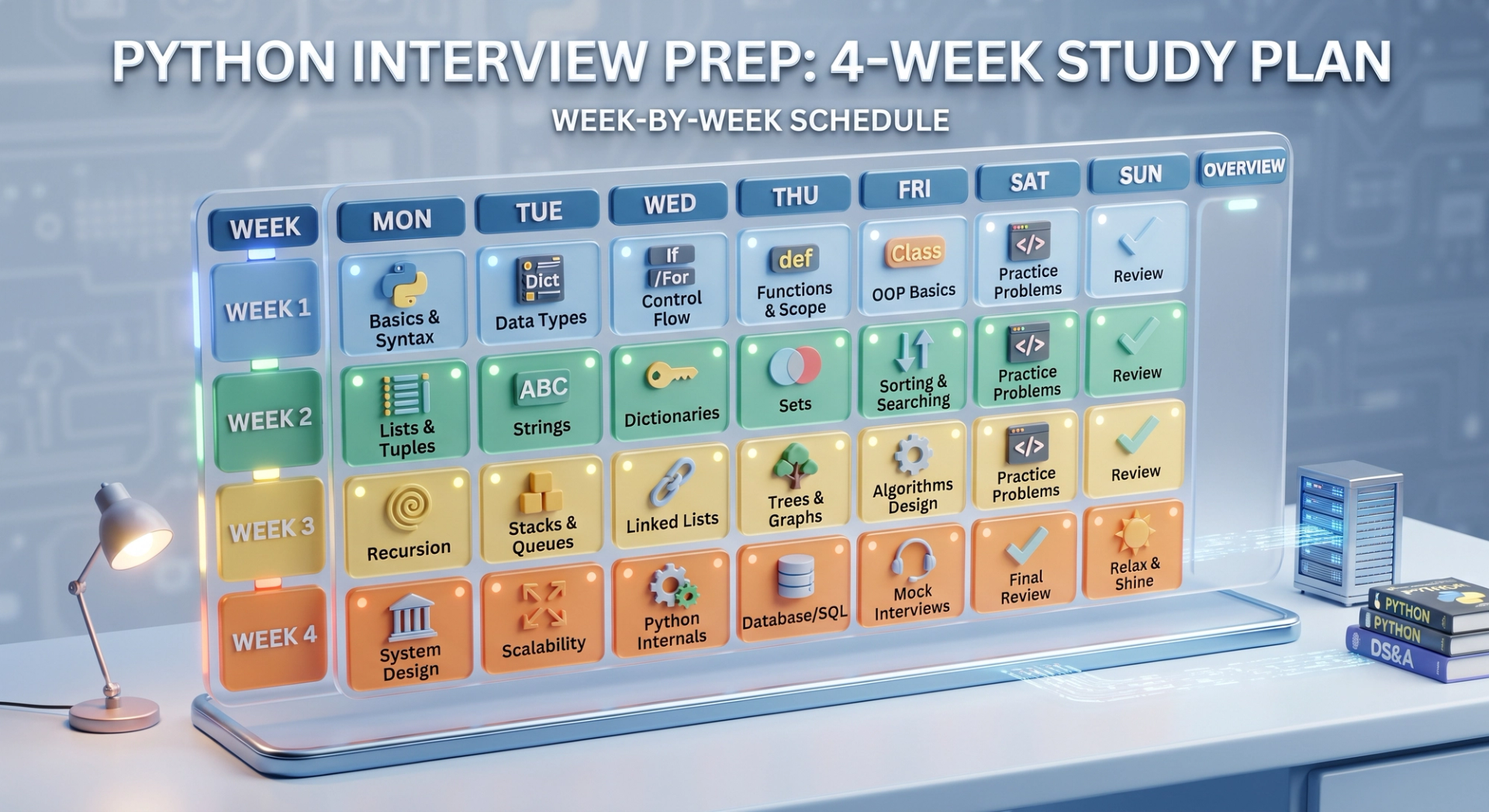
A scattered revision approach rarely works well under interview pressure, so a short, structured plan pays off. In the first few days, revisit core syntax, data types, and mutability so the fundamentals are automatic rather than something you have to think hard about. Spend the next stretch on OOP concepts, writing your own small class hierarchies rather than just reading about them, since explaining your own code is far easier than explaining someone else's.
After that, move into daily coding practice even 30 to 45 minutes solving one or two problems on strings, lists, dictionaries, or recursion builds real pattern recognition over a couple of weeks. If you are targeting a data or AI role, dedicate separate sessions purely to Pandas and NumPy exercises using real datasets. In the final days before your interview, do at least one mock interview out loud, since explaining your reasoning verbally is a different skill from solving a problem silently on your own.
Tips for Interview Day
On the day itself, a few habits consistently help candidates perform better than their preparation alone would suggest. Read each question twice before writing any code, and ask clarifying questions if the problem is ambiguous interviewers generally see this as a good sign, not a weakness. Talk through your thought process as you code rather than working in silence, since most interviewers are evaluating your reasoning as much as your final answer. If you get stuck, say so honestly and think aloud about possible approaches rather than freezing; a candidate who reasons through being stuck often leaves a stronger impression than one who stays silent. Finally, always test your code with a simple example before declaring it finished, even if you are confident it is correct.
Common Mistakes Candidates Make
A few recurring mistakes separate strong candidates from struggling ones, and most are easy to fix once you notice them. Many candidates jump straight into coding without restating the problem in their own words first, which often leads to solving the wrong version of the question. Others over-rely on memorized answers for OOP definitions, then freeze when asked a slightly different phrasing of the same concept a sign the understanding was shallow rather than genuine.
Another common gap is ignoring edge cases. A working solution that only handles the "happy path" and breaks on an empty list, a negative number, or a duplicate value signals to the interviewer that testing instincts are missing, which matters even more for QA-adjacent or data roles. Candidates also frequently under prepare for the "why" behind their choices being able to write a for loop is not the same as being able to explain why a list comprehension might be more efficient in a given case. Finally, many candidates neglect basic communication skills during practice, treating mock interviews as optional rather than as the single highest-leverage form of preparation available. Fixing these habits usually matters more in the final two weeks than learning any new topic.
Building a Career Beyond the Interview
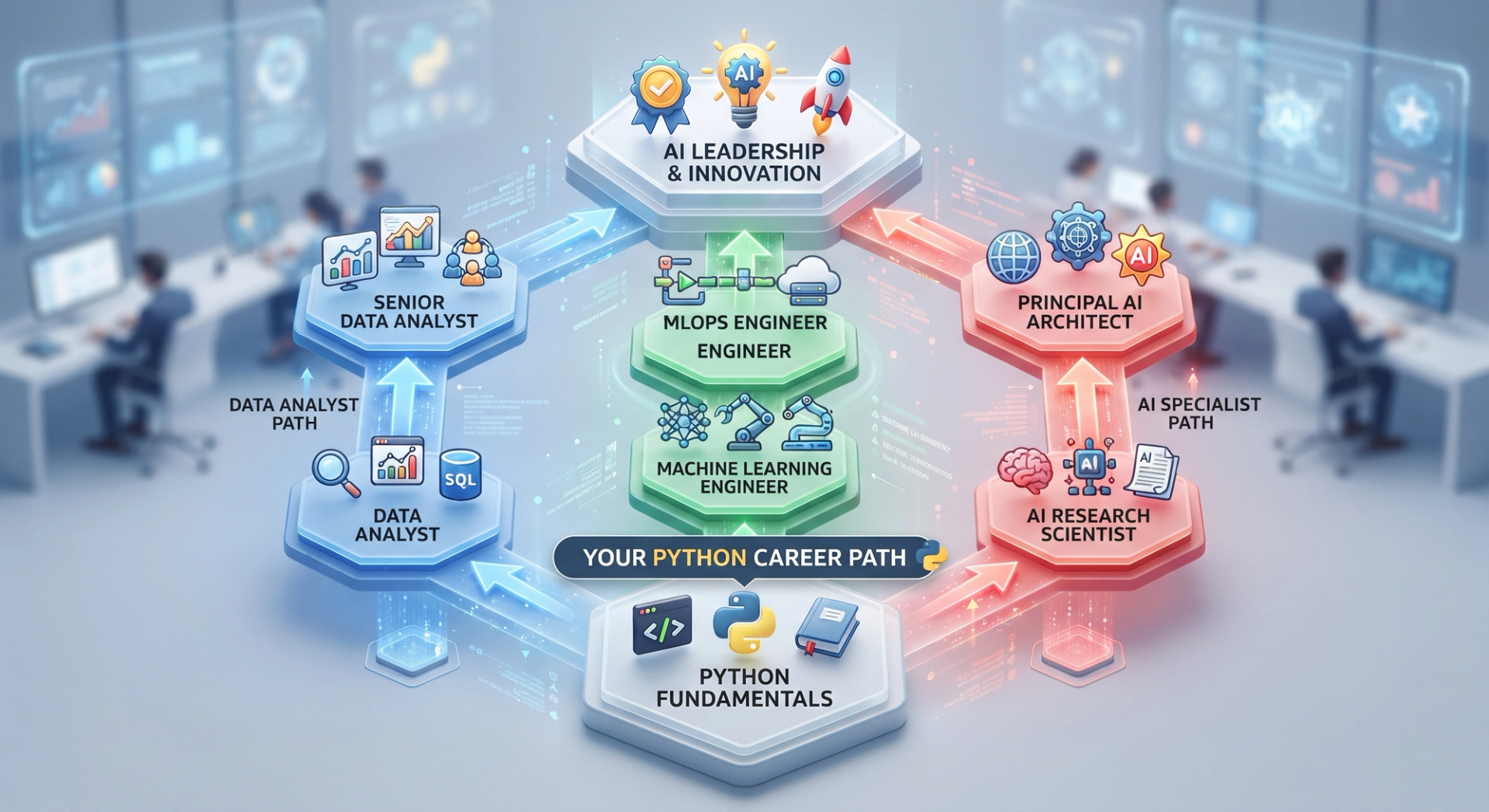
Clearing a Python interview is not the finish line, it is the entry point into a career that can branch in several directions: software development, QA automation, data analysis, or machine learning and AI. Which direction suits you best usually depends on which parts of this guide felt most natural if OOP and application logic excited you, back-end development may be the fit; if working with datasets and libraries felt more interesting, a data or AI path is worth pursuing further.
For learners who want to go beyond interview-ready fundamentals into a full career pathway with live projects and placement support, Cinute Digital's Data Science and AI/ML Master Program combines Python, machine learning, and deployment skills into one structured, mentor-led track rather than scattered self-study.
Frequently Asked Questions
How long does it take to prepare for a Python interview?
For someone with basic Python knowledge, two to three focused weeks of daily practice covering core concepts, OOP, and coding problems is usually enough to feel confident. Complete beginners typically need a few months of structured learning first.
Do I need to memorize every Python library function?
No. Interviewers care more about whether you understand the logic behind a solution and know which library or data structure fits a given problem, not whether you have memorized every method name.
What is the most commonly asked Python interview question?
Questions about the difference between mutable and immutable types, list versus tuple, and the four pillars of OOP appear in nearly every Python interview, regardless of the specific role.
Are Python interviews different for data science roles compared to software development roles?
Yes. Data science interviews add rounds on Pandas, NumPy, and statistics, while software development interviews focus more on OOP design, data structures, and sometimes web frameworks like Flask or Django.
Is Python enough on its own to get an interview call?
Python is a strong foundation, but pairing it with a portfolio of small projects, a clear understanding of data structures, and role-specific skills (like SQL for data roles or Selenium for QA roles) makes candidates noticeably more competitive.
Final Thoughts
Python interview preparation is really about building genuine understanding rather than memorizing answers to a fixed question bank. Once you are comfortable with the core language, confident explaining OOP concepts with your own examples, and used to solving coding problems out loud, most interview questions stop feeling unpredictable and start feeling familiar. Whether you are aiming for a development role, a QA automation position, or a data science career, the preparation habits in this guide apply across all of them.
If you are ready to build these skills through live projects, expert mentorship, and structured placement support rather than preparing alone, explore Cinute Digital's Python, Data Science, and AI/ML programs and take the next step toward your interview-ready career.
Tags

A visionary data scientist dedicated to unlocking the potential of data to drive informed decision-making and spark innovation. With a strong foundation in Data Science.