
Data Science vs Machine Learning vs AI: The Clear Difference
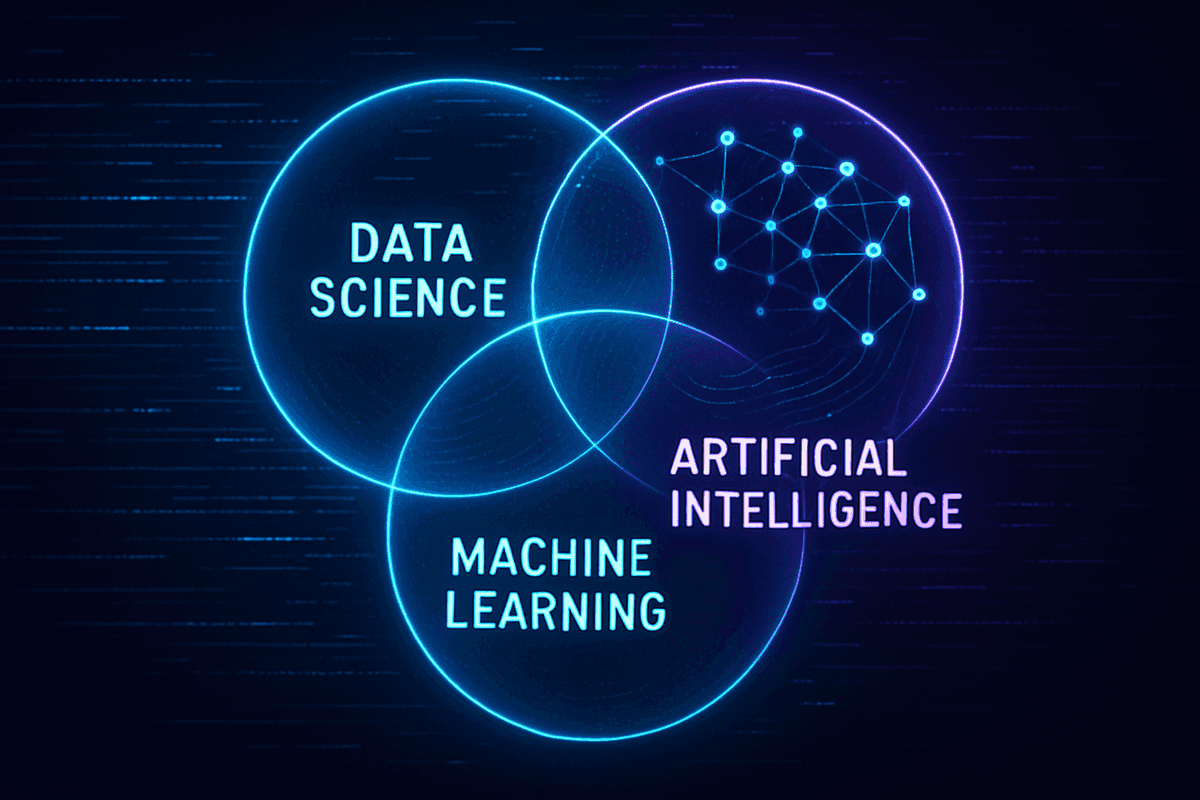
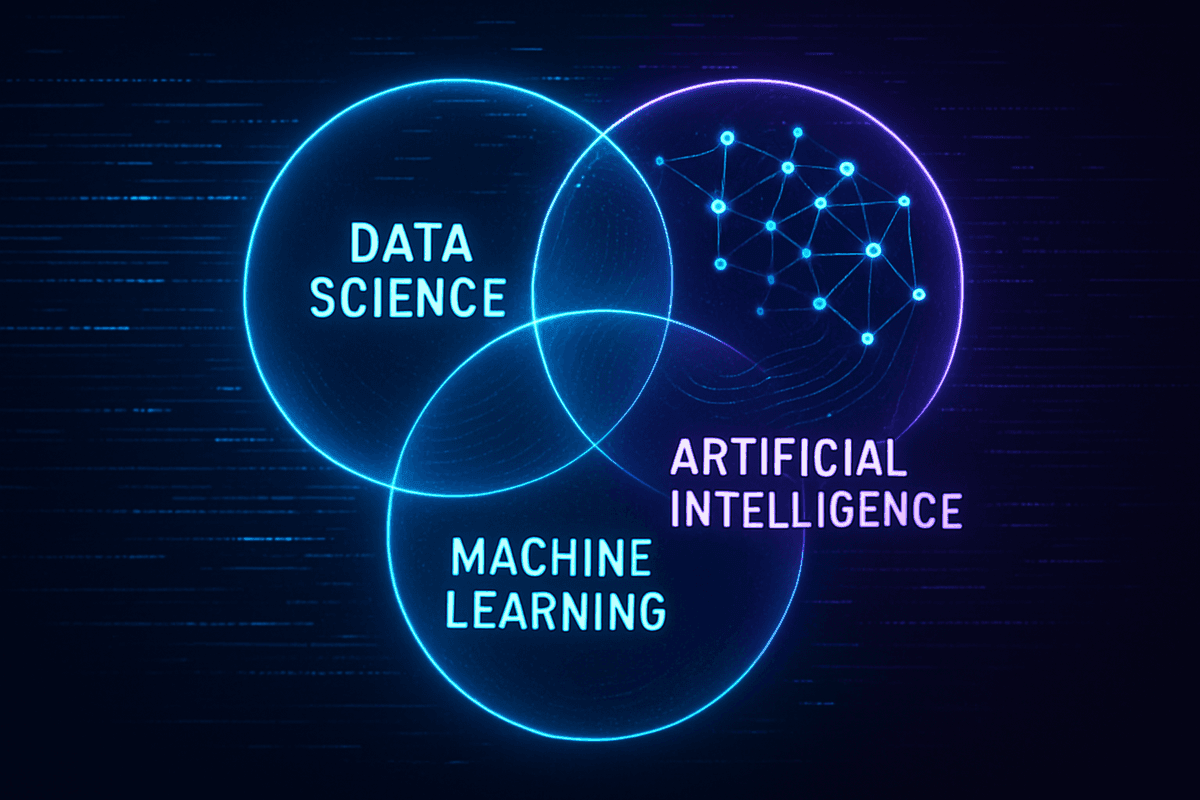
Confused between data science, machine learning, and AI? This guide gives clear definitions, shows where they overlap, explains skills and tools for each, and includes examples you can relate to.
Understand the difference between data science, machine learning, and artificial intelligence with simple definitions, examples, skills, and tools. A CDPL guide for learners and partner teams.
Introduction
Data science, machine learning, and artificial intelligence are related but not the same. For learners at Cinute Digital Pvt Ltd (CDPL) and our partner teams, this article provides a crisp mental model, practical examples, and the skills and tools you need for each area. By the end, you will know which path to choose and how they work together in real products.
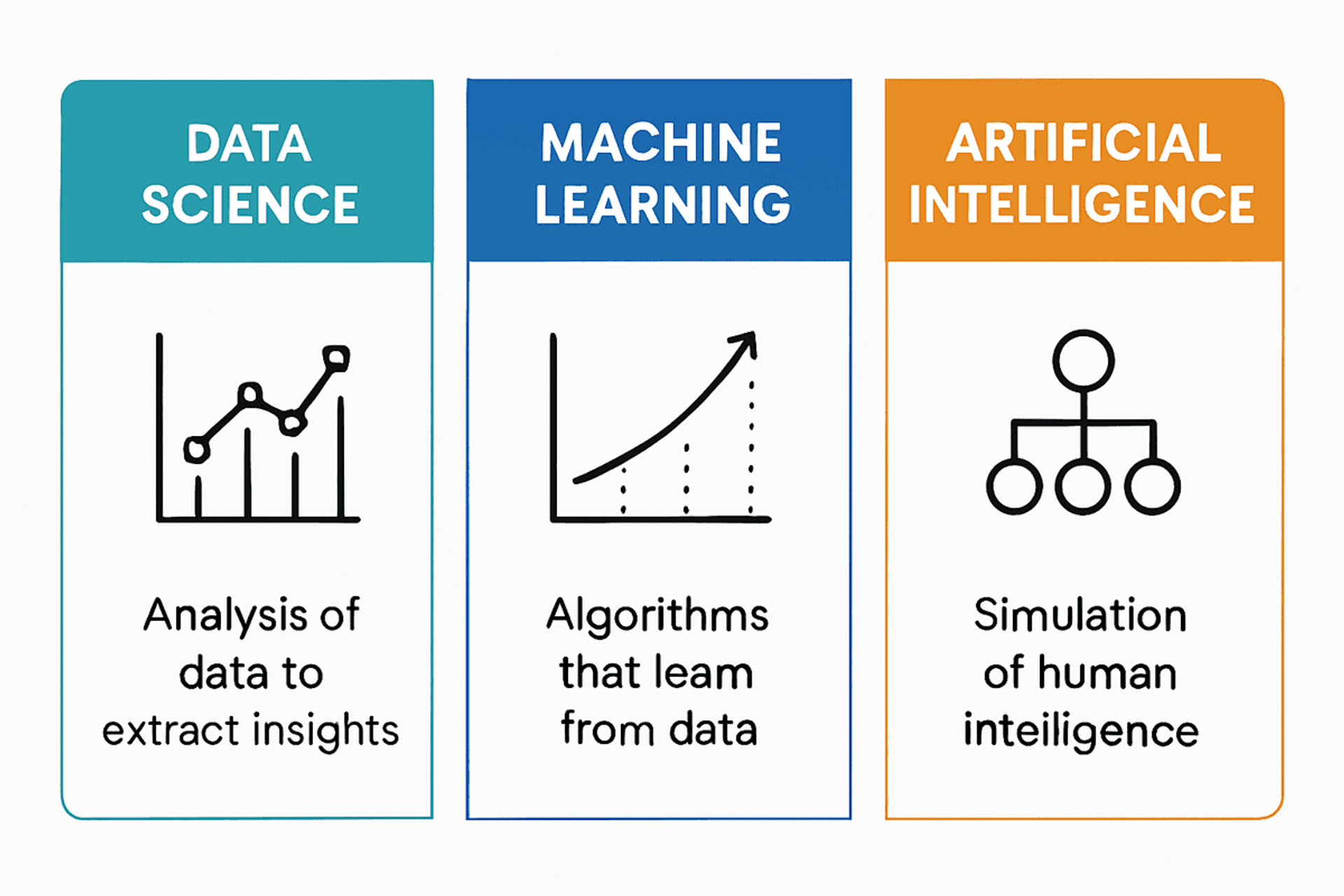
Simple Definitions
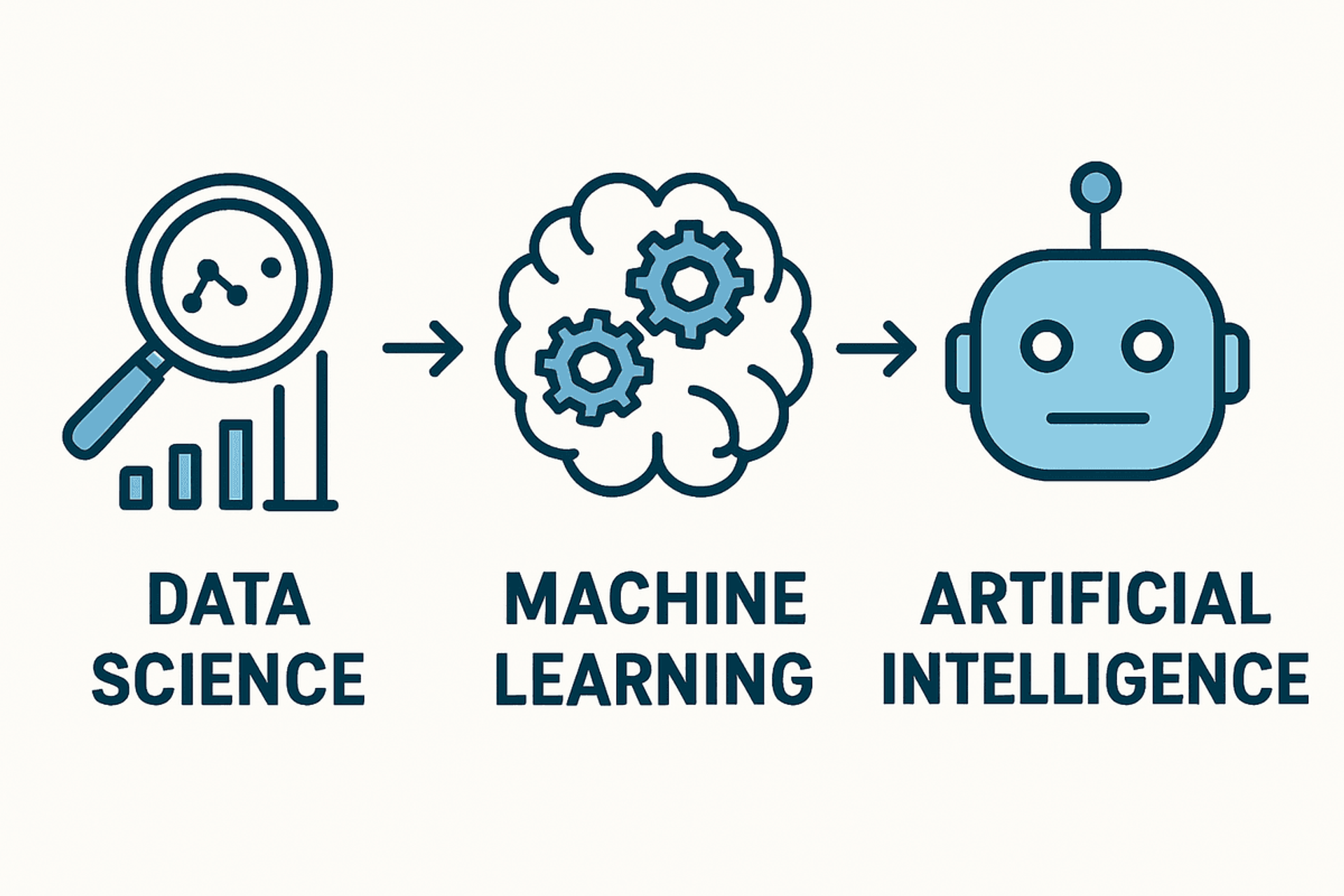
- Data Science: the end to end discipline of turning raw data into decisions. It covers collection, cleaning, analysis, modeling, and communication.
- Machine Learning: a subset of AI that learns patterns from data to make predictions or decisions without hard coded rules.
- Artificial Intelligence: systems that perform tasks that need human like intelligence such as perception, reasoning, and planning. ML is one way to build AI, not the only way.
Think of it this way: AI is the goal, ML is a set of techniques, and Data Science is the process and practice around data driven decisions.
How They Overlap
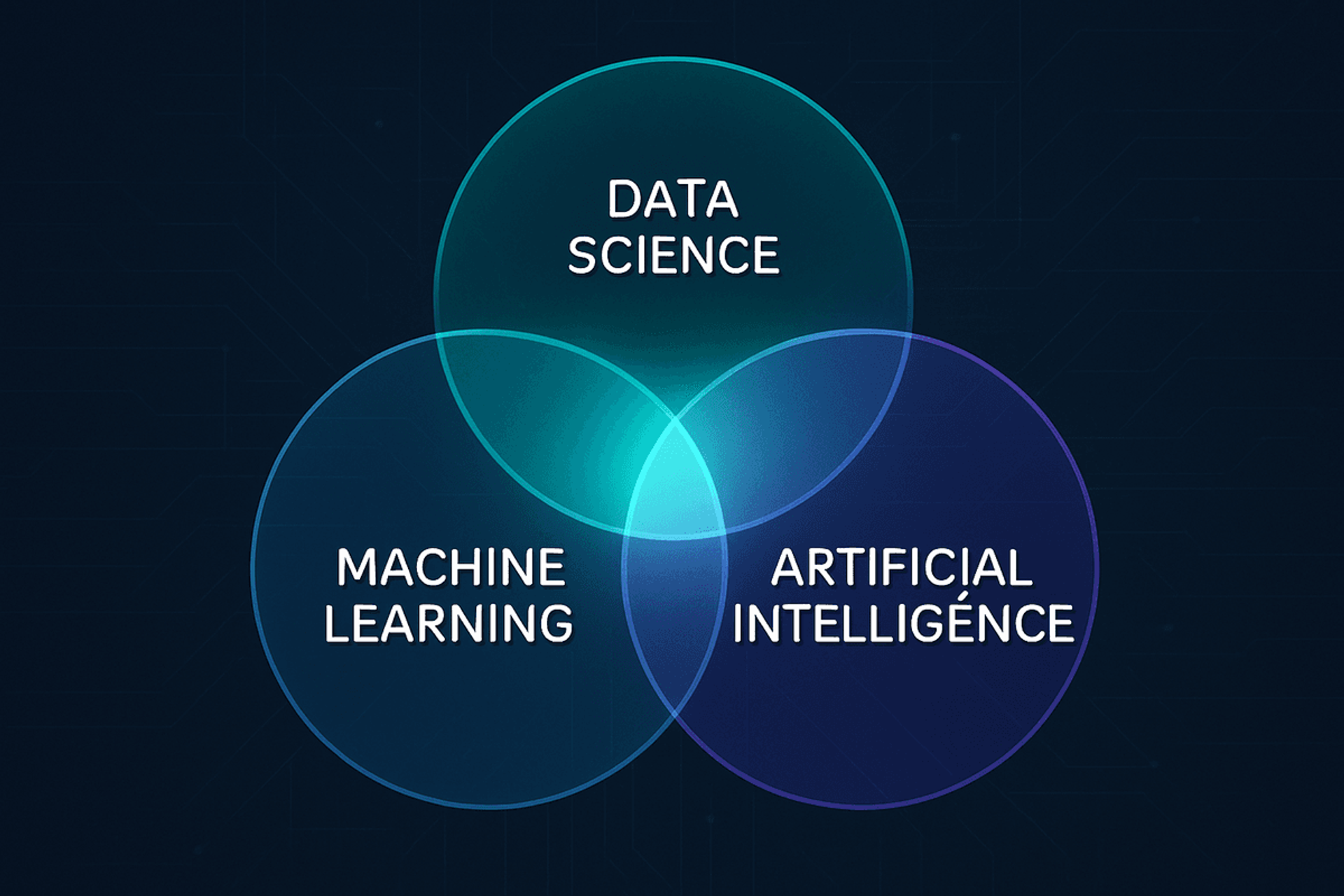
In many teams, a data scientist explores data and frames the problem, a machine learning engineer builds and ships a model, and the broader AI system wraps the model with logic, prompts, or rules to act in the product.
- Data Science ↔ ML: data scientists often prototype ML models for insights and forecasting.
- ML ↔ AI: ML models power AI features like recommendations or speech recognition.
- Data Science ↔ AI: AI features still require analytics, monitoring, and A B tests to measure impact.
Clear Differences at a Glance
Real Examples You Can Relate To
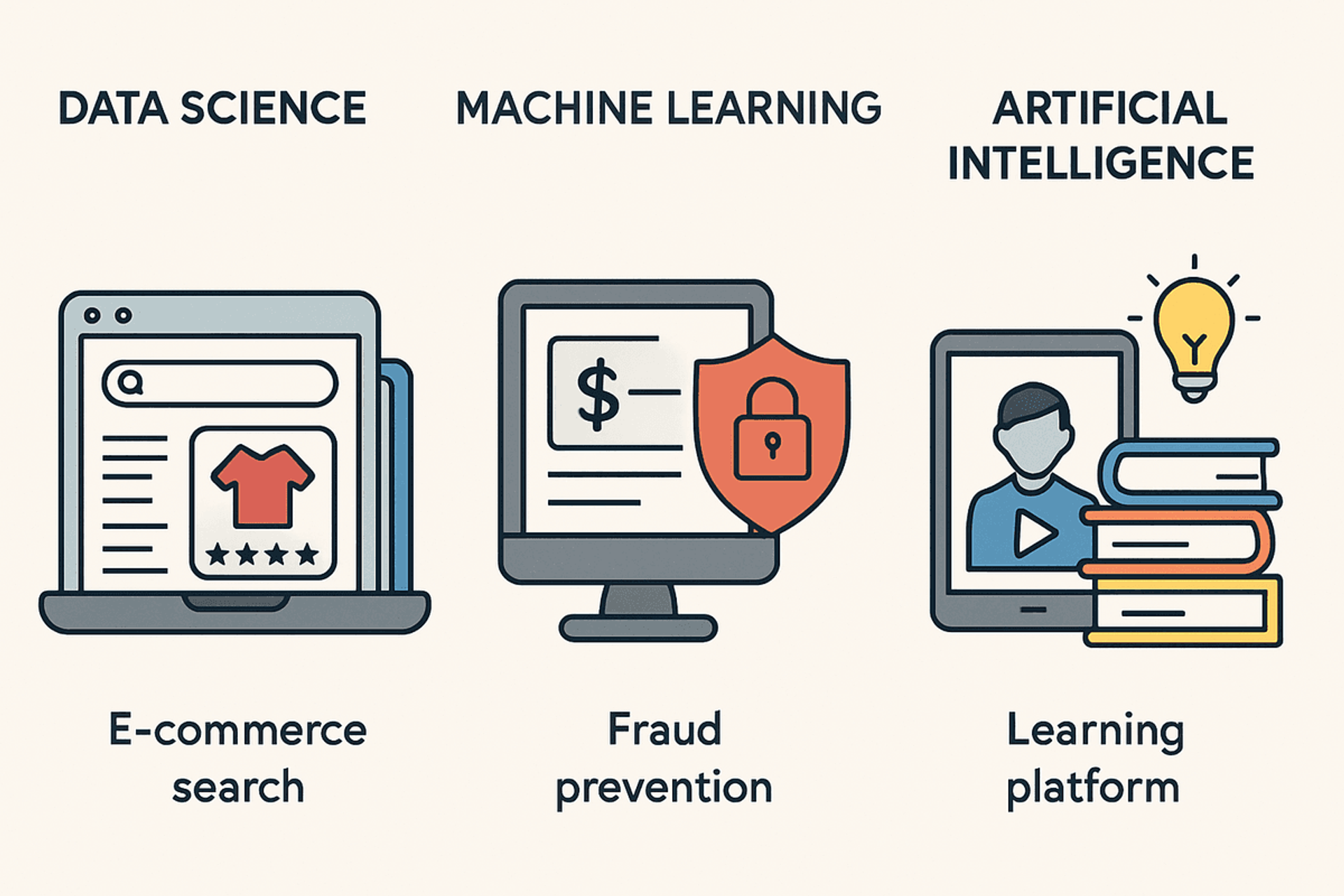
- Ecommerce search: data science analyses search funnels, ML ranks results, AI adds conversational search with a chat layer.
- Fraud prevention: data science profiles risk, ML flags suspicious transactions, AI orchestrates multi step checks and moderator review.
- Learning platform at CDPL: data science tracks learner progress, ML recommends lessons, AI tutors explain concepts with step by step hints.
Skills and Tools by Role
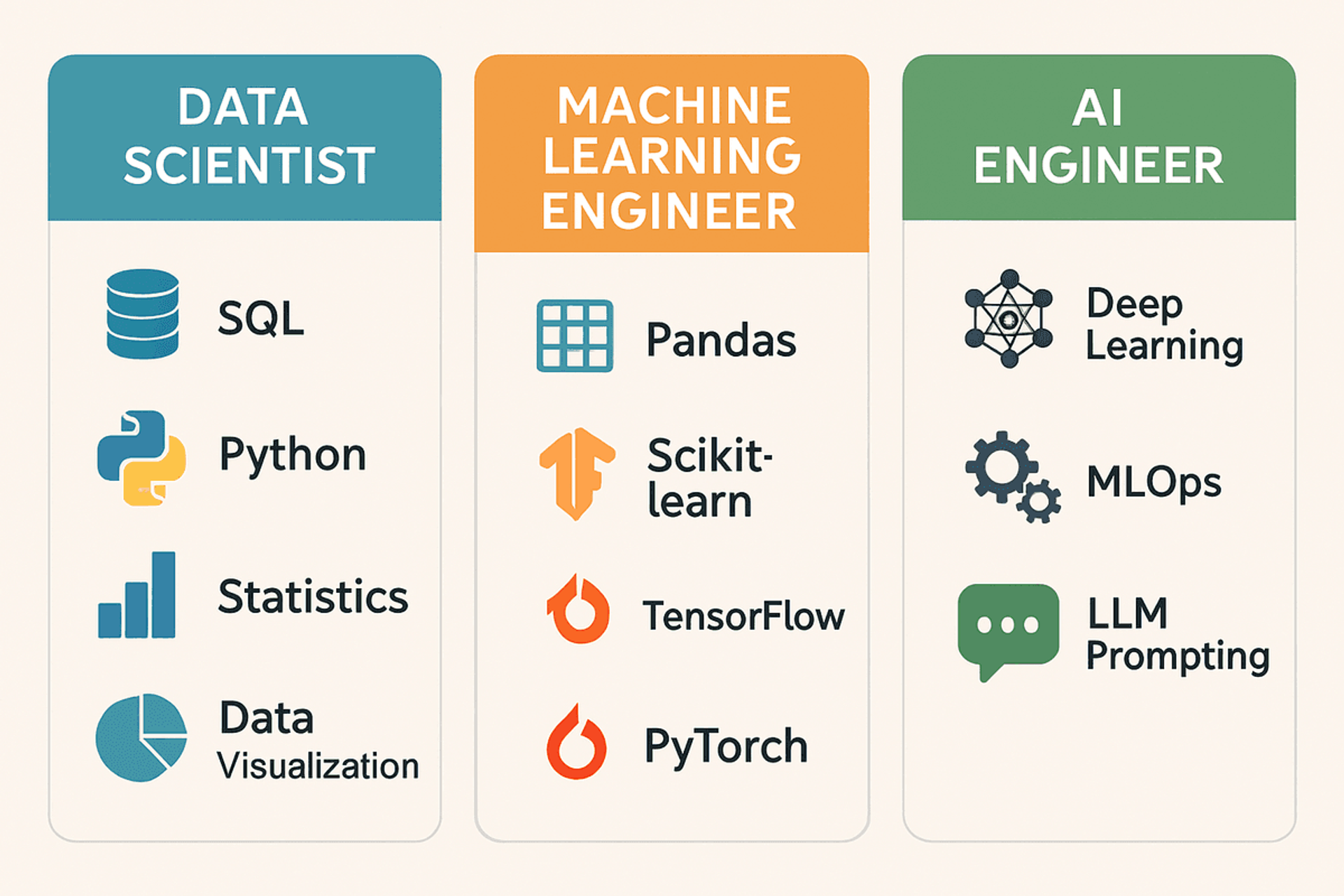
Data Scientist
- Skills: SQL, statistics, data cleaning, experimentation, storytelling.
- Tools: Python, pandas, NumPy, Matplotlib or Plotly, notebooks, BI.
Machine Learning Engineer
- Skills: model training, feature pipelines, evaluation, deployment.
- Tools: Scikit learn, PyTorch or TensorFlow, ML pipelines, Docker, basic MLOps.
AI Engineer
- Skills: LLM prompting, retrieval, tool use, agents, monitoring and safety.
- Tools: vector databases, orchestration frameworks, evaluation harness, latency and cost analysis.
A Quick Workflow Comparison
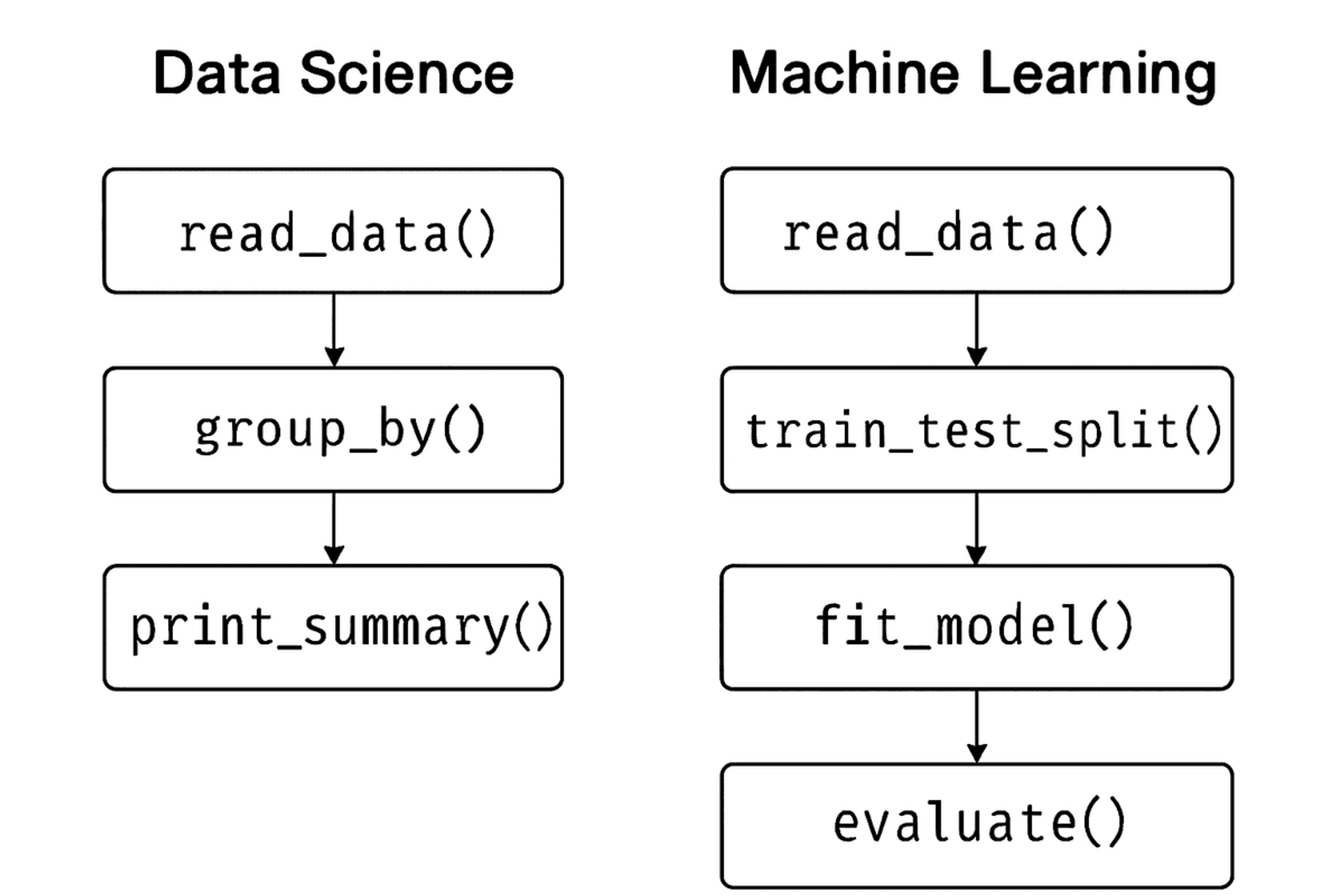
Data science focuses on questions and insights
ML focuses on predictive performance and validation
When to Use What
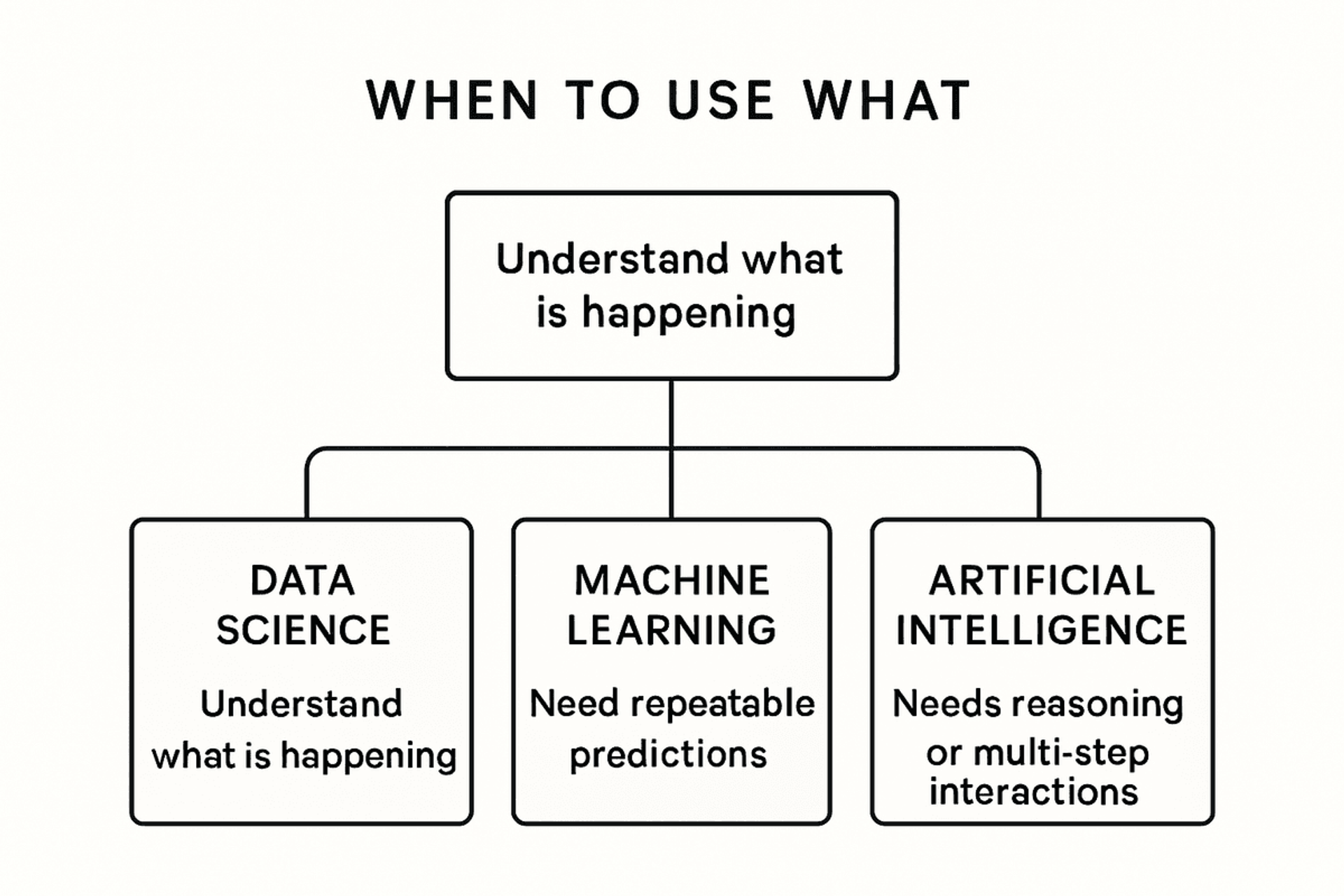
- Choose Data Science to understand what is happening and why, quantify impact, and guide decisions.
- Choose ML when you need repeatable predictions such as risk scores or demand forecasts.
- Choose AI when the task needs reasoning or multi step interactions such as chat support or agents.
Most products blend all three. Start with data science to frame the problem, use ML for prediction, and add AI for interactive experiences.
Study Paths for CDPL Learners
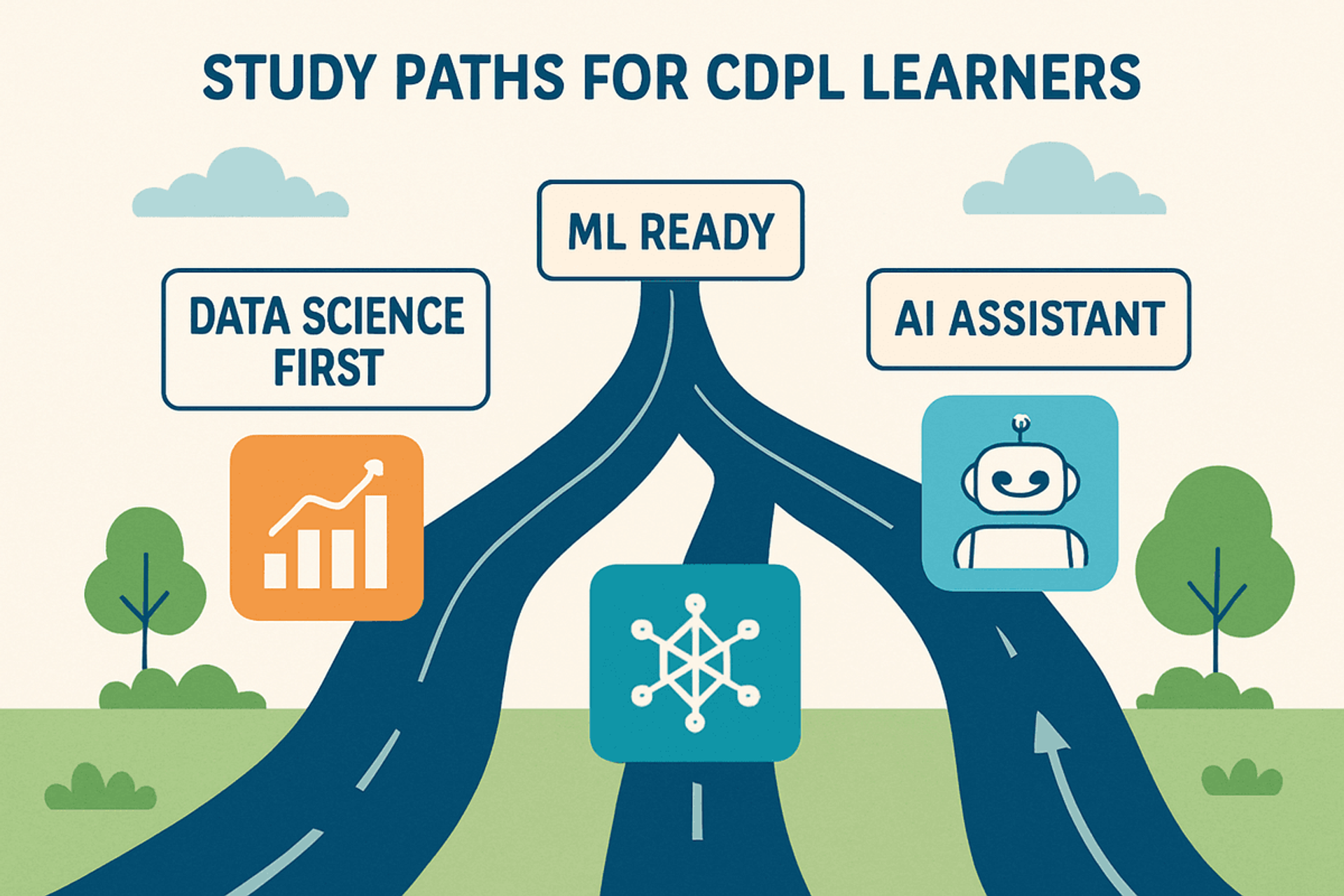
- Path 1 Data Science first: Python and pandas, SQL, visualization, experimentation. Ship two analysis projects.
- Path 2 ML ready: add Scikit learn, model evaluation, and a small deployment.
- Path 3 AI assistant: basics of LLMs and retrieval, build a small Q and A bot over your notes.
Whichever path you choose, keep a clean portfolio with READMEs that state the problem, data, method, results, and a single compelling chart or demo.
FAQ
Is ML required for data science No, many high value data science projects are analytics and experimentation without ML.
Is AI only about large language models No, AI includes classic planning, search, and rule based systems. LLMs are a powerful recent approach.
Can one person do all three In small teams yes. In larger teams roles specialize to move faster and scale safely.
Conclusion
Data science, machine learning, and AI are complementary. Use data science to ask the right questions and measure results, use machine learning to predict at scale, and use AI to deliver intelligent experiences. With this mental model, CDPL learners and partner teams can plan skills, projects, and careers with clarity.
Tags

Shoeb Shaikh is a seasoned Software Testing and Data Science Expert and a Mentor with over 14 years of experience in the field. Specialist in designing and managing processes, and leading high-performing teams to deliver impactful results.