
Mastering Google Ads Campaign Setup


Stop burning ad spend on poorly configured campaigns. Learn the enterprise-grade strategies to master your Google Ads setup, leverage autonomous workflows, and drive highly qualified B2B leads at scale.
A comprehensive, strategic blueprint designed for decision-makers and engineering leads on configuring, automating, and scaling Google Ads infrastructure to eliminate technical debt and maximize speed-to-market and ROI.
The biggest threat to your marketing ROI isn’t your competition; it is a fundamentally flawed Google Ads campaign setup. Every day, enterprise marketing budgets bleed out through broad match keywords, misaligned bidding strategies, and broken conversion tracking architectures. For CTOs, Product Managers, and Marketing Leads, this lack of precision creates a massive bottleneck. You are investing heavily in world-class products and vocational courses, but if your ad infrastructure cannot intelligently capture high-intent demand, your speed-to-market stalls, and customer acquisition costs spiral out of control.
This isn't about simply clicking "create campaign." It is about architecting a highly efficient, automated lead-generation engine. By implementing a rigorous setup protocol and leveraging autonomous workflows, you transition your ad account from a cost center into a predictable, scalable revenue driver. Let’s break down the exact technical methodology to structure, deploy, and scale your campaigns for absolute market dominance.
The Architecture of High-Converting Campaigns
Before a single dollar is spent, the foundation must be flawless. A chaotic account structure leads to ad fatigue, poor Quality Scores, and confused machine learning models.
Intent-Driven Account Structuring (SKAGs vs. STAGs)
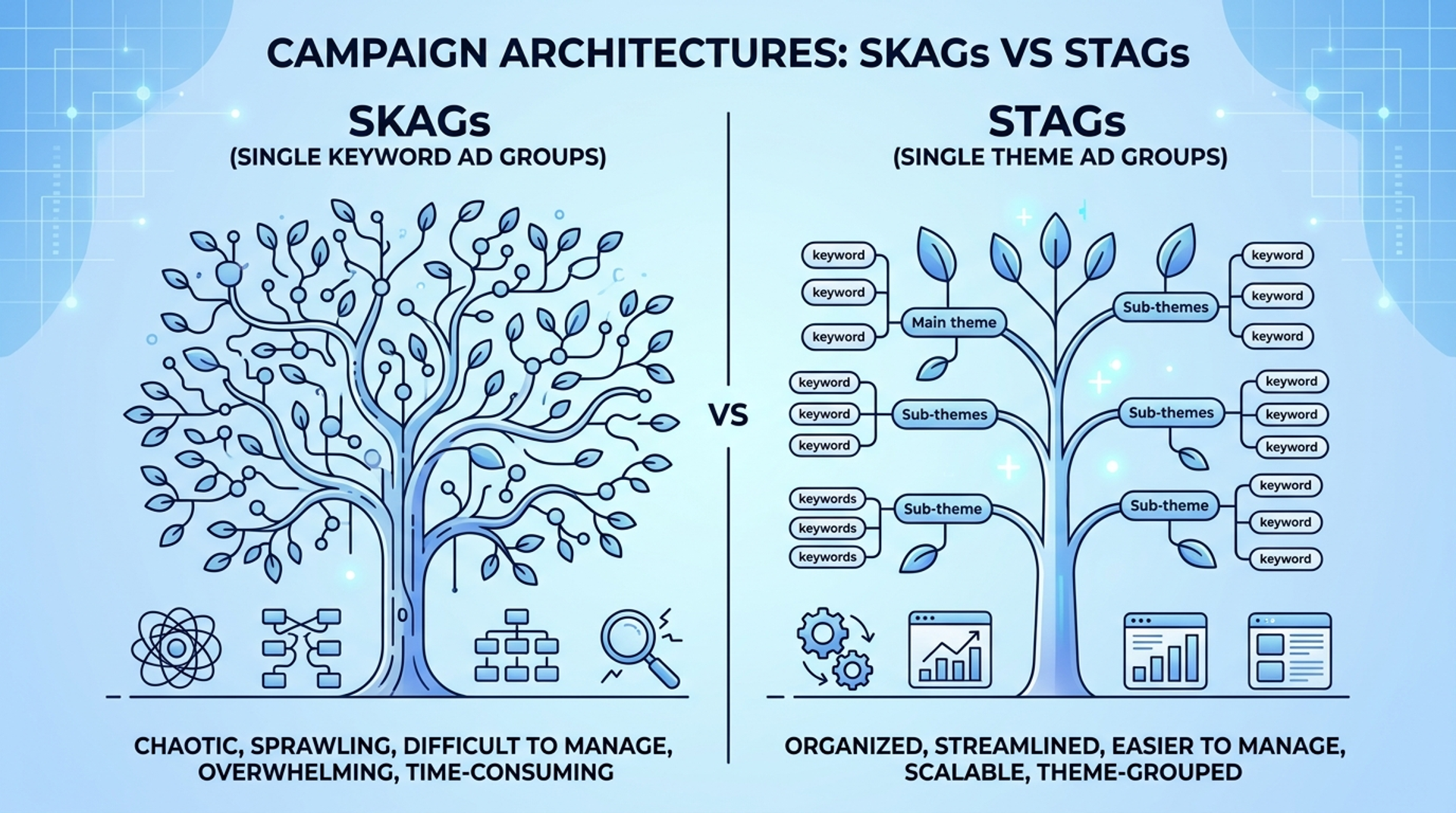
Historically, marketers relied on Single Keyword Ad Groups (SKAGs). While precise, this method completely chokes modern AI bidding algorithms. Today, we architect Single Theme Ad Groups (STAGs).
By grouping keywords based on the exact intent of the user, we feed Google’s machine learning models cohesive data. For example, if you are promoting advanced tech training, separate your top-of-funnel queries ("learn software testing") from bottom-of-funnel, high-intent queries ("enterprise QA automation certification"). This structural discipline allows you to write hyper-relevant ad copy that directly addresses the user's immediate pain point, drastically improving Click-Through Rates (CTR).
Eliminating Friction with Advanced Conversion Tracking
You cannot optimize what you cannot measure. Setting up campaigns without robust, server-side conversion tracking is the equivalent of flying blind.
To ensure data integrity, integrate Google Tag Manager (GTM) and configure offline conversion tracking. This means pushing data from your CRM back into Google Ads when a lead actually converts into a paying customer or student, not just when they fill out a form. This feedback loop is what trains the algorithm to find buyers, not just clickers. If you are struggling with this integration, our team specializing in performance marketing can audit and rebuild your tracking architecture.
Integrating Agentic AI and Autonomous Workflows
The era of manual CPC bidding is over. The modern Google Ads ecosystem demands that we lean into machine learning but we must guide the machine.
Selecting the Correct Automated Bidding Strategy
Your bidding strategy dictates how Google spends your money. Choosing the wrong one during the initial setup will derail your campaign instantly.
- Maximize Conversions: Ideal when you have historical data and want the algorithm to aggressively pursue leads within your daily budget constraint.
- Target CPA (Cost Per Acquisition): The gold standard for B2B and course enrolments. You tell Google exactly what you are willing to pay for a lead, and the system dynamically adjusts bids in real-time auctions to meet that target.
- Target ROAS (Return on Ad Spend): Crucial for eCommerce or campaigns where lead values vary significantly.
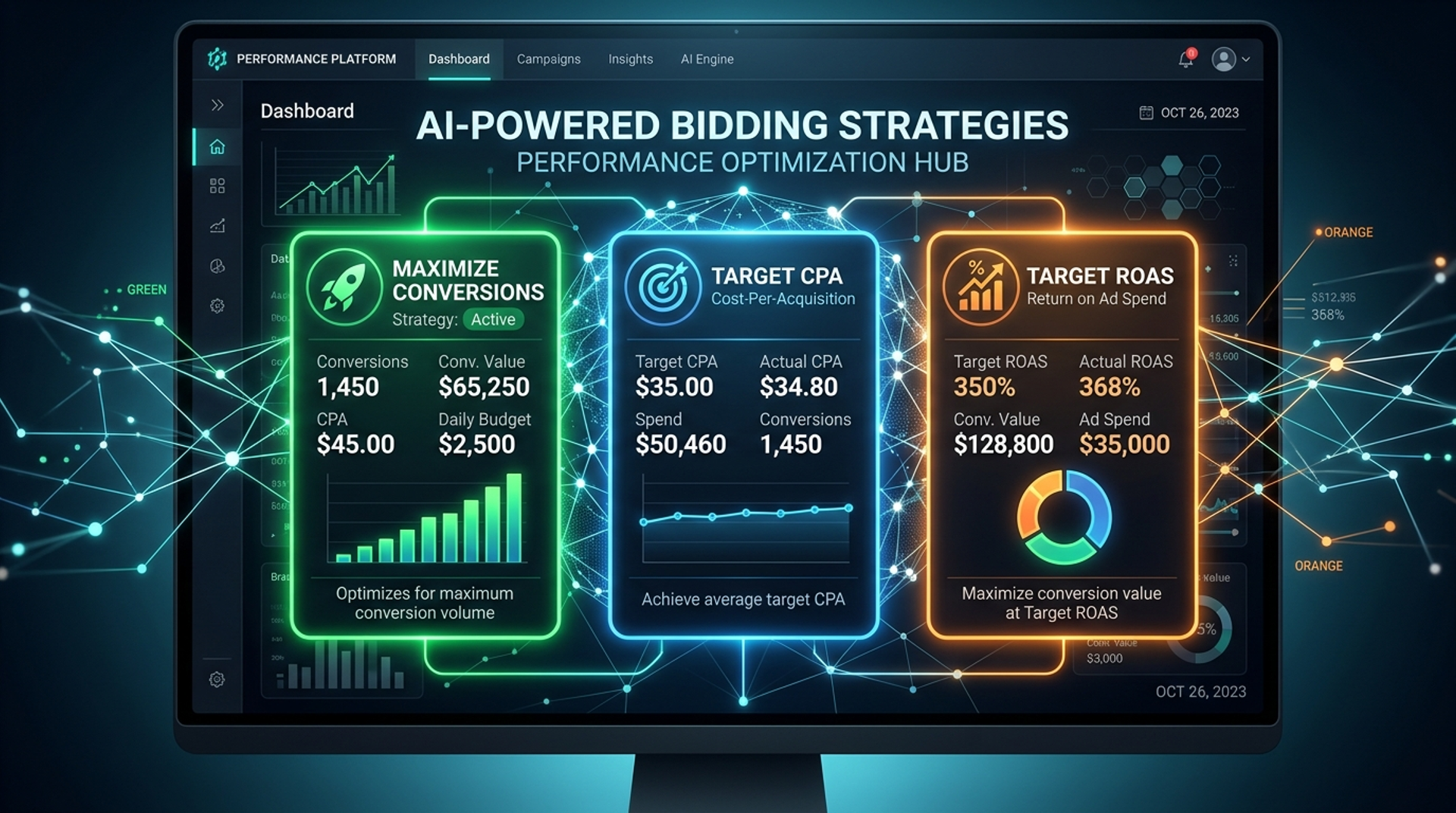
Strategic Insight: Never launch a brand-new account on Target CPA if you have zero conversion history. Start with Maximize Clicks to build initial data volume, then transition to conversion-based autonomous workflows once the system has a baseline.
Crafting Responsive Search Ads (RSAs) for the Algorithm
Google now heavily relies on Responsive Search Ads. You provide up to 15 headlines and 4 descriptions, and the AI tests thousands of combinations to serve the right message to the right user.
To master this:
- Pin Strategically: Pin your core value proposition to Headline 1. Pin your Call to Action (CTA) to Headline 2 or 3. Let the algorithm experiment with the rest.
- Inject Dynamic Keyword Insertion (DKI): Use DKI sparingly but effectively to mirror the user's search query directly in the headline.
- Focus on the Agitation: Your copy shouldn't just list features. Address the friction. Why are they searching? To reduce software bugs? To advance their career? Speak to the outcome.
Technical Defences: Protecting Your Ad Spend
Setting up the offense is only half the battle. You must build a fortress around your budget to prevent wasted clicks from irrelevant traffic.
The Power of Pre-Emptive Negative Keyword Lists
Do not wait for bad clicks to happen before you negate them. Build a comprehensive Negative Keyword List before launch. If you are selling premium B2B tech solutions, instantly negate terms like "free," "cheap," "open source," "jobs," and "internships."
Apply these lists at the account level. This ensures that as you spin up new campaigns, your defensive walls are automatically applied, safeguarding your ROI from day one.

Location and Device Exclusion Tactics
Be ruthless with your targeting. If your data shows that mobile users bounce at a 90% rate because your enterprise software landing page requires a desktop to view properly, apply a -100% bid adjustment to mobile devices.
Similarly, use "Presence: People in or regularly in your targeted locations" rather than the default "Presence or interest in." The default setting will often show your ads to users halfway across the globe who simply showed an "interest" in your targeted city, draining your local budget.
Post-Click Experience: Where SEO Meets SEM
Your Google Ads campaign setup can be technically perfect, but if the landing page fails, the campaign fails. This is where holistic marketing strategies, like advanced SEO optimization, integrate directly with paid media.
Message Match and Page Speed
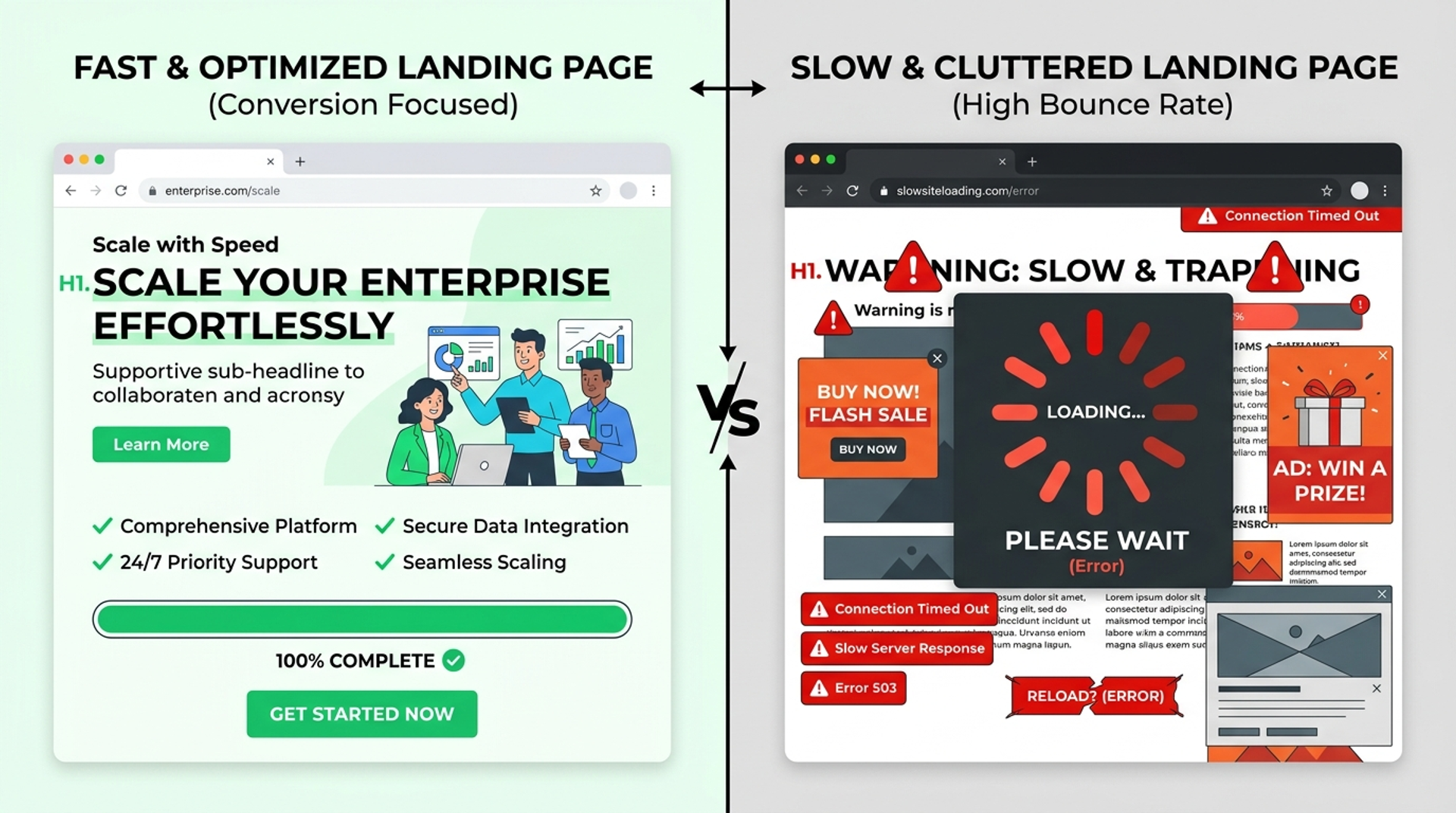
When a user clicks an ad promising "Enterprise QA Automation," the landing page H1 must clearly state exactly that. This is called Message Match. A poor message match causes immediate bounces, which lowers your ad's Quality Score and increases your Cost Per Click.
Furthermore, speed is critical. Decision-makers will not wait 6 seconds for a heavy page to load. Ensure your landing pages are built on fast, headless architectures. If your underlying site needs structural work to handle high-velocity ad traffic, review our web development frameworks to ensure your infrastructure can scale.
Utilizing Search Term Reports for Organic Growth
The data generated by a finely tuned Google Ads campaign is invaluable for your broader digital strategy. The Search Terms Report shows you exactly what users are typing into Google before clicking your ad.
Take these high-converting, long-tail queries and hand them directly to your content team. Build organic blog assets around these exact terms. Over time, as your organic rankings improve for these keywords, you can reduce your ad spend on them, effectively lowering your blended Customer Acquisition Cost.
Frequently Asked Questions (FAQ)
Q1. How long does it take for a new Google Ads campaign to optimize?
A new campaign typically requires a "learning phase" of 7 to 14 days. During this time, the AI is testing bids and placements. Avoid making major structural changes during this window, as it will reset the learning algorithm.
Q2. Should we bid on our own brand name?
Bidding on your own brand terms is generally very cheap, protects your digital real estate from competitors trying to siphon your traffic, and allows you to control the exact messaging and sitelinks the user sees.
Q3. Why is our Cost Per Click (CPC) suddenly increasing?
Sudden CPC spikes are usually caused by new competitors entering the auction, a drop in your ad's Quality Score due to poor landing page relevance, or a shift in market seasonality. Regular technical audits are required to diagnose and correct these shifts.
Q4. How does Agentic AI change campaign setup?
Agentic AI moves campaigns away from manual, granular adjustments. Setup now focuses on providing high-quality creative assets, strictly defined conversion goals, and broad, high-intent data inputs, allowing the AI to autonomously adjust bidding in real-time based on millions of contextual signals.
Conclusion
Mastering your Google Ads campaign setup is not a one-time event; it is the establishment of a strategic, data-driven ecosystem. By rigorously structuring your ad groups by intent, locking down your conversion tracking, and leveraging the immense power of autonomous bidding workflows, you insulate your marketing budget from waste.
For CTOs and marketing leaders, the goal is predictability and scale. When your ad infrastructure is built with this level of technical precision, it ceases to be a gamble. It becomes a reliable engine that consistently delivers high-value pipeline, allowing your teams to focus on closing deals and scaling the enterprise. Ensure your foundation is solid, trust the data, and let the automated workflows drive your growth.
Tags

SEO Analyst & Digital Marketing Specialist helping brands grow organically through smart strategy, data-driven insights, and powerful content.