
Content Marketing Funnel Course in Mumbai 2026 Jobs
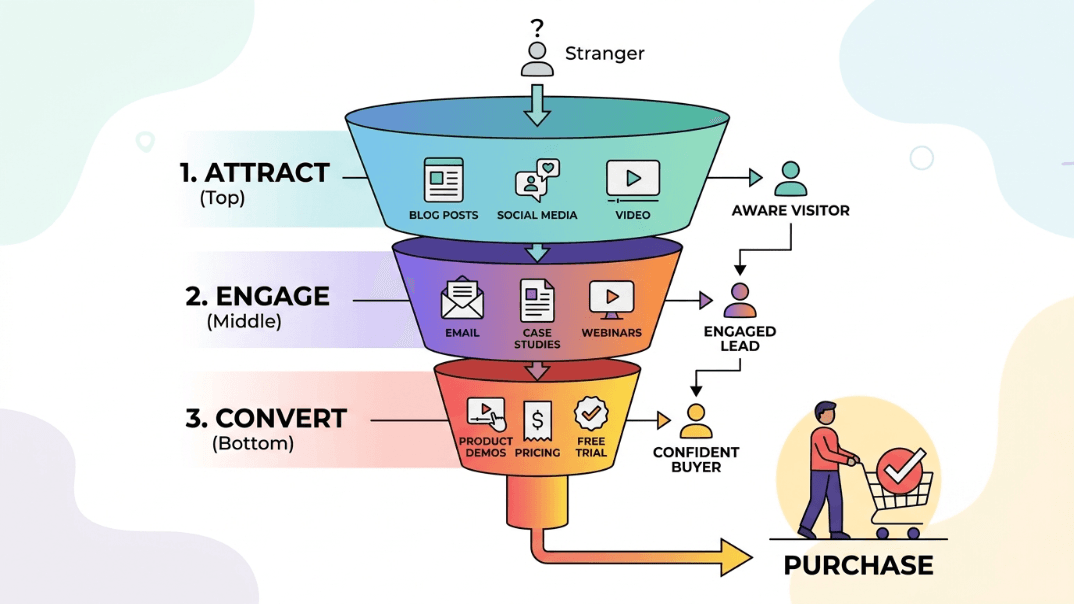
Confused about how brands turn strangers into paying customers? This guide breaks down the content marketing funnel in plain language every stage, the jobs it opens up, and a realistic roadmap to a digital marketing career in Mumbai.
Learn how brands turn strangers into customers one helpful piece of content at a time. This beginner-friendly guide breaks down the content marketing funnel stage by stage and shows the real digital marketing jobs it can open up in Mumbai by 2026.
You scroll Instagram during a Mumbai local commute, watch a 30-second reel on "5 Excel tricks", and forget about it. Two weeks later you read the same brand's blog. A month on, you book their course. You did not "decide" in one moment you were guided. That guided journey has a name: the content marketing funnel.
If you are switching careers or unsure how digital marketing actually works, this is the single most important idea to master. The content marketing funnel is the system every successful brand uses to turn complete strangers into paying customers using blogs, videos, emails, and social posts instead of cold sales calls.
In this guide you will learn what the funnel is, why Indian companies are hiring for it in 2026, how each stage works with real examples, the common mistakes beginners make, and a clear roadmap to your first job. By the end, you should be able to explain the funnel to a friend over chai.
Let us start with the simplest possible definition.
A content marketing funnel is a step-by-step framework that uses helpful content to move a stranger from first awareness to a confident purchase. It has three core stages top (attract), middle (engage), and bottom (convert) each using a different content type to match the buyer's intent at that moment.
What Is a Content Marketing Funnel?
Think of an Indian wedding shopping trip. First, the family browses dozens of shops just to see options no pressure to buy. Next, they shortlist two or three stores, compare prices, and ask detailed questions. Finally, they commit and pay at the one that earned their trust. A content marketing funnel works exactly the same way.
The "funnel" shape matters. Many people enter at the top, but only some move down to buy. Your job as a marketer is to create the right content at each level so more people keep moving down instead of dropping off.
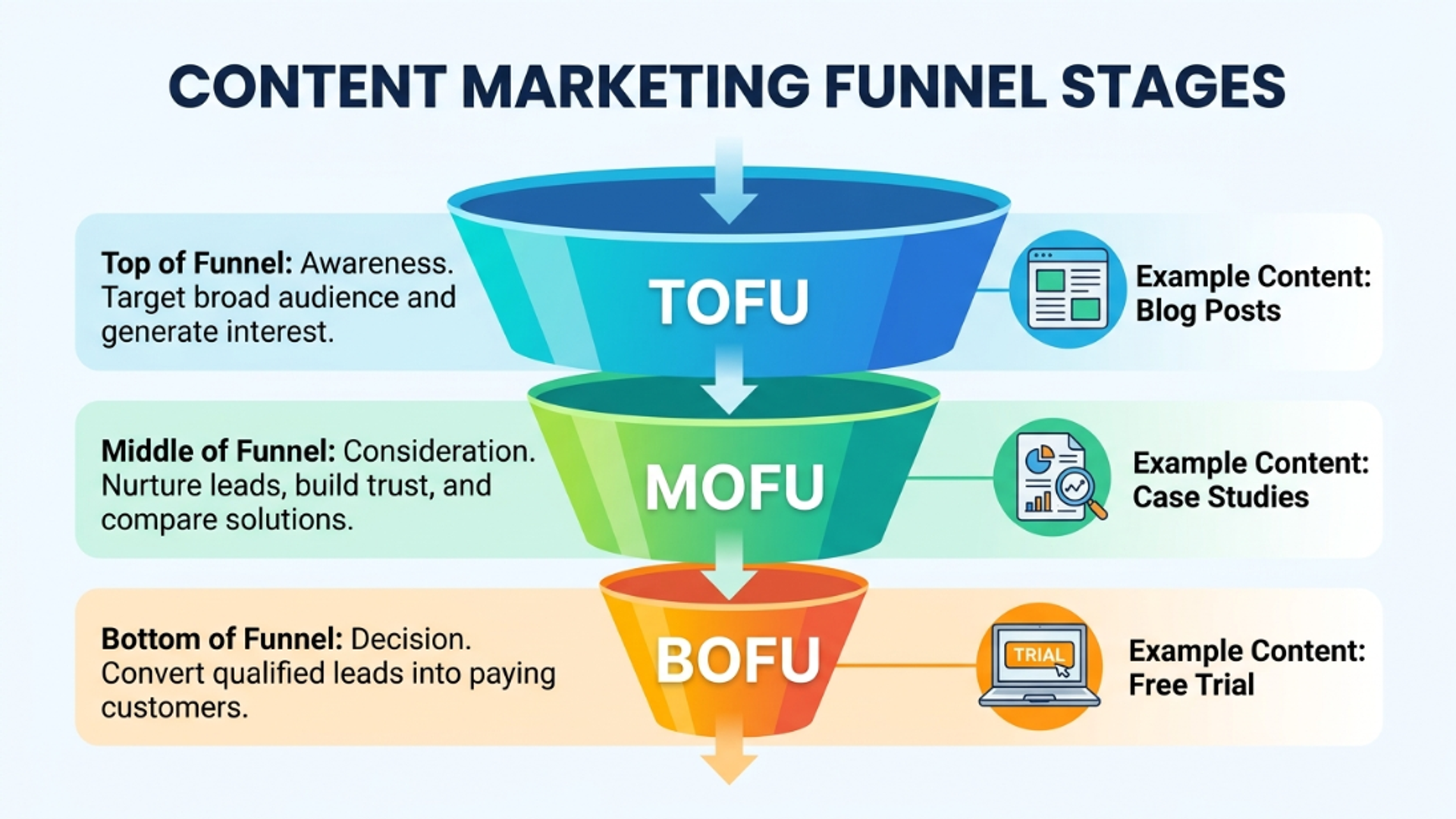
Marketers usually split the funnel into three stages, often called TOFU, MOFU, and BOFU:
- TOFU : Top of Funnel (Awareness): The person has a problem but does not know your brand. Content here is broad and educational blog posts, reels, infographics.
- MOFU : Middle of Funnel (Consideration): The person is comparing solutions. Content here builds trust detailed guides, webinars, case studies, email series.
- BOFU : Bottom of Funnel (Decision): The person is ready to buy and needs a final nudge. Content here is specific demos, testimonials, pricing pages, free trials.
The funnel is not about tricking anyone. It is about being genuinely helpful at every step, so buying becomes the obvious next choice.
Key Takeaway: A content marketing funnel guides a stranger to a sale by being useful first and salesy last.
Why the Content Marketing Funnel Matters in 2026
India's digital economy has changed how companies sell. With cheap data, vernacular content, and crores of new internet users from tier-2 and tier-3 towns, brands now compete on content, not just ads. A business that understands the funnel spends less on advertising and earns more trust.
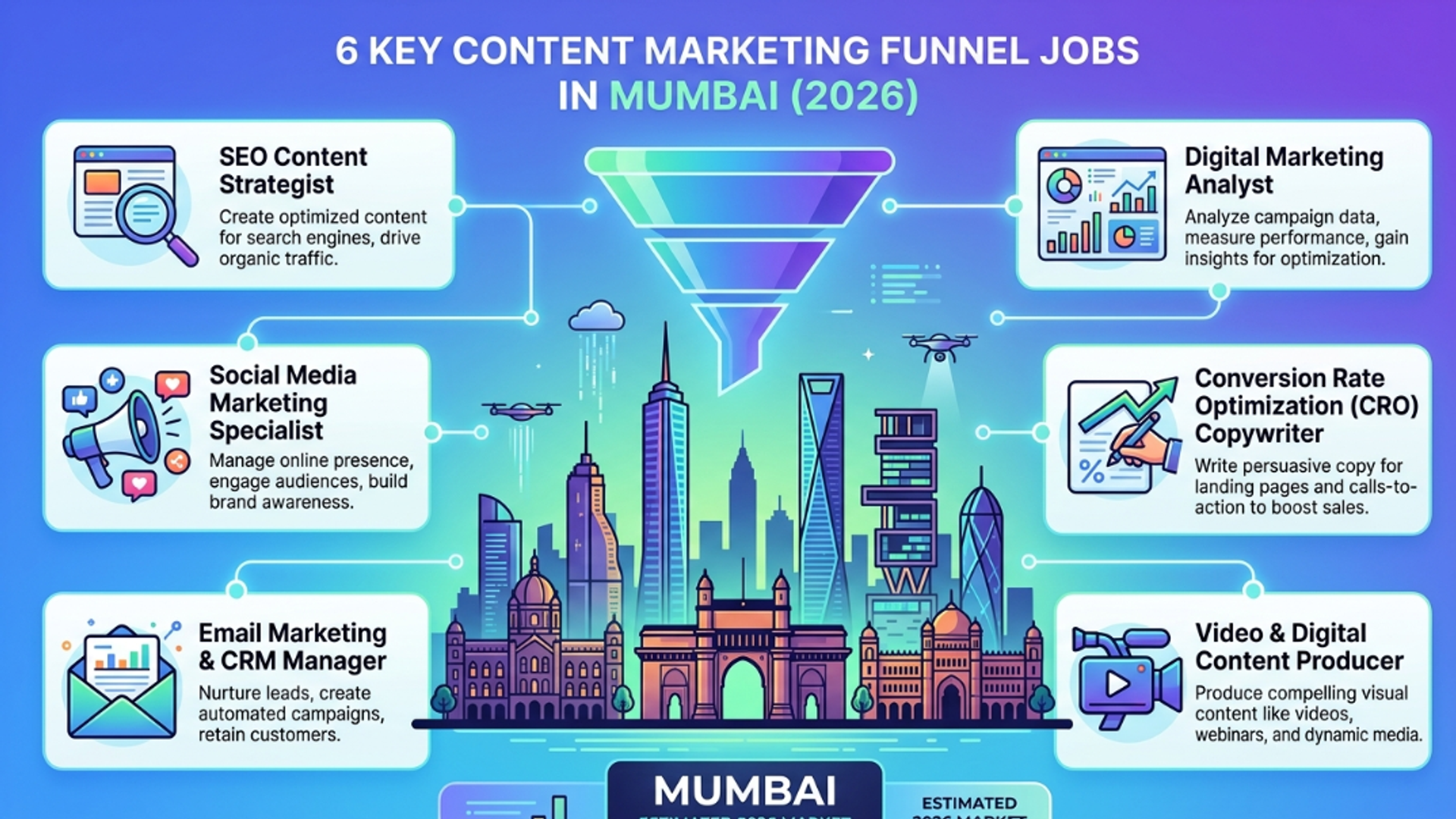
This is why funnel-literate marketers are in demand. A marketer who can map content to each funnel stage is far more valuable than one who only writes random posts. Companies in Mumbai from EdTech startups in Andheri to fintech firms in BKC actively hire for these roles.
Common job titles connected to funnel work include:
- Content Marketing Executive
- Digital Marketing Associate
- SEO Content Writer
- Email Marketing Specialist
- Social Media Manager
- Marketing Automation Analyst
Realistic salary ranges in India (all figures approximate verify with a current salary tool such as AmbitionBox, Glassdoor, or Naukri before quoting):
- Fresher / entry-level: roughly ₹2.5–4.5 LPA
- 2–4 years experience: roughly ₹5–9 LPA
- 5+ years / manager level: roughly ₹10–18 LPA
These are estimates, not promises your actual offer depends on skills, portfolio, city, and the company. The encouraging part is that this is a skill-first field. A career switcher with a strong portfolio can compete with a degree holder, because employers test what you can do.
Key Takeaway: Funnel skills make you hireable because they connect content directly to business revenue.
Brands increasingly use customer segmentation and prediction the kind of work covered in Data Science training to personalise each funnel stage
How the Content Marketing Funnel Works: A Step-by-Step Walkthrough
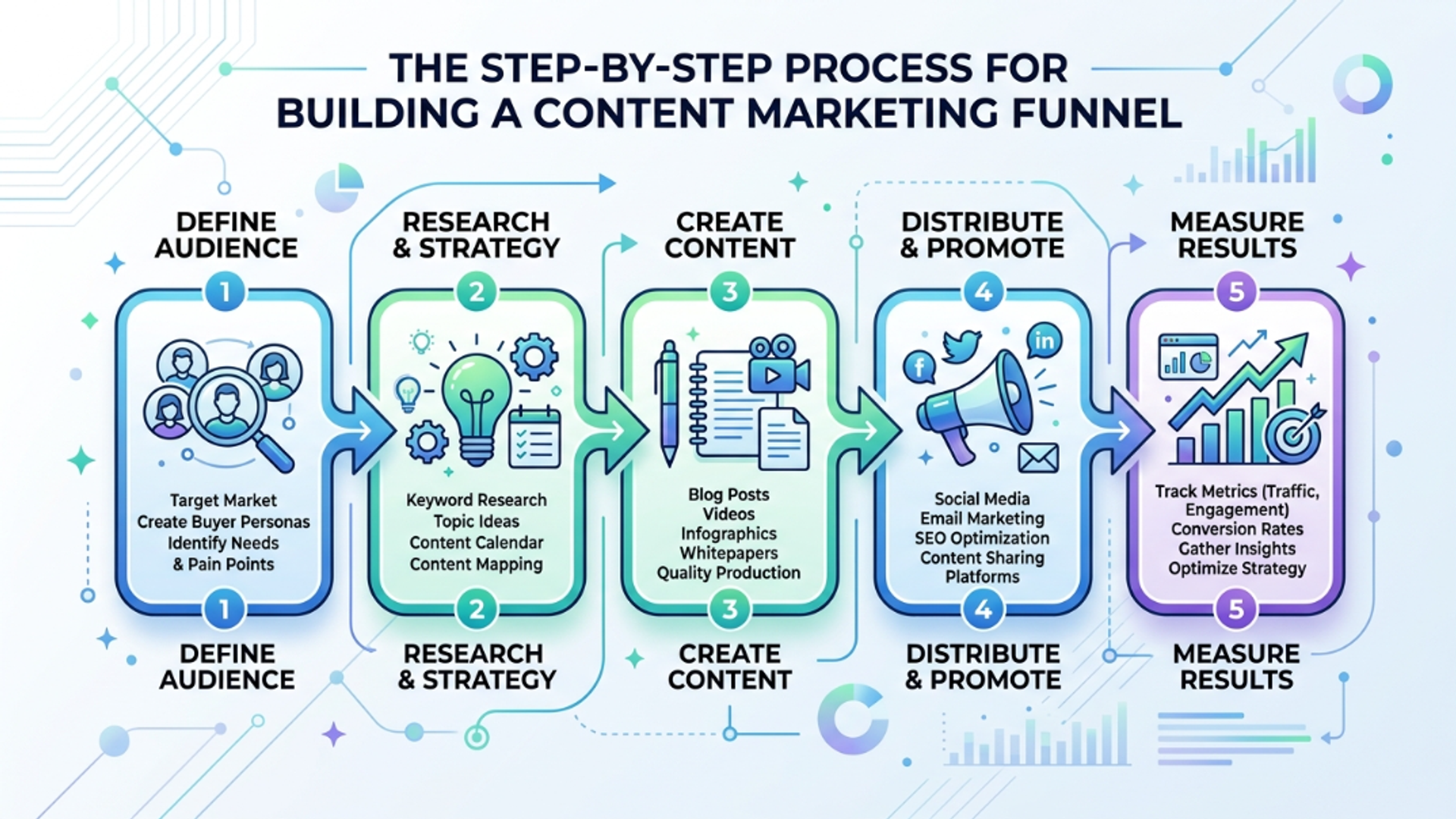
Let us follow one realistic scenario. Imagine a Mumbai-based online course brand wants new students. Here is how its team builds the funnel, step by step.
Step 1 :- Define the audience and their problem.
The team identifies "graduates worried about getting an IT job". Every piece of content will speak to this fear.
Step 2 :- Build the TOFU layer (attract).
They publish blog posts like "Top entry-level IT roles in India" and short reels answering common doubts. The goal is reach and trust, not sales. No "buy now" message appears here.
Step 3 :- Build the MOFU layer (engage).
Visitors who showed interest get deeper content a free webinar, a downloadable career roadmap, or an email series comparing learning options. The team captures emails so they can keep the conversation going.
Step 4 :- Build the BOFU layer (convert).
Now the warm audience receives course details, student testimonials, fee structures, and a free demo class invite. Because trust already exists, this content converts well.
Step 5 :- Measure and improve.
The team tracks how many people move from one stage to the next. If many readers land on the blog but few join the webinar, the MOFU content needs fixing. Measurement turns the funnel from guesswork into a repeatable system.
If many readers land on the blog but few join the webinar, you need to read the data skills taught in a Data Analytics course to find the leak
Here is a quick comparison of the three stages:
Notice that the content type changes with intent. Sending a pricing page to someone in the awareness stage scares them away. Sending another blog to someone ready to buy wastes the moment. Matching content to intent is the real skill.
Key Takeaway: A funnel works when each stage delivers the content that matches the reader's current intent.
Practical Tips, Common Mistakes & Responsible Practice
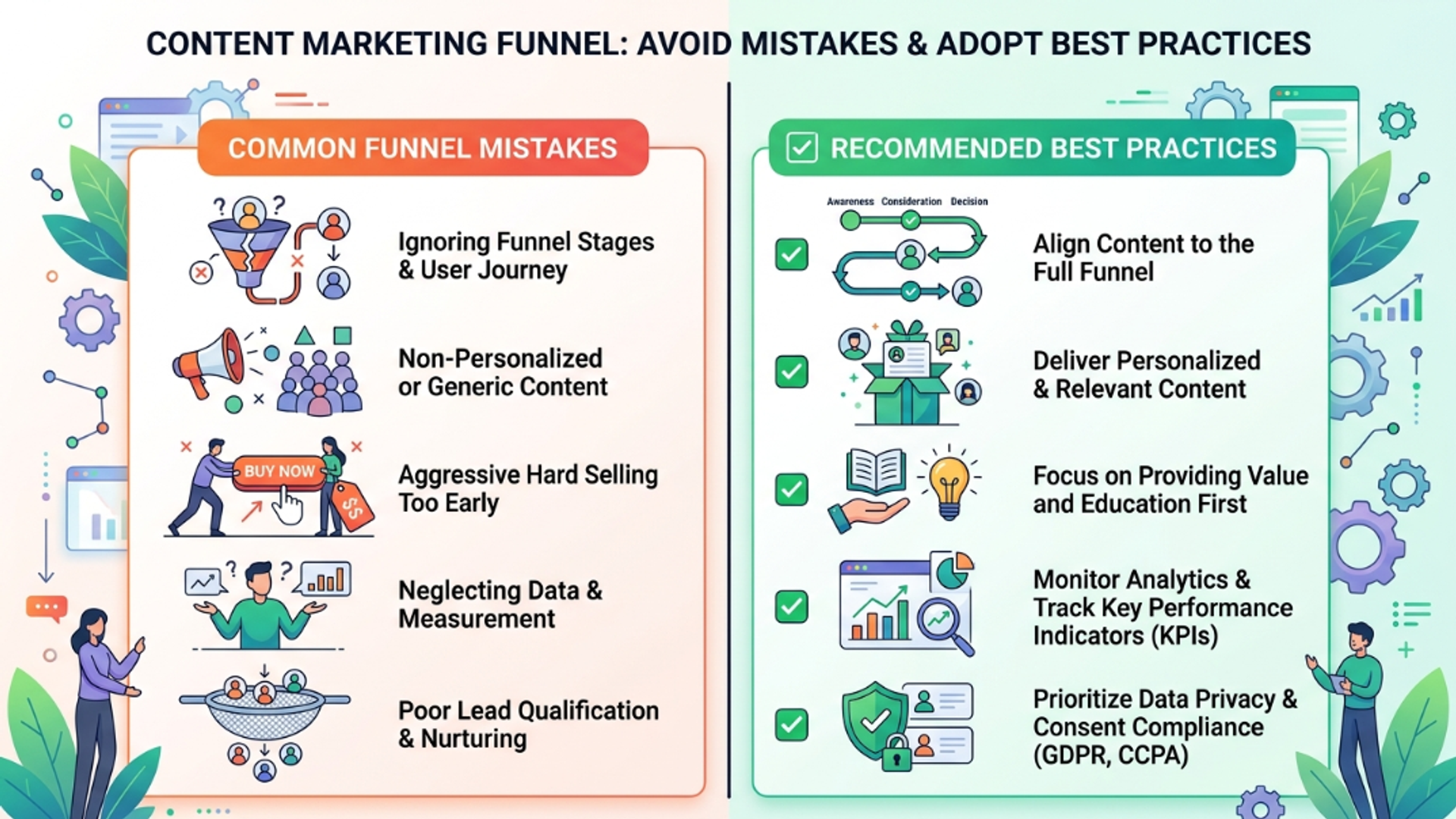
New marketers often understand the theory but stumble in practice. Avoid these five common mistakes:
- Selling too early. Pushing offers in TOFU content breaks trust. Educate first.
- Ignoring the middle. Many beginners build TOFU and BOFU but skip MOFU so warm leads go cold.
- No clear next step. Every piece of content should suggest one logical action, like "read this next" or "join the webinar".
- Chasing vanity metrics. A reel with one lakh views but zero leads is not success. Track movement between stages.
- Copy-pasting Western funnels. Indian buyers value relatability, vernacular content, and WhatsApp follow-ups. Adapt the funnel to your real audience.
Marketing automation auto-sending emails and reports is often scripted, a strength you build in a Python programming course
A few practical wins to apply immediately: repurpose one blog into five social posts, add an email capture to your best-performing page, and write content that answers the questions your audience actually types into Google.
A note on responsible practice. Funnels rely on collecting and using people's data emails, phone numbers, browsing behaviour. Under India's Digital Personal Data Protection (DPDP) Act, 2023, you must collect data with clear consent, explain how it will be used, and let people opt out. Never buy email lists or send messages without permission. Ethical marketing is not just legal it builds the long-term trust your funnel depends on.
Key Takeaway: Master the funnel by being patient, measuring movement, and handling user data ethically.
Recommendation engines that push the right content to the right reader are built using skills from a Machine Learning course
Career Path & Learning Roadmap
You do not need a marketing degree to start. You need skills and proof. Here is a realistic path for a career switcher.
Months 1–2: Foundations. Learn how the funnel works, basic SEO, content writing, and one analytics tool. Build the habit of writing every week.
Months 3–4: Specialize and practice. Pick a strength SEO content, email marketing, or social media and create real samples. Run a small funnel for a friend's business or a mock brand.
Months 5–6: Portfolio and job hunt. Package three to five strong projects into a portfolio, optimize your LinkedIn, and apply for executive and associate roles.
A focused learner can become job-ready in roughly six months with consistent practice. Structured guidance shortens the path a mentor catches mistakes you cannot see yourself. If you prefer a step-by-step route, a guided digital marketing program covers the funnel, SEO, paid ads, analytics, and a real portfolio in one place. Whatever you choose, the rule stays the same: learn, build, show.
A guided digital marketing programme covers the funnel, SEO, paid ads, analytics, and a real portfolio in one place
A mentor catches mistakes you cannot see yourself learn more about Cinute Digital's teaching approach
FAQ SECTION
Q1. What is a content marketing funnel?
A content marketing funnel is a framework that uses helpful content to move a stranger toward becoming a customer. It has three stages top of funnel (awareness), middle (consideration), and bottom (decision). Each stage uses a different content type, such as blogs to attract, webinars to nurture, and demos to convert. The funnel works by matching content to what the reader needs at that exact moment, building trust step by step instead of selling aggressively from the start.
Q2. How do I build a content marketing funnel for the first time?
Start by defining one audience and their main problem. Create broad, educational content like blogs and reels to attract them (TOFU). Next, offer deeper content like guides or webinars and capture their email (MOFU). Finally, send testimonials, demos, and offers to those warm leads (BOFU). Then measure how many people move between stages and fix the weakest one. Begin small with one funnel for a single product before scaling up.
Q3. Is a career in content marketing worth it in India in 2026?
Yes, for most people willing to learn and practise. Indian businesses increasingly rely on content to compete, so funnel-literate marketers stay in demand across cities like Mumbai, Pune, and Bengaluru. It is also a skill-first field, meaning a strong portfolio can matter more than a degree. Salaries vary widely by skill and experience, so treat any figure as approximate and verify it on a current salary platform before relying on it.
Q4. How long does it take to become job-ready in content marketing?
With consistent, focused effort, many career switchers become job-ready in around six months. The first two months cover foundations like funnel theory, SEO, and writing. The next two months focus on specialising and creating real samples. The final two months are for building a portfolio and applying for jobs. A structured course or mentor can shorten this timeline by helping you avoid common mistakes and giving you guided practice.
Q5. How much can a content marketing fresher earn in Mumbai?
Entry-level content and digital marketing roles in India typically pay somewhere in the range of ₹2.5–4.5 LPA, though this is approximate and varies by company, skills, and portfolio strength. With two to four years of experience, ranges of roughly ₹5–9 LPA are common. Always verify current numbers on platforms like AmbitionBox, Glassdoor, or Naukri, since salaries shift with demand and your individual negotiation.
Conclusion
Let us recap the three things that matter most. First, a content marketing funnel guides a stranger from awareness to purchase using helpful content at every stage. Second, funnel skills are genuinely in demand because they connect content to revenue which is exactly what employers in Mumbai want. Third, this is a skill-first field, so a focused career switcher can become job-ready in about six months.
The funnel is not a marketing trick. It is simply the art of being useful, in the right order, until trust turns into a decision. Learn it well and you will never run out of work.
If you want a structured, mentor-led path into this career, explore CDPL's digital marketing program or book a free demo class to see if it fits your goals. Your next chapter can start with one decision today.
.or book a free demo class to see if it fits your goals
If you want a structured, mentor-led path into this career, explore Cinute Digital's programmes.
Tags

A passionate and detail-oriented frontend developer with a strong knowledge in Web Development and strong foundation in HTML, CSS, JavaScript, React.js and Next.js.