
Manual vs Automation Testing: Which Is Better for Freshers?


Manual vs automation testing is the first big choice a QA fresher makes. This guide uses a Mumbai local-train analogy and one signup form tested both ways to show what each skill involves. You also get approximate pay ranges, five beginner mistakes and a month-by-month roadmap.
Manual vs Automation Testing: Which Is Better for Freshers?
By [AUTHOR NAME], [AUTHOR TITLE] at Cinute Digital | Published 21 September 2026 | 11 min read | Updated 21 September 2026
It is 8:40 am on the Western line. Two friends from your batch are arguing over the noise of the train. One says, "Learn Selenium, automation pays more." The other says, "Manual testing is easier, just get a job first." You nod at both and trust neither.
Sound familiar? The manual vs automation testing question is often the first real career decision a QA fresher faces, and most answers online are written for QA managers, not beginners.
At Cinute Digital, we work with fresh graduates and career switchers, including people from non-IT backgrounds, and we give them the same honest answer: neither wins on its own, and the order in which you learn them matters more.
In this guide, you will understand both approaches through a Mumbai local-train analogy, watch one signup form tested by hand and by script, see approximate pay ranges, avoid five beginner mistakes and follow a simple roadmap.
First, the short answer.
Manual testing means a person checks software step by step; automation testing uses scripts to repeat those checks. For freshers, manual testing is the better first step because it builds test-design and bug-reporting skills, and needs no coding. Add automation next, since many employers prefer testers who can do both.
Manual vs Automation Testing Explained with a Mumbai Local Train
Software testing means checking an app before real users touch it. Think of the apps that run your day: IRCTC, UPI, food delivery. Somebody tried to break every update before it reached your phone.
Manual testing means a person checks the software by hand. Picture the ticket checker walking through a local-train compartment. He reads each ticket, notices the passenger who looks unsure and asks one more question when something feels off. He needs no machine. He needs attention, judgment and healthy suspicion.
Automation testing means a script does the checking for you. Picture the automatic gates at a metro station. Every ticket gets the same check, in the same second, thousands of times a day. Nobody gets tired or skips a gate at 9 pm.
Now look closer. Someone still decided what the gate should check. If the rule is wrong, the gate rejects valid tickets quickly and confidently. Automation speeds up your thinking; it does not replace it. In both approaches, deciding what to test (test design) stays a human skill.
Two myths are worth clearing up. First, manual testing is not "just clicking around". Good manual testers design cases, think about edge cases and write bug reports that developers can act on. Second, automation testing is not no-code magic. Most tools still need programming, and scripts need repair when the app changes. Once you accept both truths, "which is better, manual or automation testing?" stops feeling like a fight.
That is why most freshers begin with the basics. A structured manual software testing course teaches test-case writing, the defect life cycle and ISTQB Foundation preparation, as listed on the course page.
The ISTQB website publishes the official testing syllabus and glossary. Keep it handy when a job description throws an unfamiliar term at you.
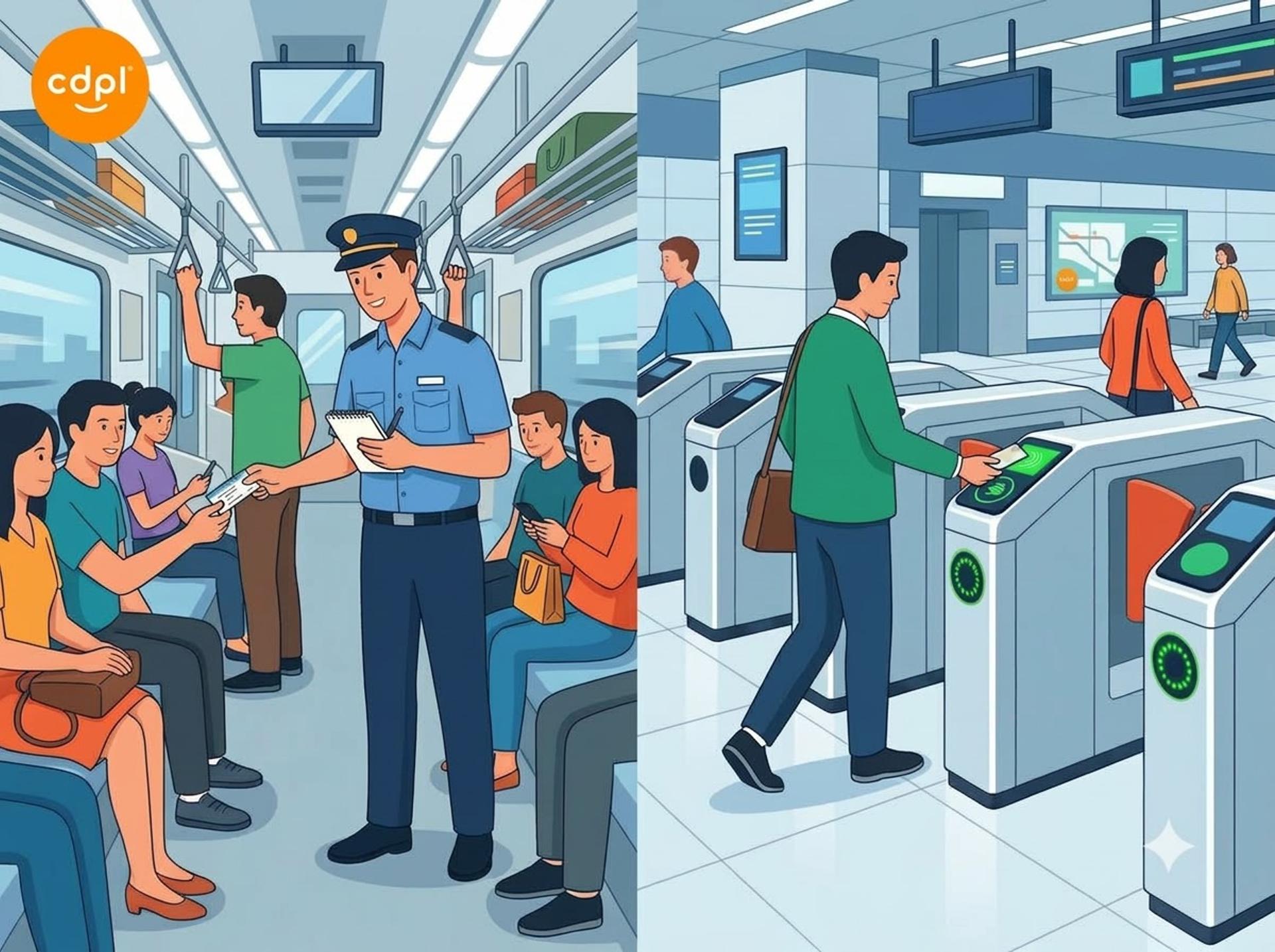
Key Takeaway: Manual testing is judgment on foot; automation testing is that same judgment set on repeat.
Why This Choice Matters for Freshers in India (2026)
Mumbai's job market alone includes banks, fintech firms, IT-services companies, e-commerce teams and product startups, and all of them need people who can test software. Release cycles keep getting shorter, so repetitive checks pile up quickly. That is why many job descriptions ask for automation skills next to test-case design.
Is manual testing dead? No. New features, usability and exploratory testing still need human judgment, and even AI-assisted tools need a person to decide whether a result makes sense. What has changed is the expectation: many employers like testers who can also automate. For a fresher, manual vs automation testing is really a question of sequence, not superiority.
Here are the common roles behind the salary question. The ranges are approximate; verify current figures on Naukri, LinkedIn and AmbitionBox, because pay varies by city, company and skills.
Job titles also differ across companies. "QA analyst", "test engineer" and "software tester" can describe similar work, so read the responsibilities, not just the title. A listing that says "manual plus basic automation" is often a good first door for a fresher, because you learn on the job while building scripting skills.
Many freshers worry about being stuck in manual roles. Testers commonly add SQL, API testing and a scripting language while working, then apply for automation roles. Your first job matters less than the skills you keep adding.
Try a five-minute exercise. Search "QA engineer" on Naukri or LinkedIn for your city and open ten listings. Count how often Selenium, API testing and SQL appear beside test-case design. If automation interests you, an advanced automation testing course is the natural next step. Its course page lists Selenium WebDriver, CI/CD with Jenkins and advanced Java concepts.
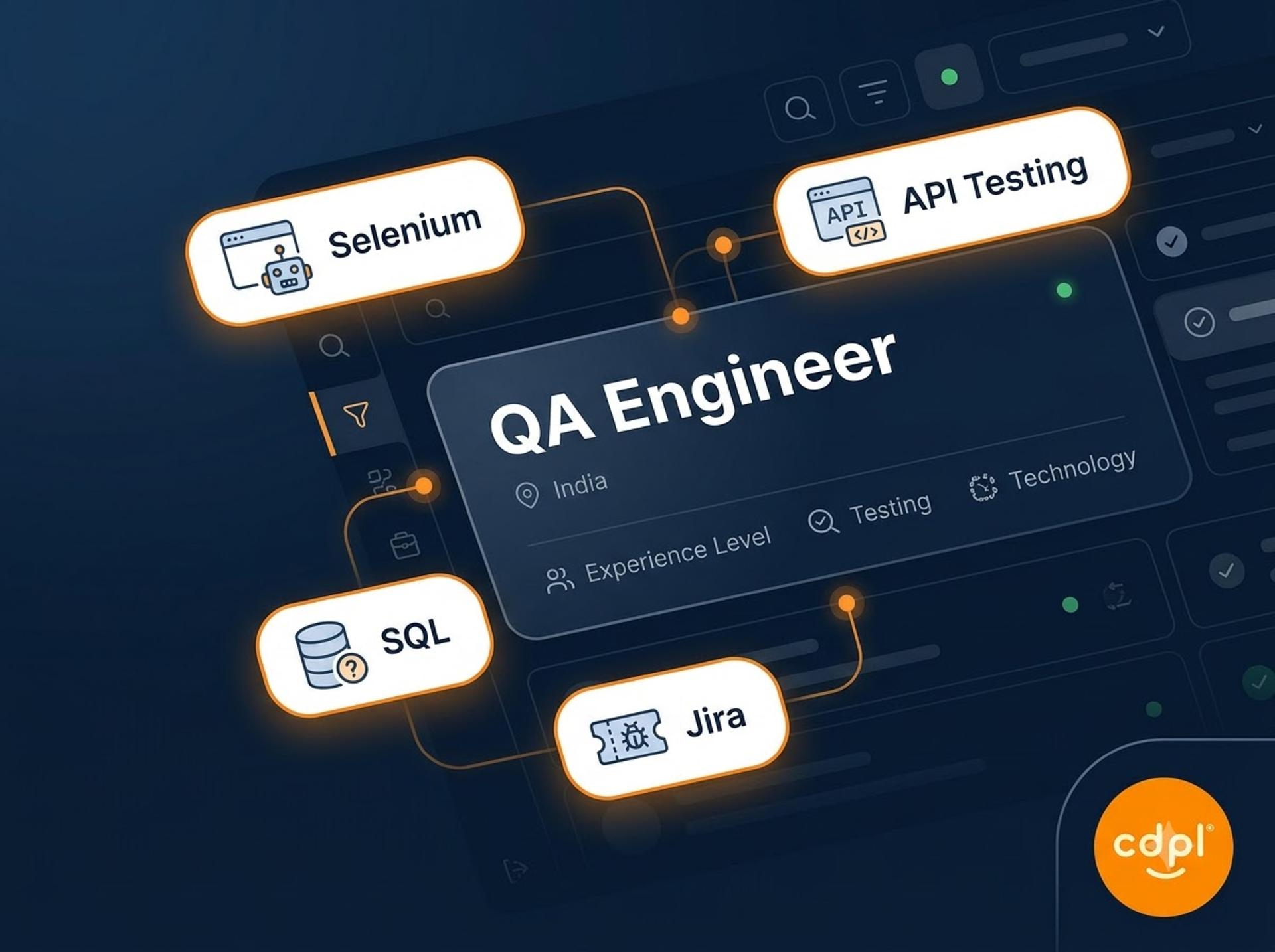
Key Takeaway: Pay and options grow as you move from finding bugs to building systems that find them for you.
One Signup Form, Tested Two Ways
Imagine your team has built a signup form. The email box must accept a valid address and show the message "Enter a valid email address" for anything else. Let us test it both ways.
Way 1: Manual testing
- Read the requirement and list test cases: a valid email, "not-an-email", a blank field, an email with spaces and an already registered email.
- Open the form and run each case by hand.
- Compare the actual result with the expected result.
- Log every mismatch as a bug, with steps, a screenshot and a severity.
A person also notices what a script would miss. Is the error readable on a small phone screen? Does the cursor return to the email box? Does the wording make sense to a first-time user? These human-only checks are the strength of manual testing. But you repeat the whole routine every time the code changes, and that repetition is where automation helps.
Way 2: Automation testing
Do testers need coding? For manual roles, no. For automation, yes, at a basic level. Selenium works with several languages. We use Python here because it reads almost like English; the logic is the same in Java. This script checks the invalid-email case. It assumes a practice page with the element IDs shown, so replace the URL with a site you are allowed to test.
Here is what each line does (line numbers count the blank lines):
- Lines 1–2: import Selenium's browser controller (
webdriver) and theByhelper, which says how to find things on a page. - Line 4: opens a new Chrome window.
- Line 5: loads the signup page.
- Line 7: finds the email box by its ID and types an invalid address.
- Line 8: finds the Sign Up button and clicks it.
- Line 10: reads the text of the error message.
- Line 11: prints PASS if the message matches, otherwise FAIL.
- Line 13: closes the browser.
Expected output: PASS, if the page has those IDs and shows exactly that message. If an ID is wrong, Selenium raises NoSuchElementException. Real scripts also add explicit waits so slow pages do not cause false failures.
Selenium's official documentation explains setup for each language. Recent Selenium 4 releases can fetch the browser driver for you, so check the docs for your version.
Scripts like this need a programming base. A beginner-friendly Python programming course covers syntax, OOP and automation scripting, as listed on the course page, so it is a logical next skill once manual basics feel comfortable.
Here is a quick way to see where each approach fits in the manual vs automation testing debate:
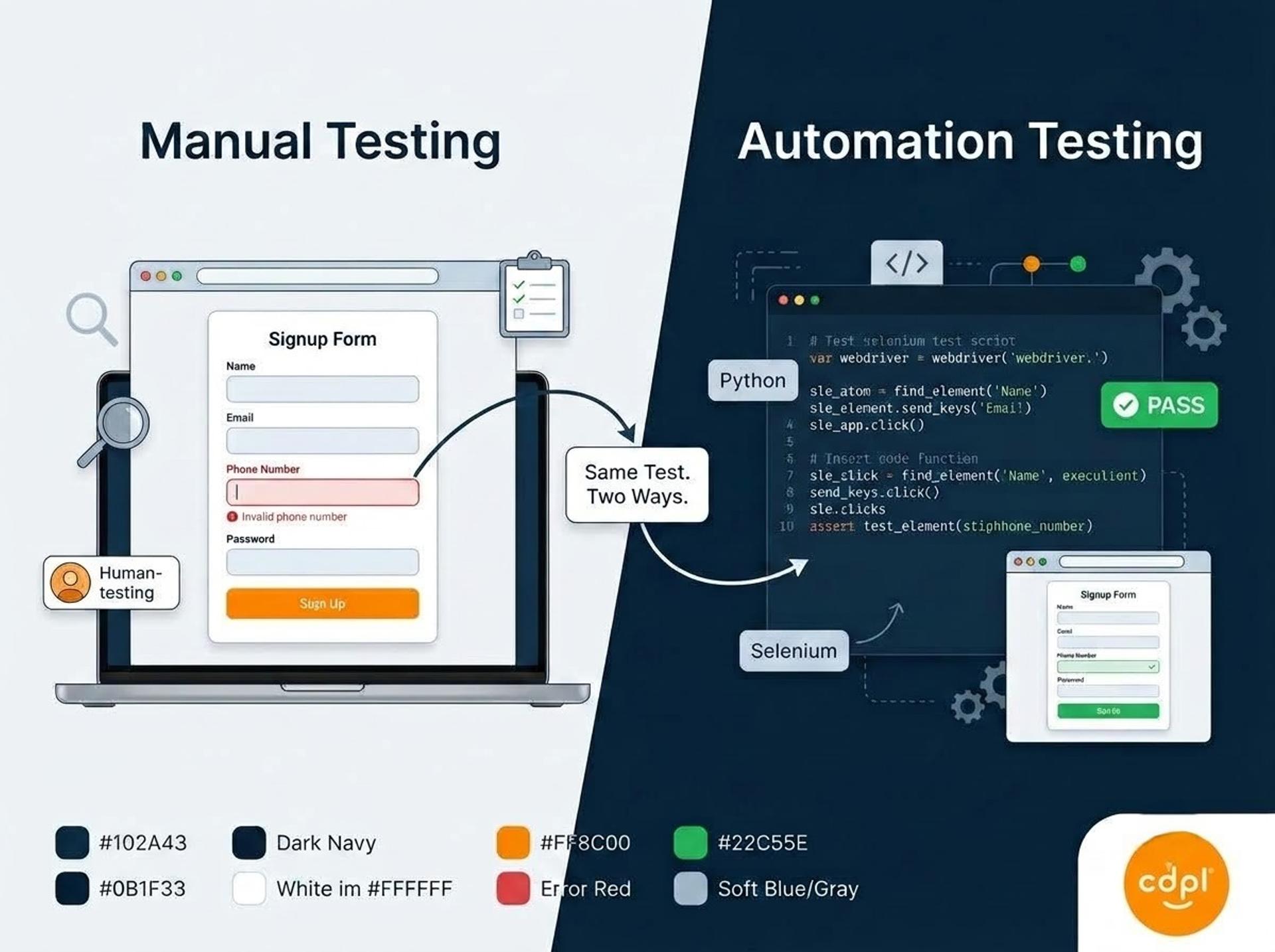
Key Takeaway: Automate the checks you repeat every release; keep humans for the checks that need judgment.
5 Beginner Mistakes to Avoid (and How to Test Responsibly)
Most beginners stumble in the same five places, whichever side of the manual vs automation testing debate they start on.
- Jumping to Selenium before test design. A script only checks what you thought of. Learn to write strong test cases first.
- Skipping SQL. Testers verify what the app stored, not just what appears on screen. Learn joins, filters and simple updates through a course on MySQL and SQL fundamentals, because data checks come up in almost every testing role.
- Copy-pasting scripts you cannot explain. Interviewers ask you to walk through your code line by line. If you cannot, the script does not count as a skill.
- Automating unstable features. If a screen changes every week, scripts break every week. Automate stable, repeated flows such as login and checkout, and keep new features manual until they settle.
- Collecting certificates without projects. A certificate opens the conversation, but a small portfolio keeps it going: ten test cases, five bug reports and one working script.
Test responsibly. Run scripts only on applications you own or on practice sites that allow testing, and never use real customer data. India's Digital Personal Data Protection Act, 2023 governs how personal data is handled, so companies expect testers to work with masked or dummy data. You can read more on the MeitY website, the ministry that administers it. Also avoid sending heavy automated traffic to sites you do not own, since it can breach their terms of service.
Spend your first month on the base skills, and everything after it goes faster.
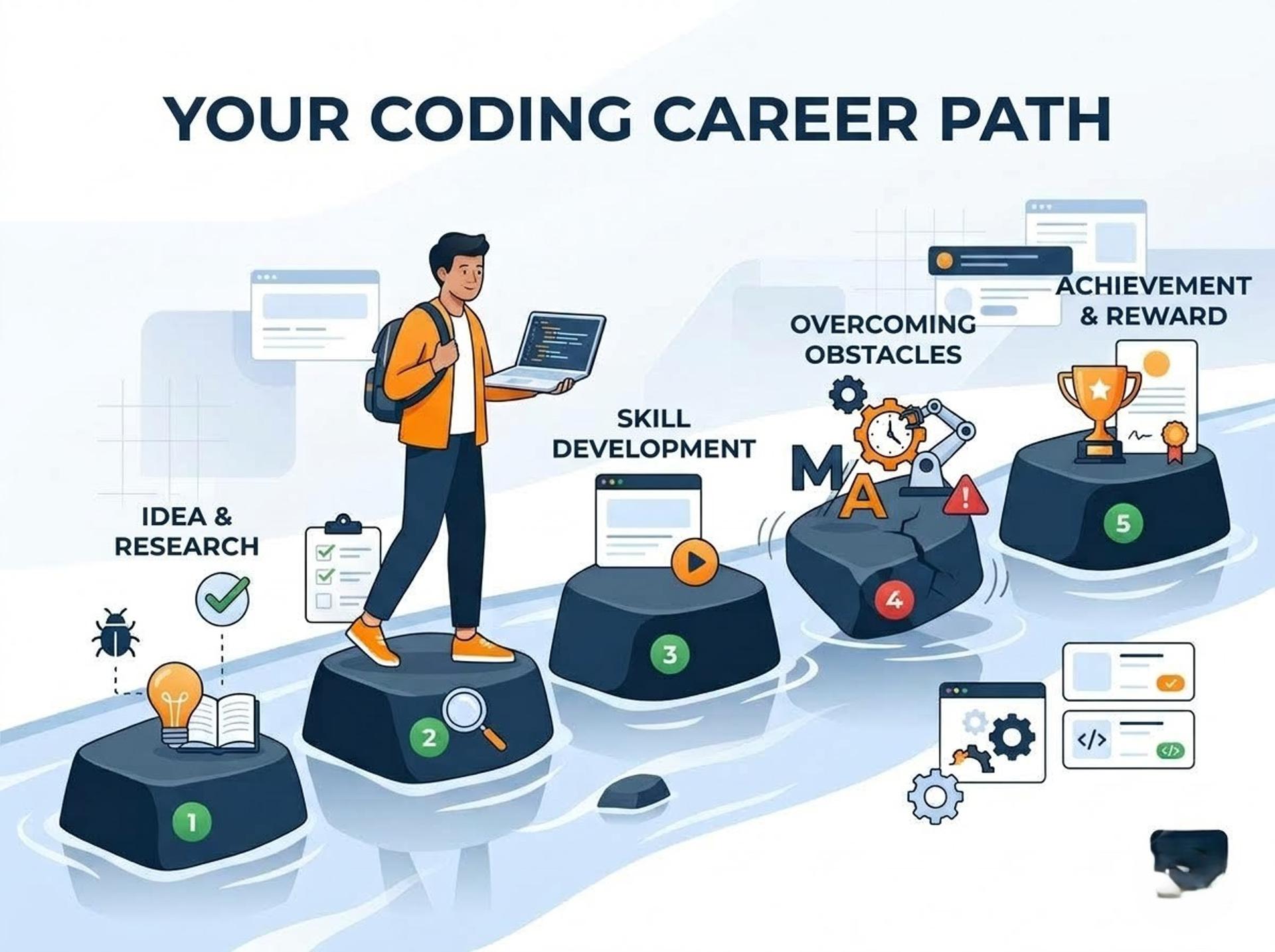
Key Takeaway: Build the base first (test design, SQL, one language), and the tools become easier to learn.
Your Career Path and Learning Roadmap
Testing opens several doors: Manual QA Engineer, Automation Test Engineer, API Test Engineer, SDET and, later, QA Lead. Manual testing vs automation testing for freshers is not a permanent choice, because testers move between tracks as they learn. A software testing career for freshers usually grows fastest when automation sits on top of manual fundamentals.
Your starting point decides your route.
- Not comfortable with code yet? Start with manual testing and SQL, then add scripting in stages.
- Comfortable with logic or programming? Learn manual fundamentals quickly, then move to automation.
- Neither detail-checking nor problem-solving excites you? Consider another path, such as data analytics or digital marketing. Testing rewards patience and curiosity.
Here is an approximate roadmap for a fresher studying 10–15 hours a week. Treat the timeline as a guide, not a promise.
- Months 0–2: manual testing, test-case design, bug tracking, optional ISTQB Foundation prep.
- Months 2–4: SQL and API testing basics.
- Months 4–8: Python or Java, Selenium, Git and CI/CD basics.
- Months 8–10: two or three projects, resume work and mock interviews.
If you prefer one guided path over stitching topics together, CDPL's Manual and Automation Testing Master Program combines both tracks. Check the course page for the current syllabus, duration and batch details. Whichever automation testing course in Mumbai you consider, ask to see project work, not just the topic list, before you enrol.
Conclusion: Start Manual, Grow Into Automation
So, which is better for freshers? Keep three points in mind.
First, manual vs automation testing is not a fight. Manual thinking is the base, and automation multiplies it, so sequence matters more than choice. Second, coding is optional on day one but valuable within months, so plan to add SQL, API testing, a scripting language and Selenium. Third, dodge the classic traps: skipping test design, ignoring SQL and automating everything.
You do not need to decide everything today. Pick one small step: write ten test cases for an app you use daily and see whether you enjoy the hunt. That single exercise will tell you more than a week of reading.
If you would like help choosing a path that suits your background, book a free demo class and talk it through with the CDPL team. A good decision beats a quick one.
Every strong tester began with one curious question and one clear bug report. Yours can start this week.
FAQ SECTION
1. What is the difference between manual and automation testing?
Manual testing means a person runs test cases by hand, notices problems and reports bugs. Automation testing uses scripts, often with Selenium, to repeat those checks quickly and consistently. Manual testing needs no coding and suits new features, usability and exploratory checks. Automation needs basic programming and suits repetitive regression tests. Most QA teams use both, so freshers benefit from learning manual fundamentals first and automation second.
2. How to start a career in software testing as a fresher?
Begin with manual testing basics: test-case writing, the defect life cycle and bug reporting. Add SQL and API testing next, then learn Java or Python and Selenium. Build two or three small projects, consider ISTQB Foundation preparation and practise interviews. You do not need coding on day one, but you will want it within a few months for automation roles.
3. Is manual testing still worth learning in 2026?
Yes. Manual testing is still needed for exploratory testing, usability checks and new features where requirements keep changing, and even automated results need a human to judge them. What has changed is the expectation: many employers like testers who can also script repeat checks and test APIs. Learn manual first, then add automation, SQL and API skills to keep your options wide.
4. How long does it take to become job-ready as a software tester?
It depends on your starting point and weekly hours. As an approximate guide, many freshers who study 10 to 15 hours a week need around 8 to 10 months to cover manual testing, SQL, API basics, a programming language, Selenium and two or three projects. Treat this as a rough range, not a promise. Project practice and interview preparation matter more than the calendar.
5. How much do software testing freshers earn in India?
Entry-level pay varies by city, company and skills. As an approximate guide only, manual QA fresher roles often fall around ₹2.5 to ₹4.5 lakh per annum, and automation-focused entry roles are often higher, roughly ₹4 to ₹7 LPA. Verify current figures on Naukri, LinkedIn or AmbitionBox. Skills such as Selenium, API testing and SQL can strengthen your offer.
Tags

A Manual Tester in TESTRIQ QA LLP and also as Corporate Trainer with CDPL. With a focused career in training and development.