
Building Web Apps with Flask and Django: A Complete 2026 Guide for Aspiring Python Developers
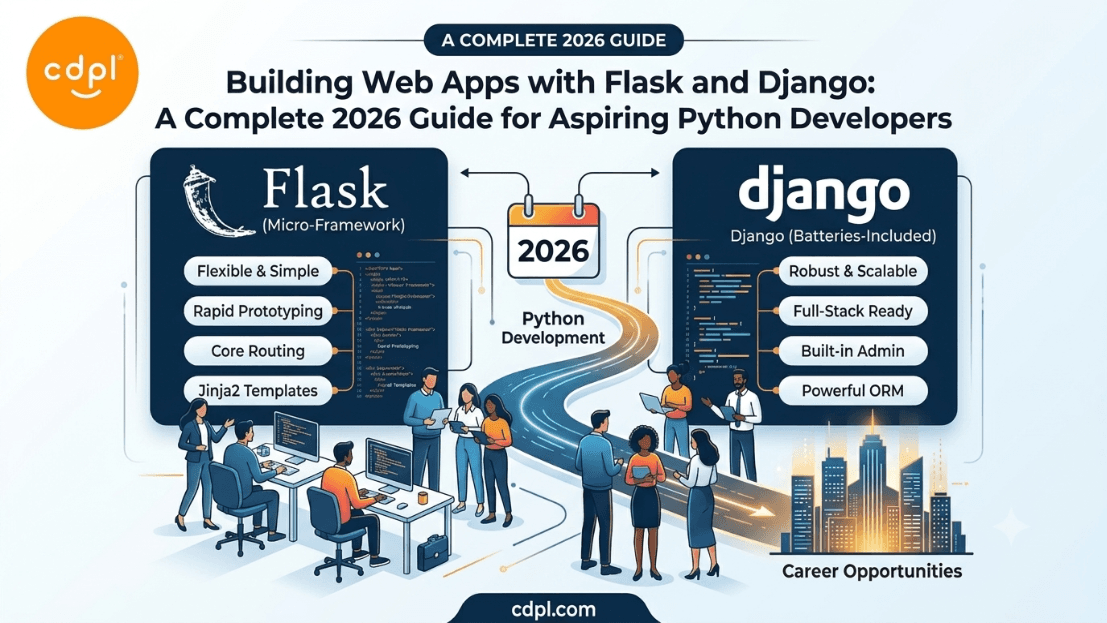
Discover how to build real web applications with Flask and Django, Python's two most popular frameworks. This complete 2026 guide breaks down their architecture, key differences, real-world project ideas, and the exact skills you need to launch a career as a Python web developer.
Learn to build modern web apps with Flask and Django, plus the projects and skills that make you job-ready as a Python developer in 2026.
Python has quietly become the language behind a huge share of the modern web. From scrappy startup MVPs to the dashboards that power billion-dollar companies, two frameworks do most of the heavy lifting: Flask and Django. If you have ever wondered how a Python script turns into a real, clickable web application that thousands of people can use, this guide is for you.
In this article we will break down what Flask and Django actually are, how they differ, when to reach for each one, and the kinds of projects you can build to become job-ready. Whether you are a student, a career switcher, or a working professional looking to add web development to your toolkit, by the end you will have a clear mental model of how Python web apps come together and a roadmap to start building your own.
Why Python for Web Development?
Before diving into frameworks, it helps to understand why Python dominates this space. Python reads almost like plain English, which lowers the barrier to entry for beginners. It has an enormous ecosystem of libraries, an active community, and crucially it powers far more than just websites. The same language you use to build a web app can also be used for data science and machine learning, automation, and AI.
That versatility matters for your career. A developer who knows Python web frameworks and understands data can move fluidly between teams and roles. Companies love hires who can build the application layer and also reason about the data flowing through it. This is exactly why structured, project-based learning like the kind offered in a focused Python Programming course pays off so quickly.
Now, let us meet the two frameworks at the center of the Python web world.
What Is Flask? The Minimalist Micro-Framework
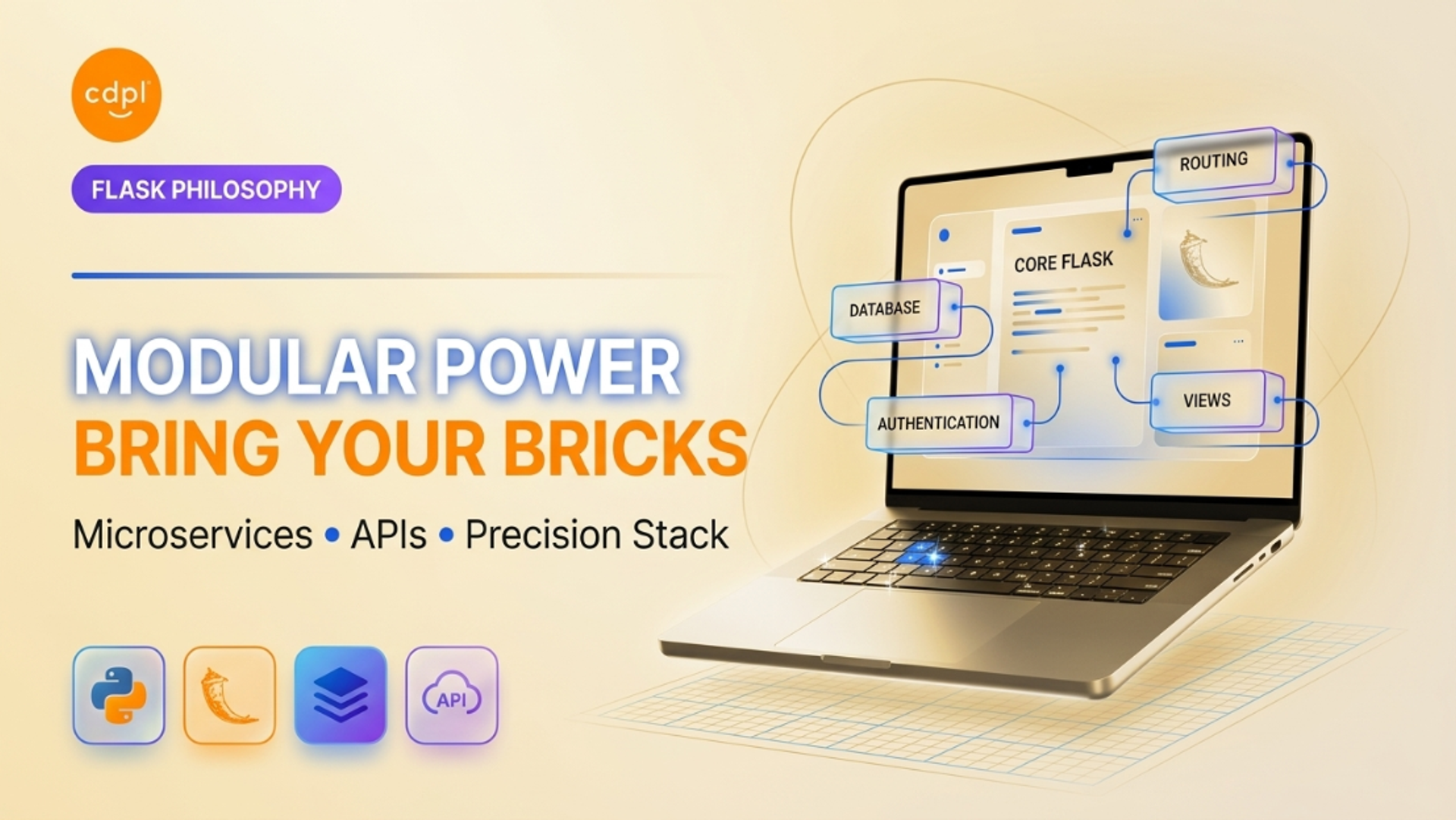
Flask is what developers call a micro-framework. That word "micro" does not mean it is weak or only for tiny projects. It means Flask ships with a small, focused core and lets you decide what else to add. Out of the box, Flask gives you routing (mapping URLs to Python functions), a templating engine (Jinja2) to generate HTML, and a development server. Everything else database handling, form validation, user authentication is left to extensions you choose and plug in yourself.
Here is the smallest possible Flask app, and it genuinely works:
python
In about seven lines you have a running web server. That immediacy is Flask's superpower. There is very little ceremony between an idea and a working page, which makes it a fantastic teaching tool and a favorite for rapid prototyping.
The Flask Philosophy
Flask follows a "bring your own bricks" approach. You assemble exactly the stack you need and nothing more. This gives you precise control and a lighter footprint, but it also means you make more decisions: which database library, which authentication system, how to structure your folders. For small-to-medium applications, APIs, microservices, and learning projects, this flexibility is a gift. For very large applications, all that freedom can become a maintenance burden if the team is not disciplined.
What Is Django? The Batteries-Included Powerhouse
Django takes the opposite philosophy. Its tagline is famously "batteries included," meaning it ships with almost everything you need to build a serious web application right out of the box. An object-relational mapper (ORM) for talking to databases without writing raw SQL, a ready-made admin interface, a robust authentication system, form handling, security protections, and a clear project structure are all built in from day one.
Django was created at a newspaper company where developers needed to ship complex, database-driven sites fast. That heritage shows. When your application involves users, content, permissions, and a lot of data relationships, Django removes an enormous amount of repetitive setup work.
A simple Django view looks like this:
python
The view itself is just as simple, but Django wraps it in a larger, opinionated structure projects, apps, URL configurations, settings, and migrations. There is more to learn upfront, but that structure becomes a productivity multiplier as your application grows. Many of the same architectural ideas you will encounter here echo across full-stack and advanced development training, so the investment compounds.
The Django Admin: A Hidden Superpower
One feature deserves a special mention. Django automatically generates a polished, secure admin panel from your data models. Within minutes of defining your data structures, you get a fully functional back-office interface where staff can create, edit, and delete records. Building this by hand in Flask would take days. For content-heavy sites, this single feature can justify choosing Django.
Flask vs Django: The Core Differences
Let us put the two frameworks side by side so the trade-offs are crystal clear.
The key insight is this: Flask gives you freedom; Django gives you speed at scale. Neither is "better" in absolute terms. The right choice depends on your project, your team, and your goals.
When to Choose Flask
Reach for Flask when you want full control over your stack, when you are building a lightweight REST API or microservice, when you are prototyping an idea quickly, or when you are learning and want to understand each moving part. Flask is also excellent for serving machine learning models as web endpoints a common task where you wrap a trained model in a thin API layer. If you are pairing web skills with an AI and Machine Learning specialization, Flask is often the deployment tool of choice.
When to Choose Django
Reach for Django when you are building a large, database-heavy application, when you need user accounts and an admin panel from the start, when security and convention matter for a growing team, or when you simply want to ship a feature-complete product fast without reinventing common wheels. Social networks, e-commerce sites, content management systems, and SaaS platforms are classic Django territory.
Understanding the Architecture: How Web Apps Actually Work
To build with either framework confidently, you need a mental model of what happens when someone visits your site. Both Flask and Django follow a request-response cycle built around a separation-of-concerns pattern. Django calls it MVT (Model-View-Template), which is its own spin on the classic MVC (Model-View-Controller) pattern.
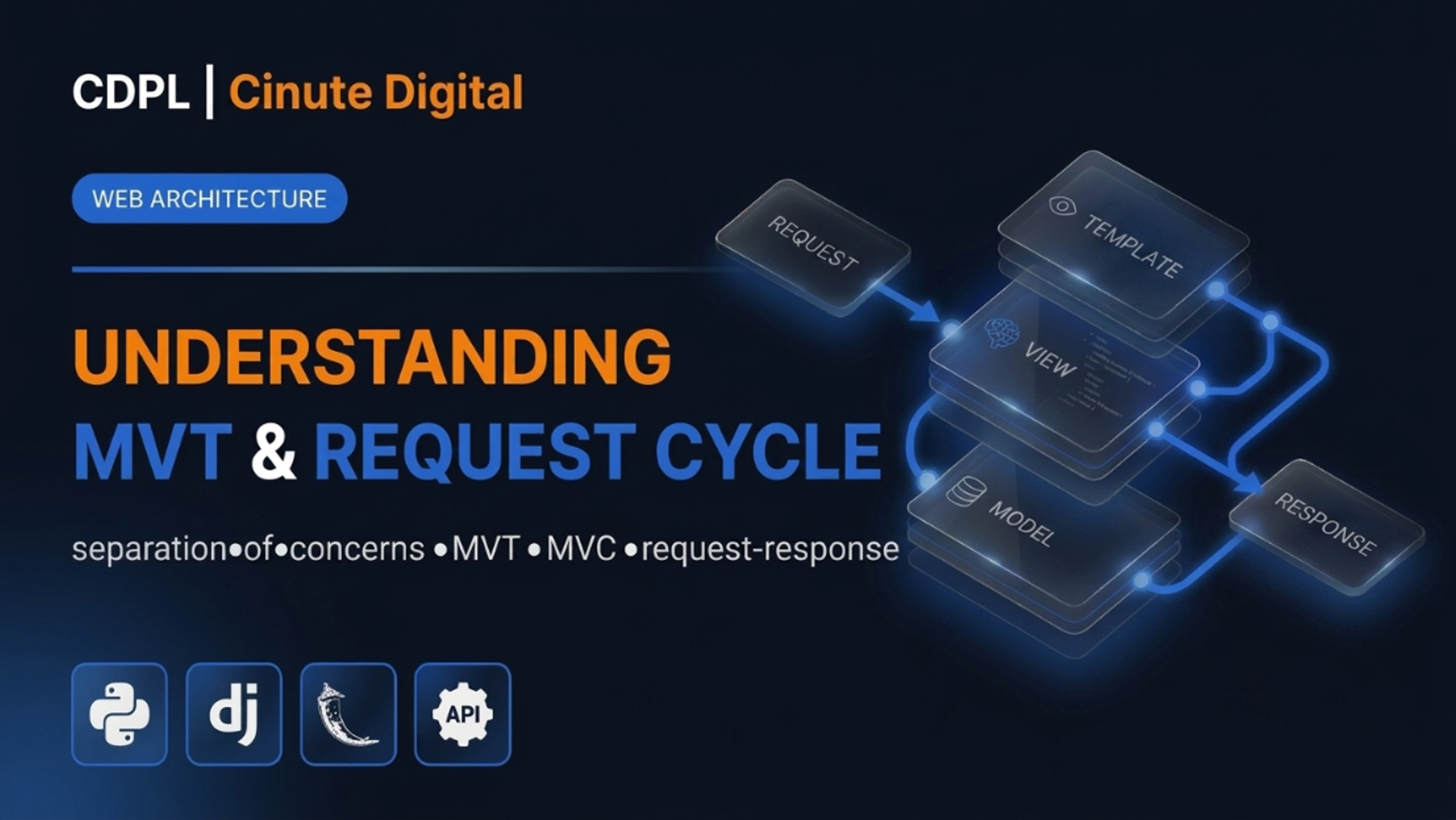
Here is the flow in plain language. A user types a URL or clicks a link. That request travels to your server. The framework's router matches the URL to a specific piece of Python code a view. The view contains your logic: it might fetch data from the database through the model, process it, and then hand it to a template. The template fills in the dynamic values and produces the final HTML, which is sent back to the user's browser as a response.
Once you internalize this loop URL → view → model → template → response every web framework starts to feel familiar, because they all implement variations of the same idea. This conceptual foundation is one of the most valuable things you can learn, and it transfers far beyond Python. Understanding how data moves through an application also makes you a sharper tester, which is why these ideas overlap with software testing fundamentals.
Real-World Projects to Build Your Skills
Reading about frameworks only takes you so far. You learn web development by building. Here are project ideas, ordered from beginner to advanced, that work beautifully in either Flask or Django.
Beginner projects. Start with a personal portfolio site, a to-do list app, or a simple blog. These teach you routing, templates, and basic forms. A to-do app in particular forces you to handle creating, reading, updating, and deleting records the famous "CRUD" operations that underpin almost every application.
Intermediate projects. Build a weather dashboard that calls an external API, a URL shortener, or a recipe-sharing site with user accounts. These introduce authentication, database relationships, and working with third-party data. This is also where you start thinking about clean code and how others will read your work.
Advanced projects. Create a full e-commerce store, a social platform with profiles and feeds, or a REST API that serves a machine learning model's predictions. These projects combine everything databases, auth, security, deployment, and often a connection to data analytics or AI workflows. A polished, deployed advanced project is worth more on a resume than a dozen tutorials.
The goal is to finish projects and put them online where recruiters can see them. A live, working app you can demo in an interview is one of the strongest signals that you can do the job.
The Skills Around the Framework
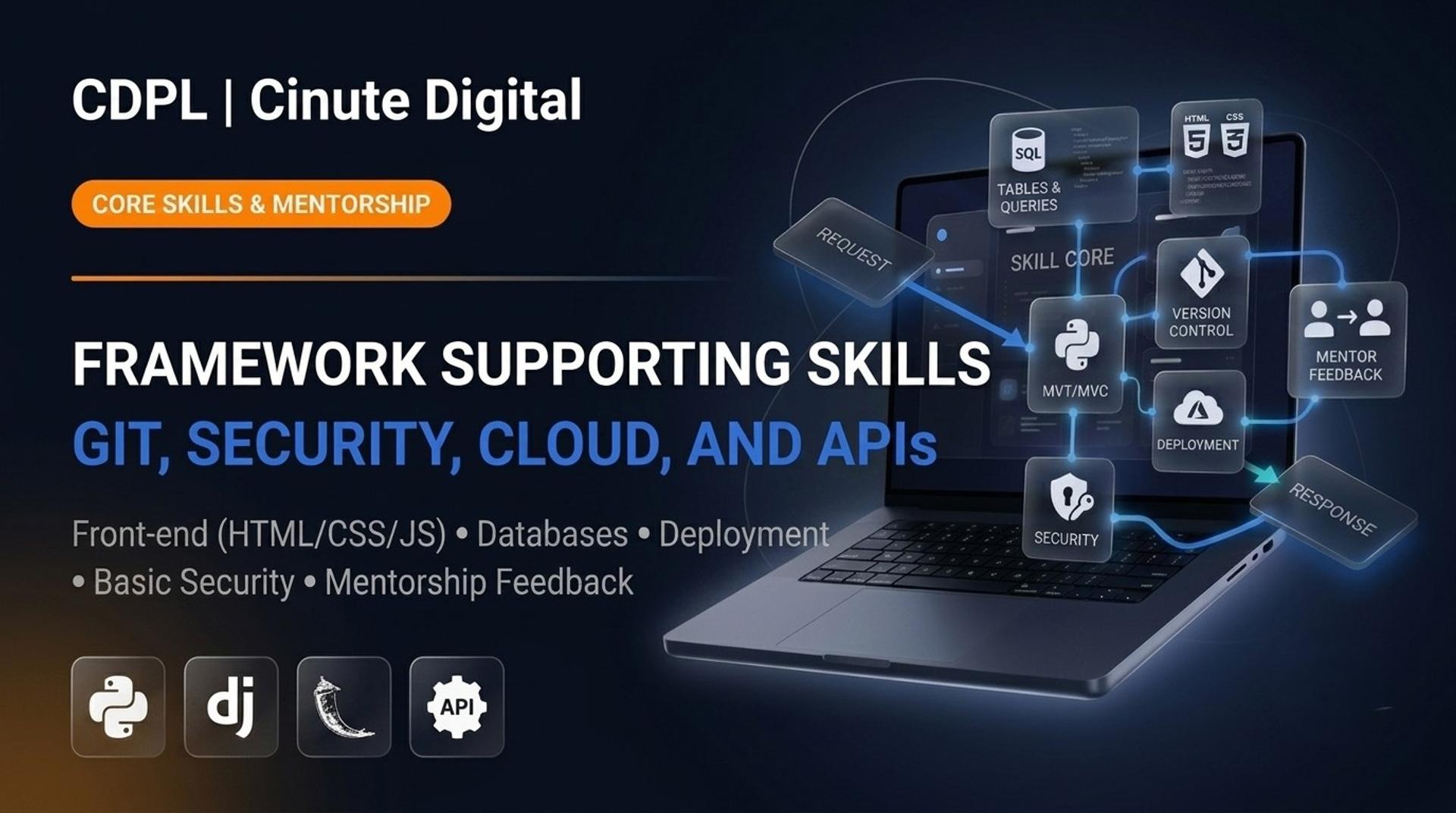
Knowing Flask or Django is necessary but not sufficient. Real-world web developers also need a cluster of supporting skills. You should be comfortable with HTML, CSS, and a little JavaScript for the front end. You need to understand databases at minimum how tables, relationships, and queries work. Version control with Git is non-negotiable on any team. And increasingly, knowing how to deploy your app to a cloud platform and reason about basic security is expected even at the junior level.
You will also benefit enormously from understanding APIs how applications talk to each other over the web. So much of modern development is connecting services together, and frameworks like Flask make building and consuming APIs straightforward. Many of these adjacent competencies are best learned in a structured program with mentor feedback rather than alone, which is where guided learning paths and one-on-one mentorship make a measurable difference.
Career Opportunities for Python Web Developers in 2026
The demand for Python web developers remains strong and steady. Companies of every size from early-stage startups to large enterprises need people who can build and maintain web applications. Roles you can target include Python Web Developer, Backend Developer, Full-Stack Developer, API Developer, and Django/Flask Developer. Many professionals also blend these skills with data roles, becoming the kind of versatile engineer who can build the app and understand the analytics behind it.
What makes this field especially attractive is its accessibility. You do not need a computer science degree to break in. What you need is demonstrable skill: a portfolio of working projects, a solid grasp of fundamentals, and the ability to talk through your decisions in an interview. Structured training that includes live projects, certifications, and placement support can dramatically shorten the path from beginner to hired and CDPL's placement-backed programs are designed precisely around that outcome.
Your Learning Roadmap
If you are starting from zero, here is a sensible sequence. First, get comfortable with Python fundamentals variables, loops, functions, and data structures. Next, learn the basics of how the web works: HTTP requests, URLs, and HTML. Then pick one framework and go deep rather than skimming both. Flask is the gentler on-ramp for understanding fundamentals; Django gets you to a feature-rich app faster. Build small projects, then progressively harder ones, deploying each so you have a public portfolio.
Finally, branch out. Once you can build a working app, learn about databases more seriously, pick up Git fluency, and explore how web development connects to adjacent fields like AI and data. The developers who thrive long-term are the ones who keep their fundamentals sharp while continuously layering on new, complementary skills.
Conclusion: Start Building Today
Flask and Django are not rivals you must choose between forever they are two excellent tools for two slightly different jobs. Flask rewards you with simplicity, control, and a gentle learning curve, making it ideal for APIs, microservices, and understanding how the web works under the hood. Django rewards you with speed, structure, and a remarkable set of built-in features, making it the go-to for large, ambitious, database-driven applications.
The best way to learn is to stop reading and start typing. Spin up that seven-line Flask app. Generate your first Django admin panel. Build a to-do list, then a blog, then something that genuinely excites you. Every line of code moves you closer to becoming a capable, employable Python web developer.
If you want a structured, mentor-led path with live projects, industry certifications, and real placement support, explore CDPL's full range of career-focused technology courses and take the first concrete step toward your future in tech. The web is waiting for what you will build.
Tags

A visionary data scientist dedicated to unlocking the potential of data to drive informed decision-making and spark innovation. With a strong foundation in Data Science.