
REST API vs GraphQL: Understanding the Key Differences
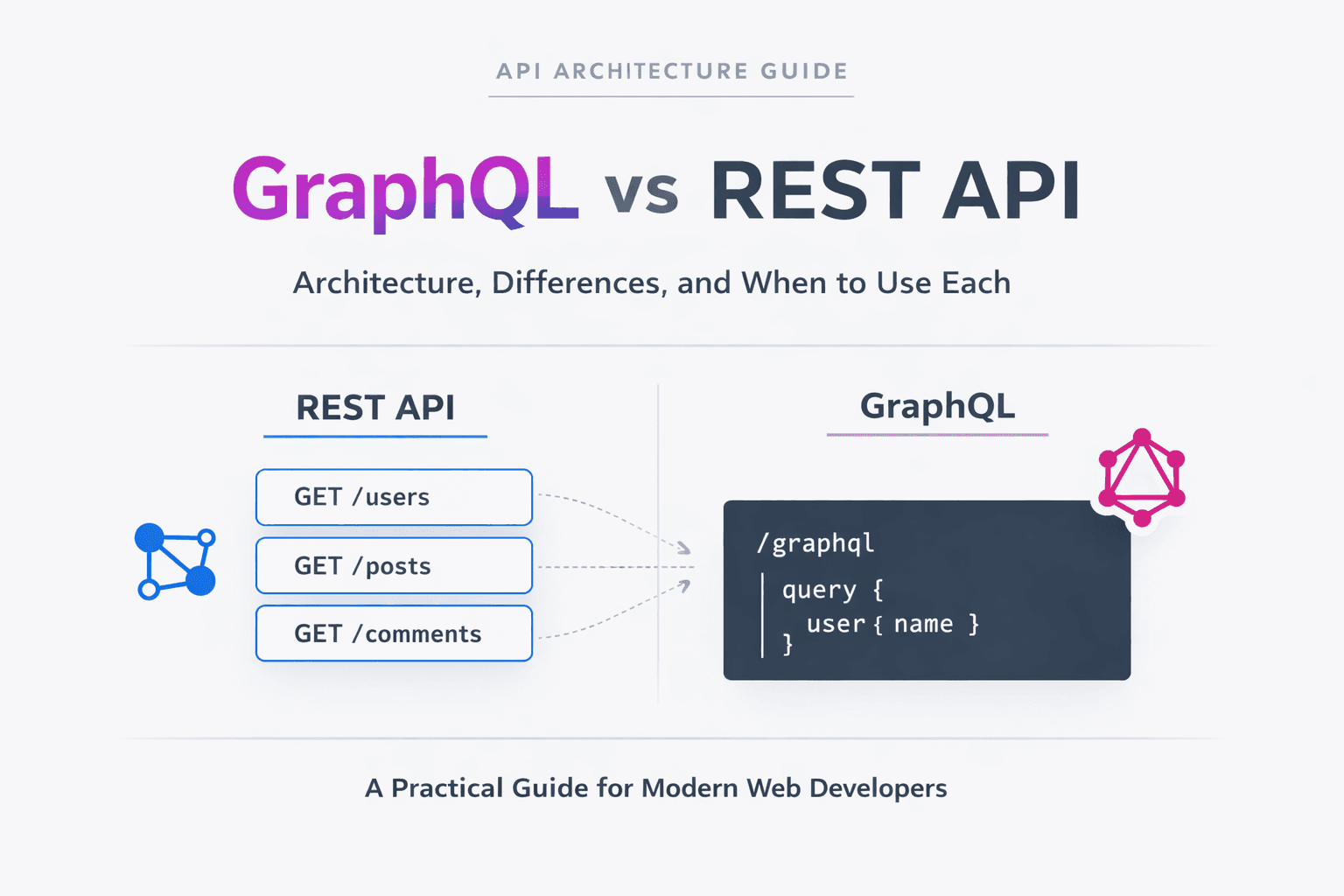
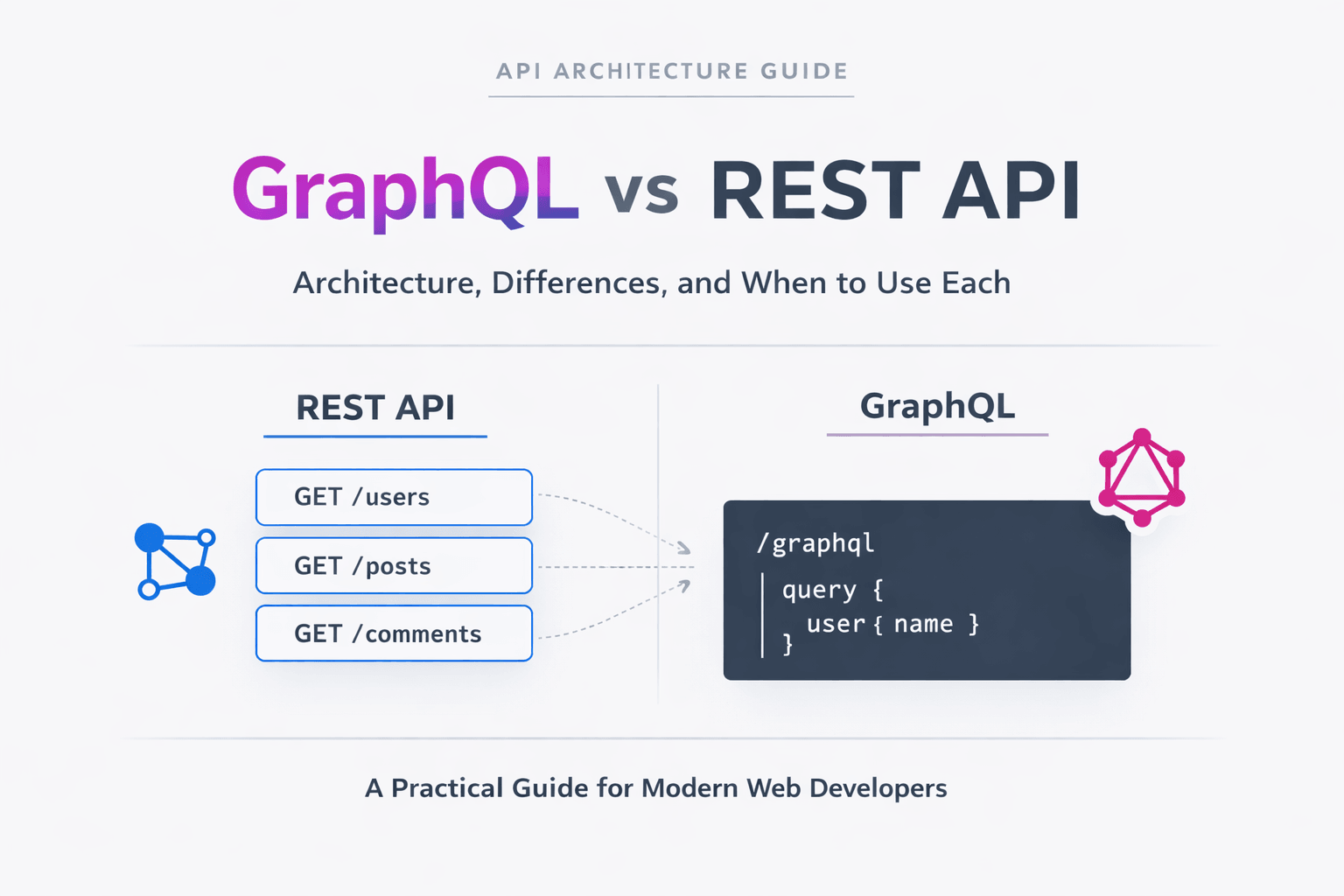
Modern web applications rely heavily on APIs to communicate between the frontend and backend. Whether you're building a single-page application, a mobile app, or a large distributed system, choosing the right API architecture is important for performance, scalability, and developer experience.
1. What is an API?
An API (Application Programming Interface) allows different software systems to communicate with each other.
In web development, APIs allow a frontend application to request data from a backend server. For example, a frontend built with React may request user data from a backend built with Node.js.
The backend processes the request, retrieves data from a database, and sends a response back to the client.
2. What is REST?
REST stands for Representational State Transfer, an architectural style for designing networked applications.
REST APIs use standard HTTP methods and operate on resources identified by URLs.
Example resource endpoints:
These endpoints represent resources, and each resource is manipulated using HTTP methods.
Common HTTP methods in REST:
REST APIs typically return responses in JSON format.
3. What is GraphQL?
GraphQL is a query language and runtime for APIs created by Meta Platforms (formerly Facebook) in 2012 and publicly released in 2015.
Unlike REST, where multiple endpoints return fixed data structures, GraphQL allows clients to request exactly the data they need.
Instead of many endpoints, GraphQL usually exposes a single endpoint such as:
Clients send queries specifying the exact fields required.
Example GraphQL query:
The server returns only the requested fields.
4. How REST Works
In REST APIs:
- The client sends an HTTP request.
- The server processes the request.
- The server returns a response.
Example:
Request:
Response:
Even if the client only needs the name, the entire object is returned.
This can lead to over-fetching.
Another issue is under-fetching, where the client must make multiple requests to get related data.
Example:
5. How GraphQL Works
GraphQL allows the client to define exactly what data is required.
Example query:
Response:
Only requested fields are returned.
GraphQL uses a schema that defines the structure of available data and queries.
6. Key Differences Between REST and GraphQL
7. Advantages of REST
Simplicity
REST APIs follow HTTP standards, making them easy to understand and implement.
Mature ecosystem
REST has been widely used for decades and is supported by most frameworks.
Caching support
REST APIs work well with HTTP caching mechanisms.
Stateless design
Each request contains all necessary information, making REST services scalable.
8. Advantages of GraphQL
Precise data fetching
Clients request exactly the data they need.
Single request for complex data
GraphQL can fetch nested resources in a single query.
Strong typing with schema
GraphQL schemas provide clear API structure.
Faster frontend development
Frontend developers can control the data they receive.
9. Disadvantages of REST
Over-fetching
Servers may return more data than required.
Multiple network requests
Fetching related resources may require multiple API calls.
Versioning complexity
Maintaining different API versions can increase maintenance.
10. Disadvantages of GraphQL
Increased complexity
GraphQL requires schema design, resolvers, and query validation.
Difficult caching
HTTP caching is less straightforward than REST.
Query cost issues
Complex queries may affect server performance if not controlled.
11. When to Use REST
REST is a good choice when:
- The API is simple
- Strong HTTP caching is required
- The system has clear resource-based endpoints
- The development team wants a straightforward architecture
REST works well for many traditional web services and microservices.
12. When to Use GraphQL
GraphQL is useful when:
- Applications require flexible data queries
- Multiple clients need different data structures
- The frontend evolves quickly
- Complex relationships between data exist
GraphQL is often used in modern frontend-heavy applications.
13. Real-World Adoption
Many large companies use GraphQL to improve API flexibility.
Notable examples include:
- Meta Platforms
- GitHub
- Shopify
At the same time, REST remains the dominant API architecture used by thousands of web services worldwide.
14. Conclusion
Both REST and GraphQL are powerful approaches for building APIs.
REST offers simplicity, stability, and strong ecosystem support. GraphQL provides flexibility and efficient data fetching, which is particularly useful for modern frontend applications.
Choosing between them depends on the needs of your project, team expertise, and system architecture.
In many cases, developers use REST for simpler services and GraphQL for complex client-driven applications.
Tags

Full Stack JavaScript Developer who designs and ships end-to-end web apps. I use React/Next.js + Node.js/NestJS with TypeScript, building secure, scalable, high-performance systems with modern DevOps, testing, and cloud-native tooling.