
What Is Software Testing? Types, Levels, and Examples
New to QA or refreshing fundamentals? Learn software testing basics, explore functional and non-functional types, understand testing levels from unit to UAT, and see simple examples you can apply today.
A practical introduction to software testing for product teams at CDPL. Learn key testing types, testing levels across the SDLC, and real-world examples with tools and tips.
Introduction
Software testing is the practice of evaluating a system to find defects, verify requirements, and increase confidence in quality before and after release. At Cinute Digital Pvt Ltd (CDPL), a clear testing strategy reduces risk, accelerates delivery, and builds trust with learners and enterprise clients.
From quick unit checks to realistic end-to-end scenarios, testing spans many techniques and levels. This guide clarifies the essentials, testing types vs levels, where each fits in the SDLC, and how to start with practical examples you can apply today.
Fundamentals: Purpose, Principles, and the SDLC

Purpose: prevent defects, detect regressions, document expected behavior, and provide actionable feedback. Testing does not prove the absence of bugs, it increases confidence that critical risks are controlled.
Core Principles
- Risk-based: test deeper where impact and probability are higher.
- Early and continuous: shift-left and automate feedback loops.
- Context-driven: tailor the strategy to product, team, and constraints.
- Balanced approach: blend manual exploration with automation.
Testing Across the SDLC
Plan strategy during requirements, design tests alongside development, automate critical paths in CI/CD, and monitor in production with synthetic and observability-led checks.
Testing Types: Functional vs Non-Functional

Testing types describe what you validate.
Functional Testing
- Unit Tests: verify small, isolated functions or classes.
- Integration Tests: validate modules working together, for example service plus database.
- API Testing: request and response, contracts, error paths, and authentication.
- UI and End-to-End: user workflows in browsers and devices.
- Regression: ensure existing features still work after change.
Non-Functional Testing
- Performance and Load: response times, throughput, scalability.
- Security: authentication, authorization, OWASP risks, dependency vulnerabilities.
- Usability and Accessibility: WCAG, keyboard navigation, ARIA.
- Reliability and Resilience: fault injection and chaos scenarios.
- Compatibility: devices, browsers, operating systems, network conditions.
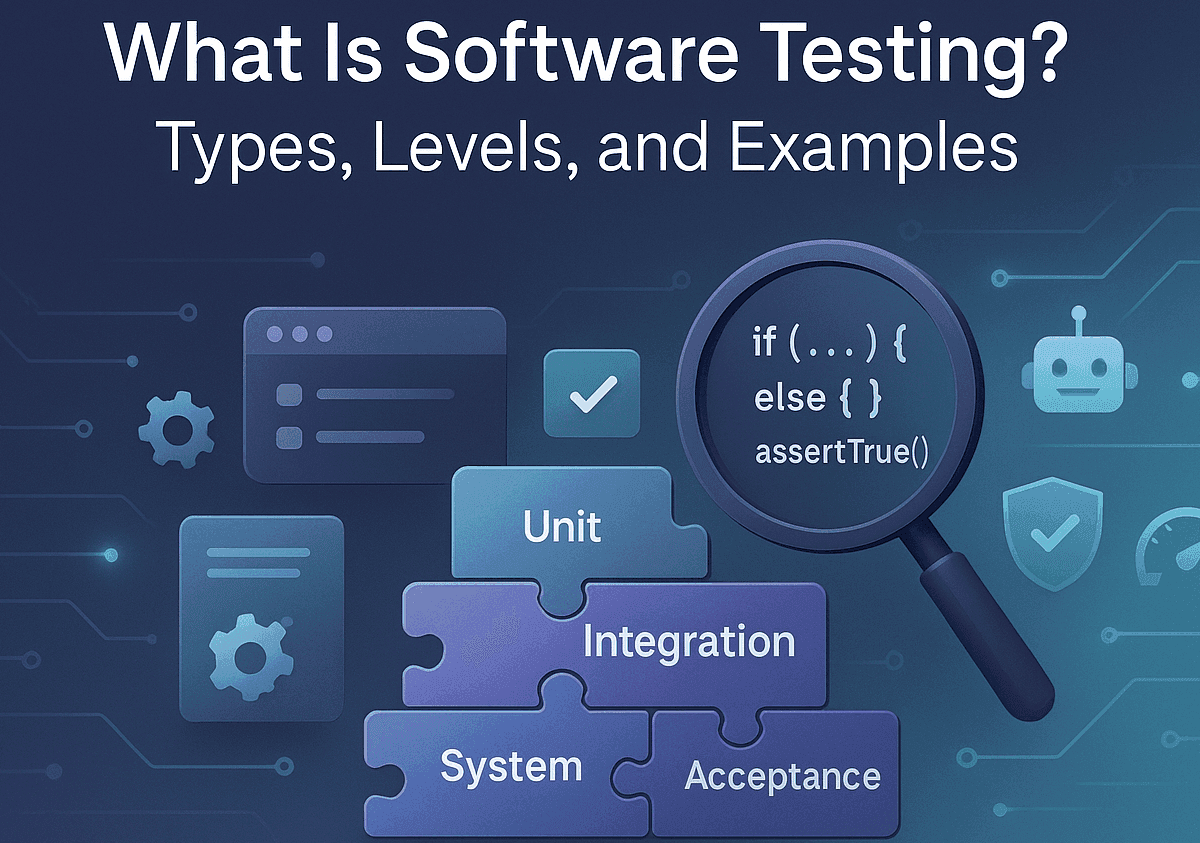
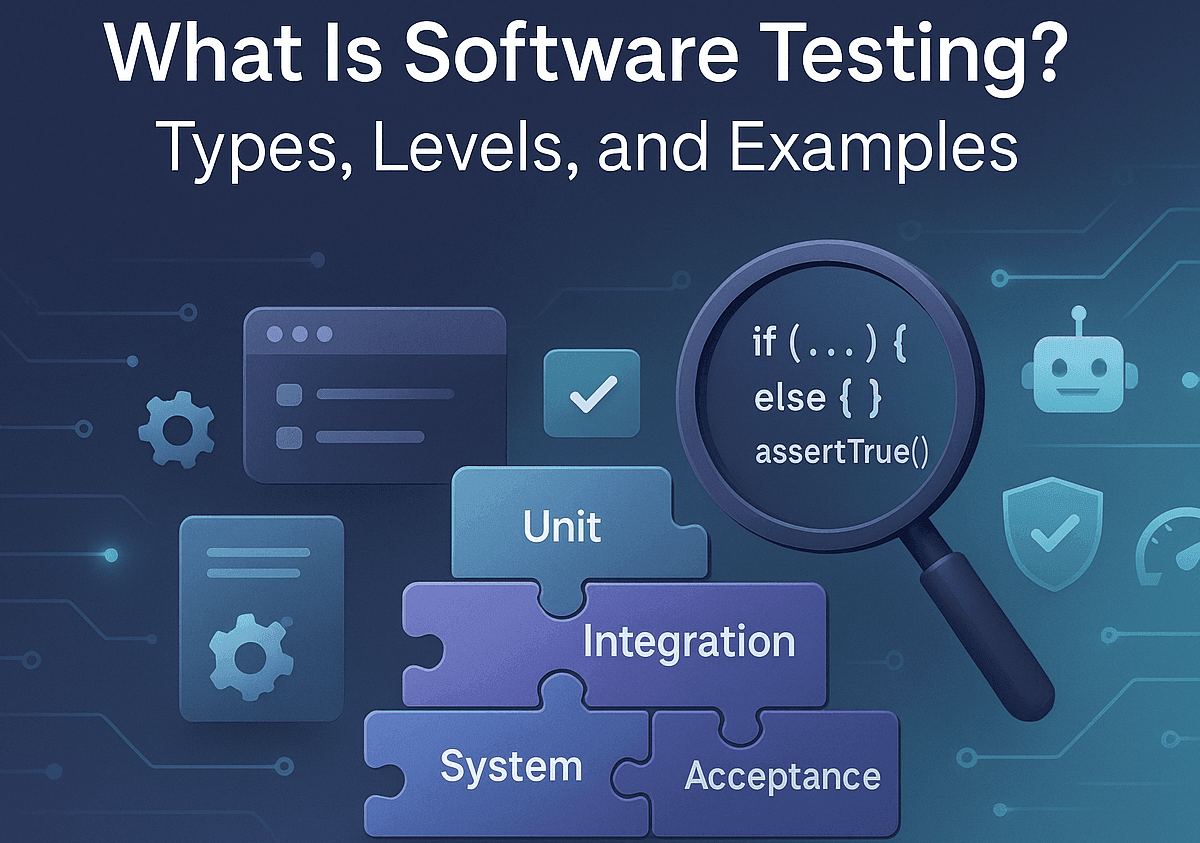
Testing Levels: Unit to Integration to System to Acceptance

Testing levels describe where you validate in the architecture.
- Unit: smallest testable parts, fast and deterministic.
- Integration: contracts between modules and services, including database and queues.
- System: the whole application in a production-like environment.
- Acceptance: business-oriented checks against requirements.
Example unit test verifying a pure function
Best Practices: Strategy, Automation, and CI/CD

- Define a test strategy: risks, scope, environments, and responsibilities.
- Test pyramid: many fast unit tests, fewer integration tests, minimal end-to-end that cover critical journeys.
- Automate in pipelines: run unit and integration on each pull request; nightly end-to-end and performance baselines.
- Data management: seed known datasets, isolate tests, and reset state.
- Observability: logs, metrics, and traces plus synthetic monitors after release.
- Accessibility first: catch issues early with linters and audits.
Automated tests wired into CI for fast feedback
Common Pitfalls, and How to Avoid Them
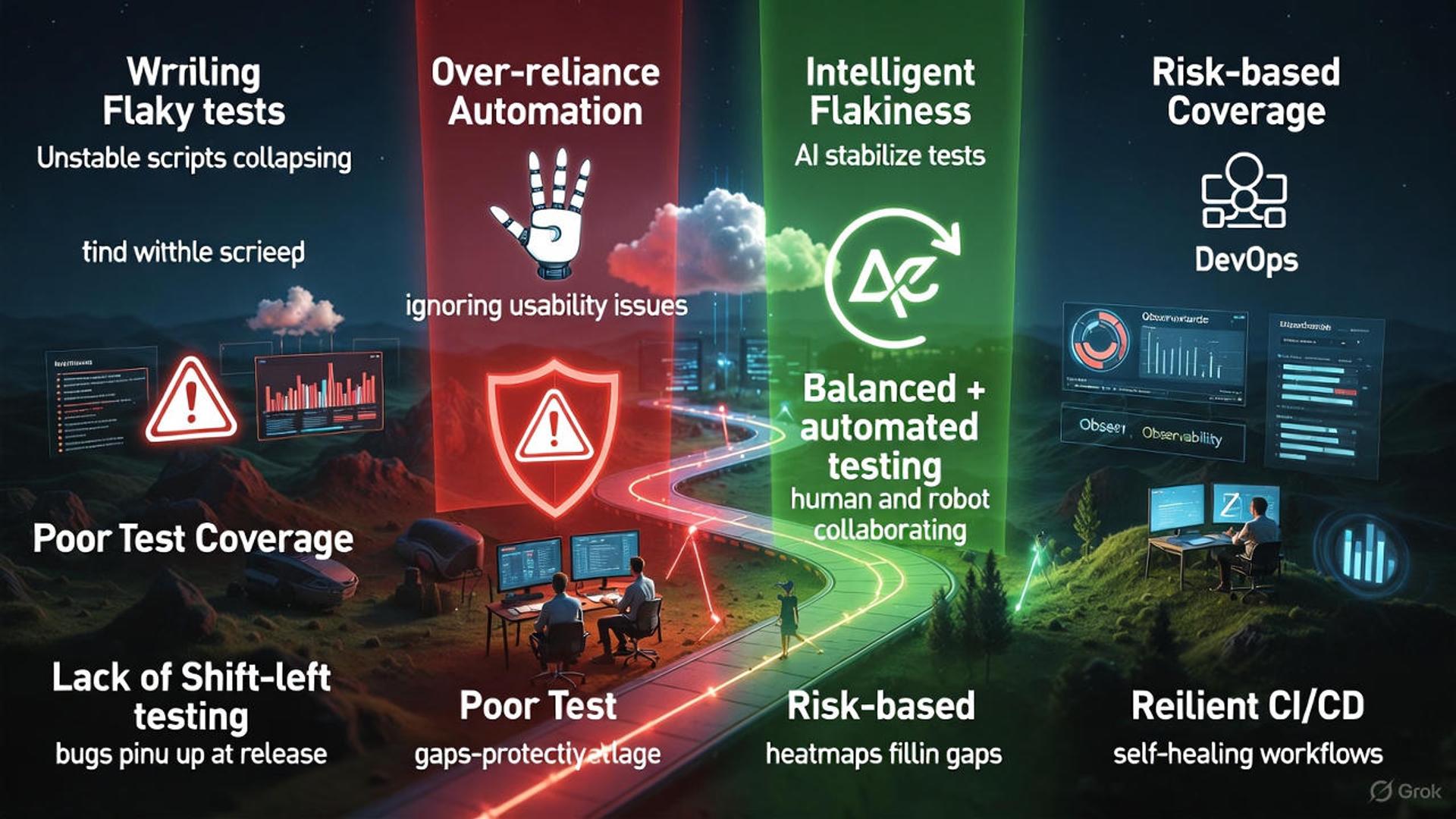
- Flaky tests: fix timing, network reliance, and shared state, and use test doubles where it helps.
- End-to-end only anti-pattern: slow and brittle suites; rebalance toward unit and integration layers.
- Unclear ownership: define who writes and maintains tests per layer.
- Poor data setup: use factories and fixtures; reset the database per test; avoid cross-test coupling.
- Ignoring accessibility and security: add automated checks and periodic expert reviews.
Advanced Techniques

- Contract testing: keep microservices aligned with Pact.
- Mutation testing: measure test strength by introducing code mutants.
- Visual regression: detect UI diffs with snapshot images.
- AI-assisted testing: generate scenarios, prioritize cases, and detect anomalies.
- Chaos and resilience: inject failures to validate recovery and service level objectives.
Tools and Quick Examples
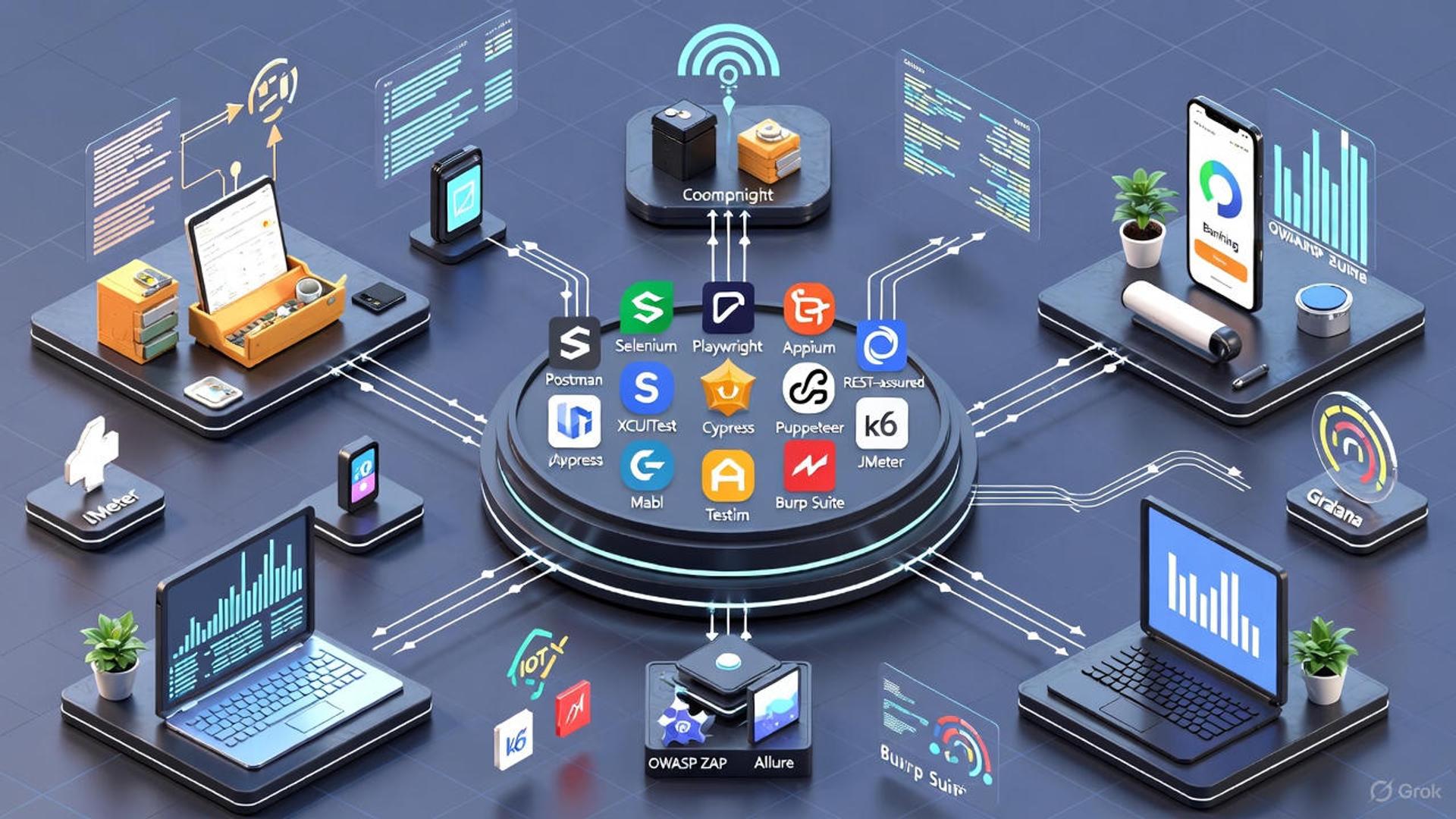
Unit and Integration: Jest or Vitest, Testing Library, Supertest.
End-to-End and UI: Playwright, Cypress, Selenium and WebDriver.
API and Contract: Postman and Newman, Pact.
Performance: k6, JMeter, Artillery.
Security: OWASP ZAP and dependency scanning with npm audit or Snyk.
API test verifying happy-path behavior
Real-World Scenarios
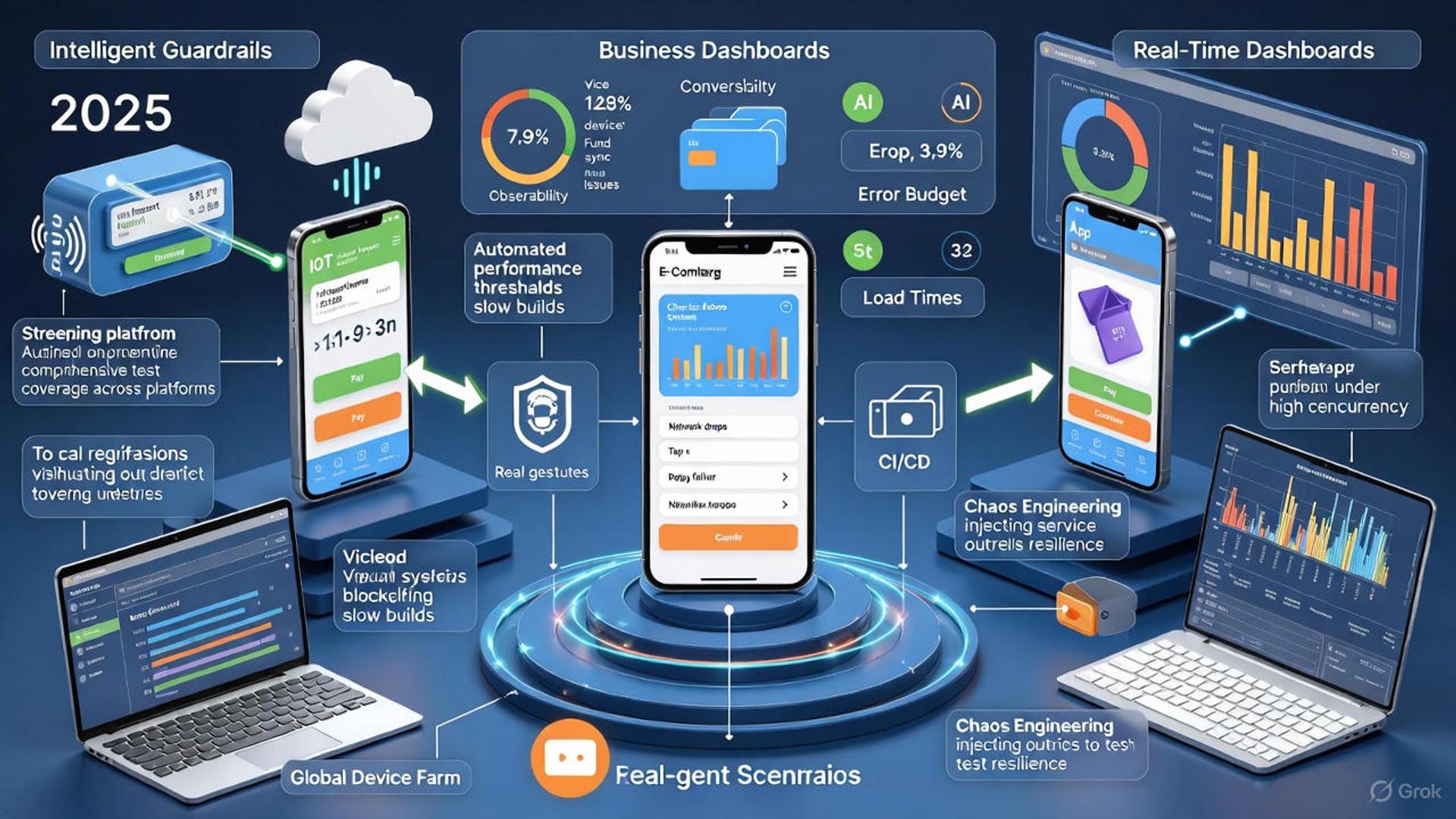
- Checkout flow end-to-end: login to cart to payment to receipt, guarded by smoke tests on every deploy.
- API compatibility: consumer-driven contracts prevent breaking changes across services.
- Performance objectives: baseline 95th percentile response time and fail the pipeline on regression.
Future Outlook

Expect tighter DevTestOps loops, AI-generated tests guided by risk, and production verification with feature flags and observability. The goal is managed risk and continuous, confident delivery.
Conclusion
Testing is a system of practices. Choose the right tests at the right level, automate where it pays off, and guide priorities with risk. Stabilize unit and integration tests, automate a critical user journey, and add performance and security gates to CI/CD.
From there, evolve toward contract testing, visual checks, and AI-assisted prioritization. Quality becomes a shared habit, not a last-minute phase.
Tags

Shoeb Shaikh is a seasoned Software Testing and Data Science Expert and a Mentor with over 14 years of experience in the field. Specialist in designing and managing processes, and leading high-performing teams to deliver impactful results.