
Neural Networks Fundamentals Made Simple
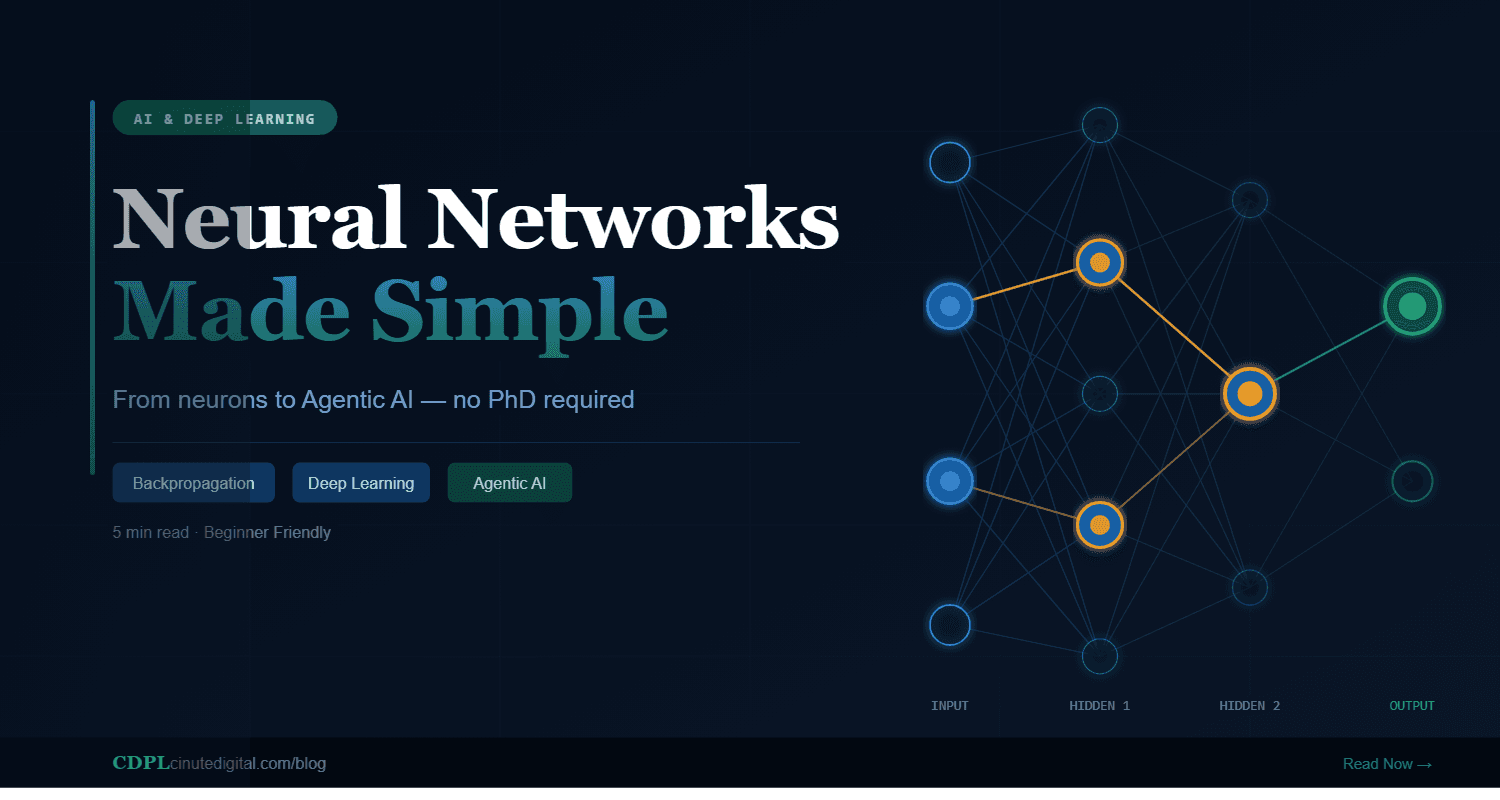
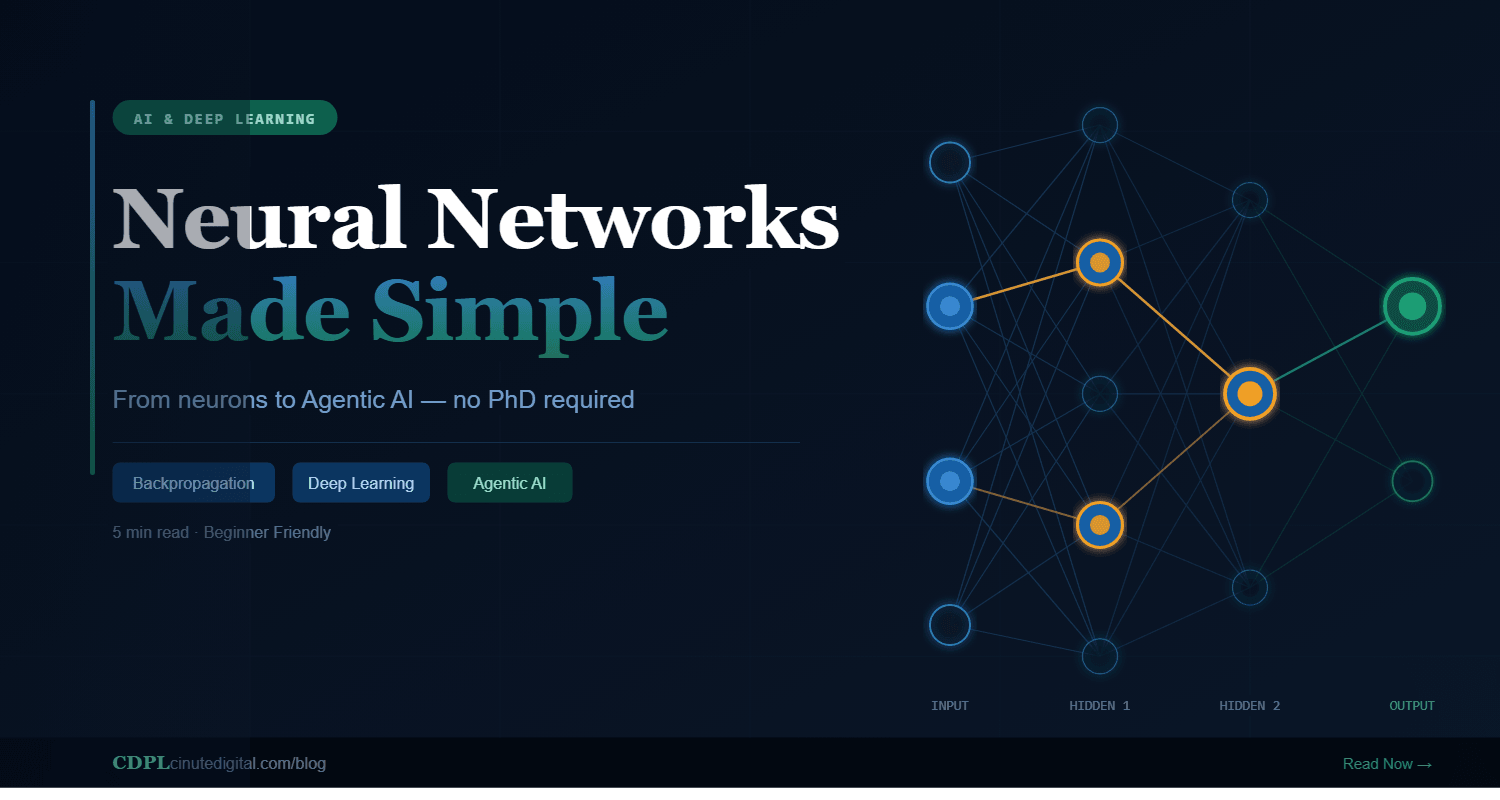
AI doesn't have to be intimidating. Dive into our plain-English guide on neural network fundamentals, exploring how machines learn, process data, and drive today's autonomous workflows
A comprehensive, beginner-friendly guide breaking down the core concepts of artificial neural networks, deep learning, and their transition into agentic AI, tailored for digital professionals and tech enthusiasts.
Artificial Intelligence is fundamentally changing how we interact with technology, but the science behind it often feels locked behind doors of complex mathematics and dense academic papers. If you want to understand the future of digital innovation, you need to grasp neural networks fundamentals.
But here is the good news: you do not need a PhD in computer science to understand how these systems work. At their core, neural networks are simply problem-solving engines inspired by the human brain. Whether it is an algorithm recommending your next favorite song, or advanced Agentic AI systems managing complex business tasks without human intervention, neural networks are the invisible gears turning in the background.
In this guide, we are going to break down the complex jargon and make the fundamentals of neural networks simple, accessible, and actionable for everyone.
What Exactly is a Neural Network?
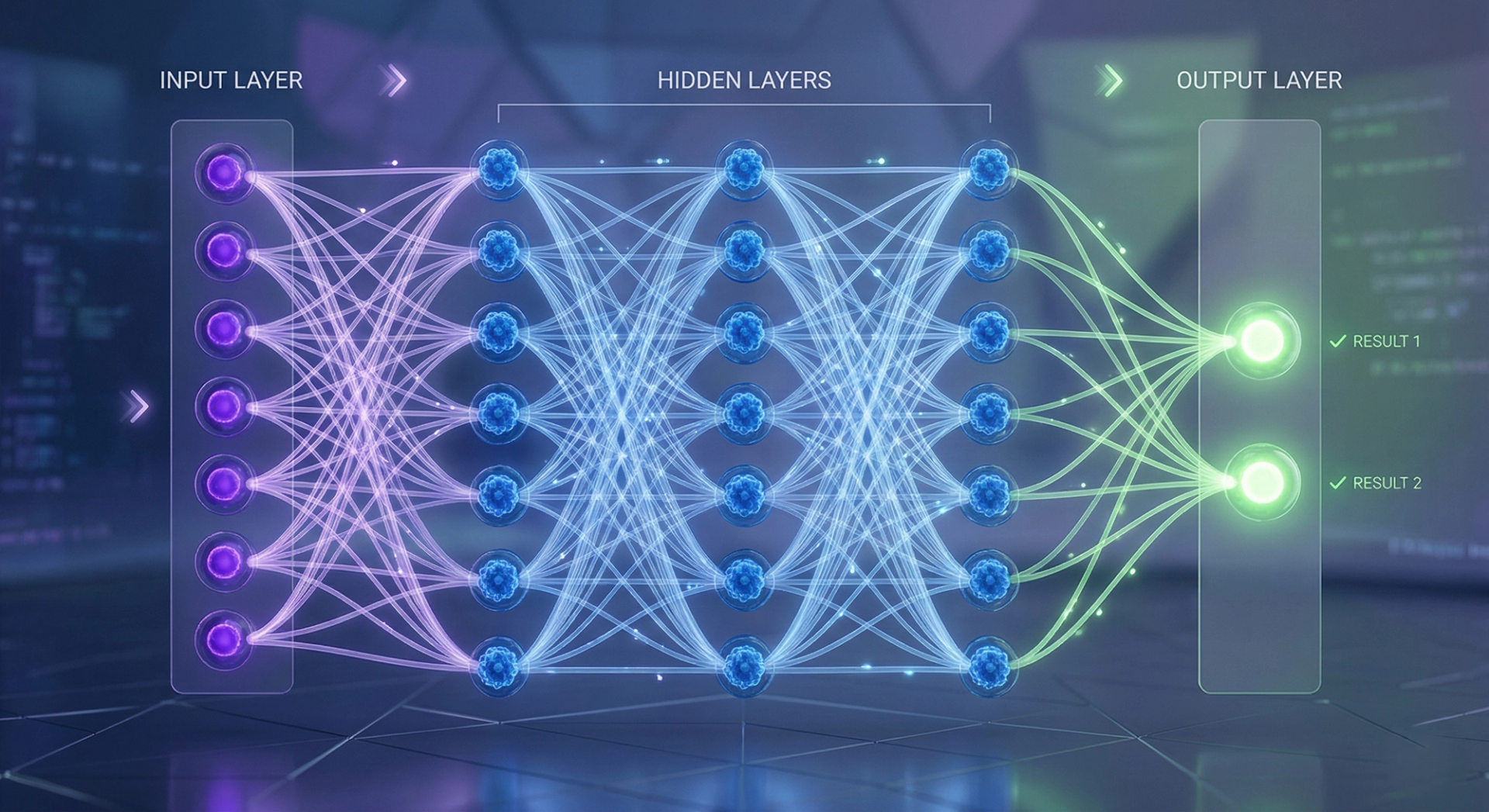
To understand neural networks fundamentals, we have to look at biology. The human brain contains billions of interconnected neurons. When you learn something new—like how to ride a bike or write a piece of code—these neurons fire together, creating strong pathways.
An Artificial Neural Network (ANN) mimics this exact process digitally. Instead of biological cells, it uses artificial nodes (or artificial neurons). These nodes are programmed to take in data, process it based on a specific set of rules, and pass the result on to the next node.
Think of it like a highly advanced filtering system. You pour raw data into the top, it passes through various filters that recognize patterns, and a refined, calculated prediction cFomes out at the bottom.
The Architecture: Layers of the Network
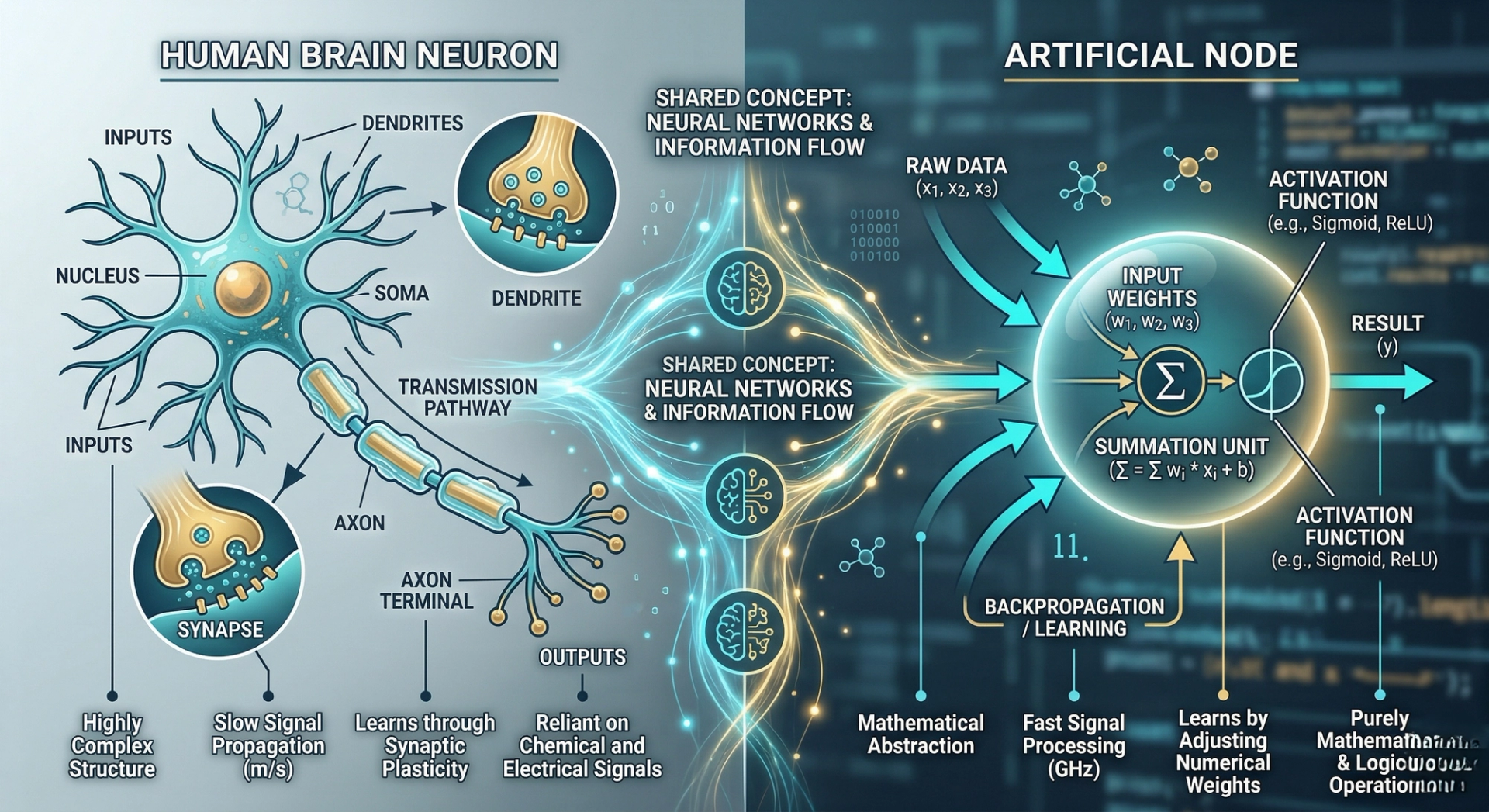
A neural network is not just a random jumble of nodes; it is highly structured. Understanding this structure is the key to grasping how modern web development and AI applications integrate seamlessly. A standard network is divided into three distinct types of layers:
1. The Input Layer
This is the entry point. The input layer receives the raw data from the outside world. If you are building an application that recognizes images, the input layer takes in the individual pixels of an image. It does not process the data; it simply holds it and passes it forward.
2. The Hidden Layers
This is where the magic happens. A network can have one hidden layer or dozens (which is what we call Deep Learning). Each node in a hidden layer receives data from the previous layer, applies mathematical transformations to it, and passes it to the next.
- An easy way to think about it: Imagine a complex JavaScript function taking an input from a user interface, passing it through several conditional statements and API calls, and refining the data before rendering the final view. The hidden layers act as the ultimate backend logic for the AI.
3. The Output Layer
After the data has been sliced, diced, and analyzed by the hidden layers, it arrives at the output layer. This layer delivers the final prediction or decision. If the input was a picture of a dog, the output layer is the part of the system that confidently states, "This is a dog with 98% certainty."
How Neural Networks "Learn"
A network does not know how to solve problems perfectly right out of the box. It has to be trained. This training process is the most crucial part of neural networks fundamentals.
Weights and Biases
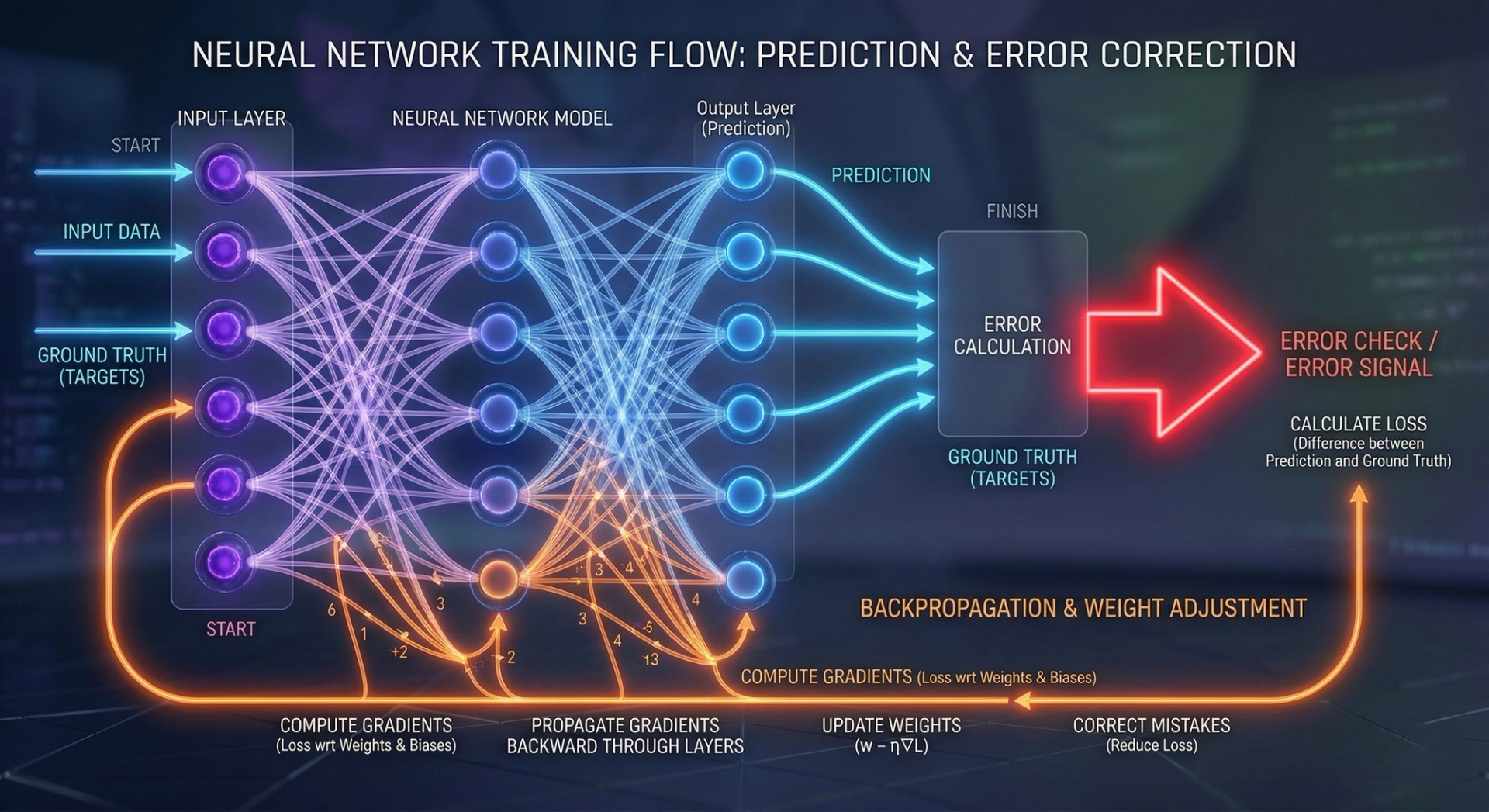
Every connection between two nodes has a weight, which determines the importance of that specific connection. A bias is an additional threshold value that helps shift the activation of the node. During training, the network makes a prediction. If the prediction is wrong, the network adjusts its weights and biases to get closer to the correct answer next time.
Forward Propagation and Backpropagation
When data moves from the input layer to the output layer to make a prediction, it is called Forward Propagation.
When the network realizes its prediction was incorrect, it calculates the margin of error and sends that information backward through the network to adjust the weights. This is called Backpropagation. It is the digital equivalent of learning from your mistakes.
The Evolution: Agentic AI and Autonomous Workflows
Understanding the basics of nodes and layers is just the beginning. Today, neural networks are powering a massive shift toward Agentic AI and autonomous workflows.
Traditional AI is reactive—you ask a chatbot a question, and it answers. Agentic AI is proactive. Powered by highly advanced neural networks, an Agentic AI system can understand a high-level goal, break it down into smaller tasks, and execute them independently across different software platforms.
For businesses, this means AI is no longer just a tool for analysis; it is an active participant in digital operations. From automated supply chain management to dynamic customer relationship systems, these autonomous workflows rely heavily on the deep learning capabilities of neural networks to make complex decisions in real-time. If you are looking to scale your business operations, exploring our [Interlink 1: custom web development] solutions can help you integrate these advanced AI workflows directly into your company's infrastructure.
Different Types of Neural Networks
Not all neural networks are built the same. Depending on the task, developers use different architectures:
- Convolutional Neural Networks (CNNs): These are the undisputed kings of image and video recognition. They are designed to scan visual data pixel by pixel to identify shapes, edges, and objects.
- Recurrent Neural Networks (RNNs): If data has a sequence—like speech, text, or stock market prices—RNNs are the tool of choice. They have a form of "memory" that allows them to understand context based on previous inputs.
- Transformers: The architecture behind modern Large Language Models (LLMs). Transformers are incredibly efficient at understanding the context of language, allowing for the generation of highly human-like text.
Bridging AI and Practical Web Applications
You might be wondering, "How does all this heavy AI theory actually connect to the websites and applications I use every day?"
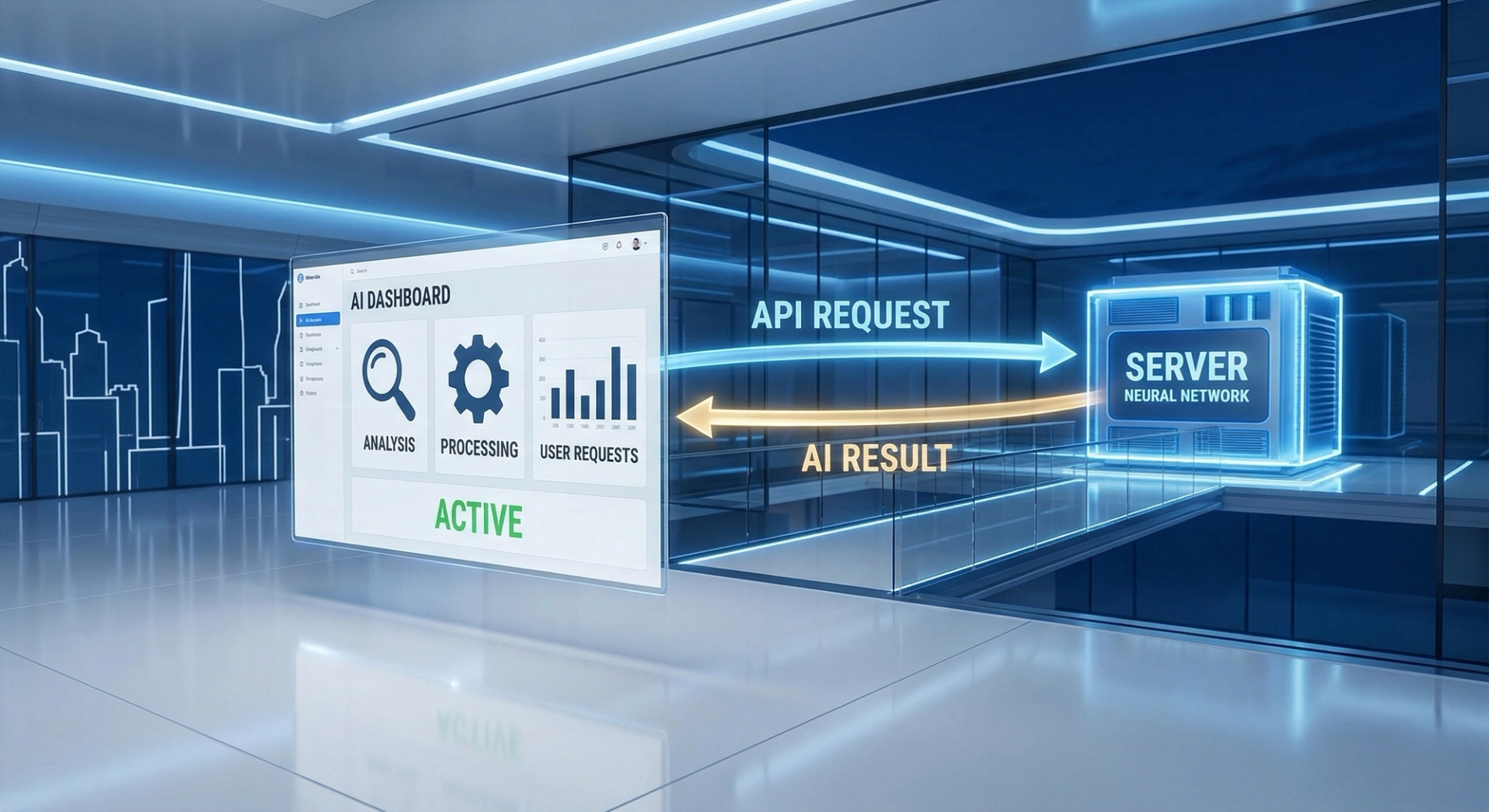
The reality is that modern web architecture—especially robust full-stack applications built on frameworks like React or Node.js—rarely handles the heavy lifting of neural network training locally. Instead, the relationship is built on seamless communication.
Data is gathered through the front-end user interface. That data is sent securely via APIs to powerful cloud servers where the trained neural network lives. The network processes the data, generates an output, and sends it back to the web application in milliseconds.
This architecture allows businesses to provide incredibly smart, AI-driven experiences without slowing down the user's browser. Whether it is a recommendation engine on an e-commerce site or an automated chatbot, these features require robust backend architecture. To ensure your digital presence can support these technologies, investing in professional [Interlink 2: UI/UX design] and seamless [Interlink 3: app development] is critical.
Why Neural Networks Matter for SEO and Digital Growth
Search engines like Google are entirely powered by advanced neural networks. The algorithms that determine which websites rank at the top of the search results use deep learning to understand user intent, analyze content quality, and measure website performance.
Understanding how these machines process information can drastically improve your digital strategy. It proves that outdated tactics like keyword stuffing no longer work; modern search engines understand context, semantics, and user behavior. By partnering with experts for comprehensive SEO optimized, you ensure that your content speaks clearly not just to human readers, but to the neural networks crawling the web. Furthermore, leveraging AI insights can dramatically enhance your broader [Interlink 5: digital marketing services], ensuring you reach the right audience at exactly the right time.
Frequently Asked Questions (FAQ)
Q1: What is the main difference between Machine Learning and Neural Networks?
Machine Learning is a broad category of artificial intelligence that involves teaching computers to learn from data. Neural Networks are a highly specific, advanced sub-category of Machine Learning inspired by the human brain, used for handling highly complex data like images and natural language.
Q2: Do I need to know complex math to use neural networks?
To build a neural network from absolute scratch, yes, a strong grasp of calculus and linear algebra is required. However, to use them in modern applications, developers rely on pre-built libraries and APIs, meaning you only need to understand the fundamental concepts and how to write the code that connects to them.
Q3: What does "Agentic AI" mean?
Agentic AI refers to artificial intelligence systems that exhibit "agency." Instead of just answering a prompt, they can pursue complex, multi-step goals, interact with various software tools, and manage autonomous workflows with minimal human oversight.
Q4: How long does it take to train a neural network?
It depends entirely on the size of the network and the data. A simple model predicting house prices might train in a few seconds on a standard laptop. A massive language model using billions of parameters can take months to train on supercomputers.
Q5: Can neural networks be integrated into a standard website?
Absolutely. Most modern websites integrate neural networks by using API calls to cloud-based AI services, allowing you to add features like image recognition, smart search, and chatbots without needing heavy local computing power.
Conclusion
The world of artificial intelligence does not have to be a black box. By breaking down neural networks fundamentals, we can see that these systems are highly logical networks of input, processing, and output. From the simplest artificial node adjusting its weights, to complex Agentic AI systems running autonomous workflows, the underlying principles remain the same.
As technology continues to evolve, understanding these basics will empower you to make smarter decisions about how to integrate AI into your business, your applications, and your digital strategy.
Tags

Cezzane Khan is a dedicated and innovative Data Science Trainer committed to empowering individuals and organizations.